Favourable cognitive frailty trends linked to lower diabetes risk
Favourable cognitive frailty dynamics were linked to lower odds of next-wave diabetes compared with unfavourable dynamics (OR 0.66).
Diabetes Research and Clinical Practice
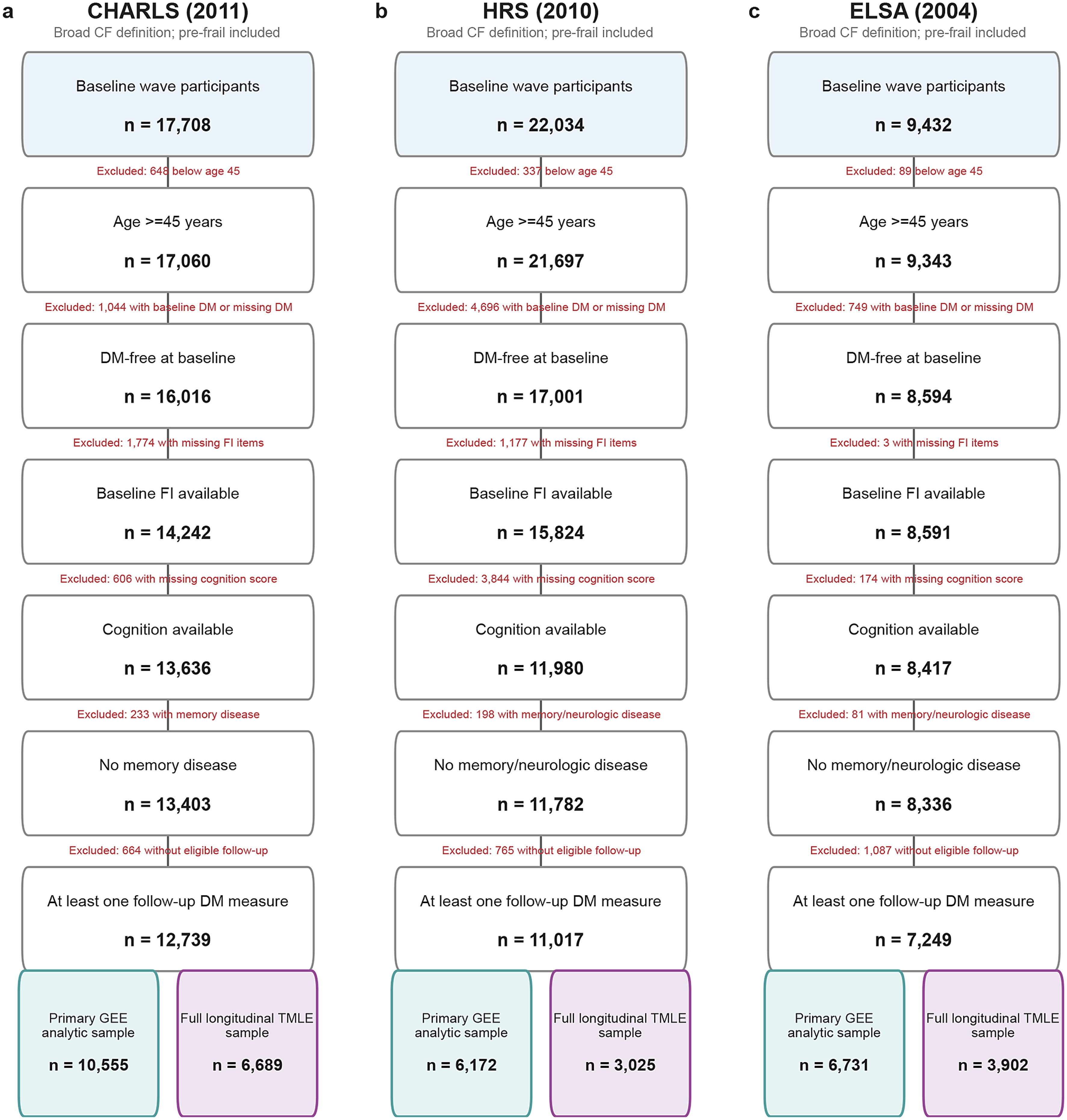
In a multinational study of 23,458 adults aged 45 years and older without baseline diabetes from CHARLS, HRS, and ELSA, researchers tracked cognitive frailty transitions across repeated assessments. Pooled adjusted models showed that favourable dynamics were associated with lower odds of next-wave diabetes compared with unfavourable dynamics (OR 0.66, 95% CI 0.59–0.74). In a three-category analysis, recovery was linked to lower odds of diabetes than persistent vulnerability or worsening (OR 0.79, 95% CI 0.66–0.95), but higher odds than persistent normality in a four-category analysis (OR 1.30, 95% CI 1.06–1.58). Targeted maximum likelihood estimation in 13,616 adults estimated cumulative diabetes risks of 11.8% under hypothetical sustained favourable patterns versus 18.1% under sustained unfavourable patterns (risk difference -6.2 percentage points).
Why it matters
Cognitive frailty reflects concurrent cognitive and physical vulnerability during aging. Tracking its trajectories over time may help identify individuals who could benefit from intensified diabetes prevention efforts.
Caveats
The findings rely on observational cohort data and modeled hypothetical patterns, which cannot establish a causal link. The authors emphasize that the observed associations require cautious interpretation and validation through intervention studies.
The paper
Show 3 more authors
Wendie Zhou, Jiaqi Yu, Xuan Yang,Peking University
Diabetes Research and Clinical Practice · 4 Oct 2026