Diabetes and low muscle mass concentrate vertebral fractures
In older adults, having both type 2 diabetes and low muscle mass had a vertebral fracture prevalence ratio of 3.63 versus neither condition.
Frontiers in Public Health
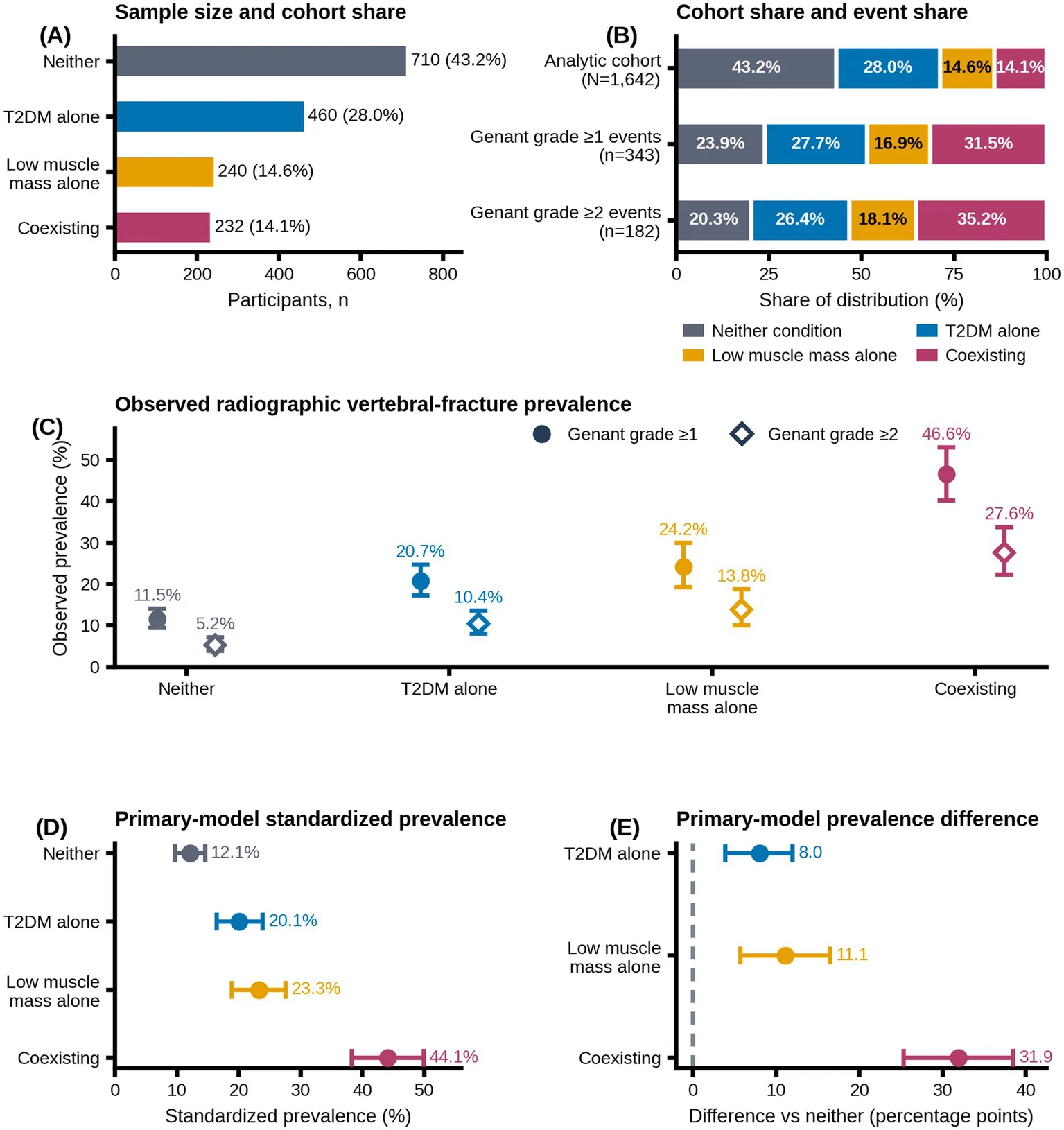
A cross-sectional study examined 1,642 community-dwelling adults aged 65 years or older in Changchun, China, to evaluate how type 2 diabetes and dual-energy X-ray absorptiometry (DXA)-defined low muscle mass relate to prevalent radiographic vertebral fractures. Participants were classified into four groups: neither condition, diabetes alone, low muscle mass alone, or both conditions.
Overall, 343 participants (20.9%) had a radiographic vertebral fracture. The coexisting phenotype represented 14.1% of the cohort but accounted for 31.5% of all fracture events. Observed fracture prevalence was 11.5% for neither condition, 20.7% for diabetes alone, 24.2% for low muscle mass alone, and 46.6% for both. After adjusting for age, sex, body mass index, and smoking, the prevalence ratio for individuals with both conditions was 3.63 (95% CI, 2.81–4.68) compared to those with neither.
Why it matters
Aging frequently involves concurrent muscle loss and metabolic dysfunction. These findings demonstrate that the convergence of type 2 diabetes and low muscle mass identifies an older subgroup that harbors a disproportionate burden of skeletal fragility.
Caveats
The study's cross-sectional design cannot establish causality, future fracture prediction, or screening utility. In addition, recruitment relied on nonprobability sampling within a single geographical area in Northeast China.
The paper
Changchun University of Chinese Medicine
Frontiers in Public Health · 16 Sep 2026