Early cognitive frailty is reversible in rural older adults
In older adults with reversible cognitive frailty, recovery intensity to cognitive impairment alone was 0.429 versus 0.224 for deterioration to potentially reversible cognitive frailty.
BMC Geriatrics
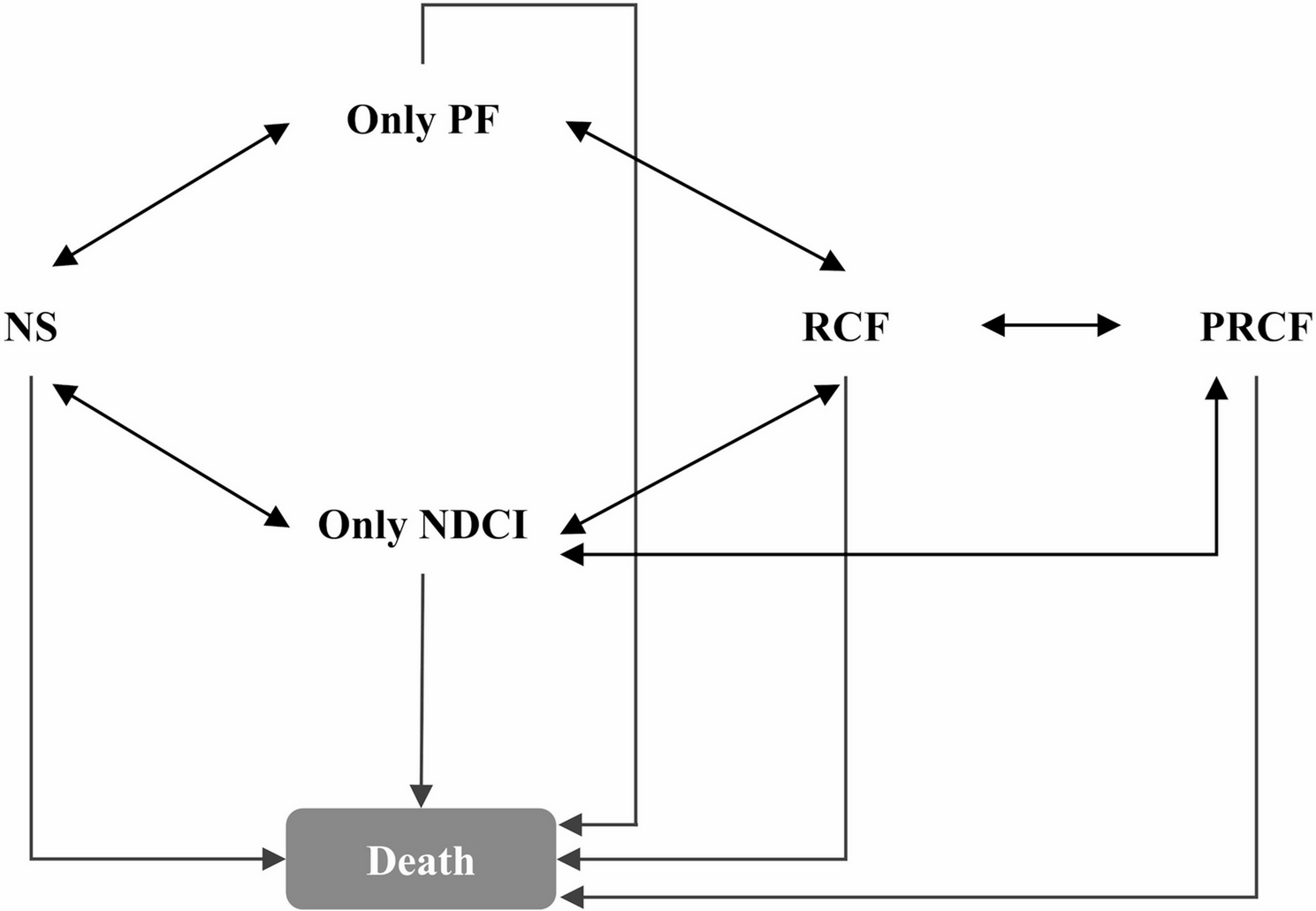
Researchers analyzed 3,243 rural older adults from the China Health and Retirement Longitudinal Study across survey waves in 2011, 2013, and 2015. They mapped transitions between six states: normal condition, physical frailty alone, non-dementia cognitive impairment alone, reversible cognitive frailty, potentially reversible cognitive frailty, and death. Across 4,146 total transitions, participants with reversible cognitive frailty recovered more frequently than they deteriorated. The transition intensity of recovery to cognitive impairment alone reached 0.429 and to physical frailty alone reached 0.291, both exceeding the 0.224 intensity of worsening to potentially reversible cognitive frailty. In contrast, potentially reversible cognitive frailty had the lowest recovery likelihood and the highest transition intensity to death at 0.048. Predictive factors linked to transitions included age, sex, education, physical activity, depressive symptoms, possible sarcopenia, and social participation.
Why it matters
Cognitive frailty marks a high-risk precursor to severe neurodegeneration and physical decline in aging populations. Demonstrating that early cognitive frailty frequently transitions back to single-domain deficits confirms a critical clinical window where interventions might halt progression toward death or permanent disability.
Caveats
The study is observational and restricted to rural Chinese older adults followed across a four-year timeframe, so the transition dynamics may not generalize to urban or non-Chinese populations.
The paper
Sun Yat-sen University
BMC Geriatrics · 3 Oct 2026 · CC BY-NC-ND