COVID-19 tied to higher dementia risk in older adults with diabetes
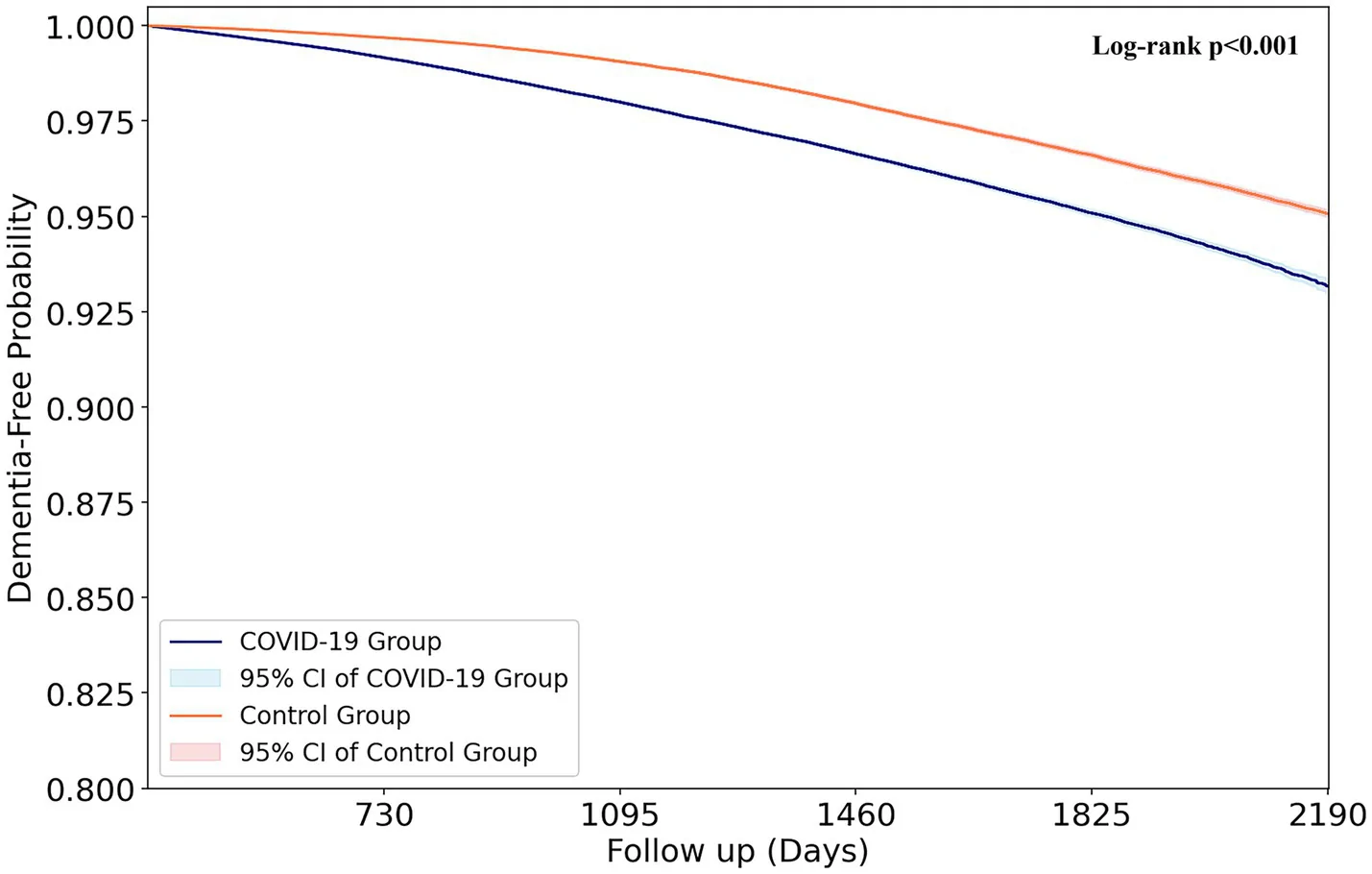
Among patients aged 65 and older with type 2 diabetes, dementia developed in 3.25% of COVID-19 patients versus 2.75% of matched uninfected controls.
Frontiers in Aging Neuroscience
In a retrospective study of older humans aged 65 years and older with type 2 diabetes, researchers evaluated 449,745 patients with documented COVID-19 and 449,745 propensity score-matched unexposed controls from the TriNetX global health record network. The authors used a one-year landmark design, analyzing only individuals who were alive and free of dementia at day 365, with follow-up extending up to six years.
Documented COVID-19 was associated with a higher risk of incident overall dementia (hazard ratio 1.51). Incident dementia occurred in 3.25% of the COVID-19 group compared to 2.75% of matched controls. COVID-19 patients also showed higher rates of vascular dementia (hazard ratio 1.61), Alzheimer's disease (hazard ratio 1.41), and mild cognitive impairment (hazard ratio 1.66). The relative risk rose across sequential landmarks, reaching a hazard ratio of 2.09 at three years post-infection.
Why it matters
The findings suggest that viral infection can accelerate or trigger long-term neurodegenerative processes in individuals with preexisting metabolic disease. This highlights how systemic infections and metabolic vulnerability may interact to influence late-life brain aging.
Caveats
The study was an observational analysis of electronic health records, which could be subject to unmeasured confounding and diagnostic coding differences. The authors also note that prospective studies with standardized cognitive tests and biological markers are needed to establish underlying mechanisms.
The paper
Chi Mei Medical Center · National Sun Yat-sen University
Frontiers in Aging Neuroscience · 15 Sep 2026