Cardiovascular risk from metabolic burden weakens with age
The hazard ratio for hypertension dropped from 3.60 in adults under 40 to 1.21 in those aged 80 and older over a 4.5-year follow-up.
The Lancet Regional Health Western Pacific
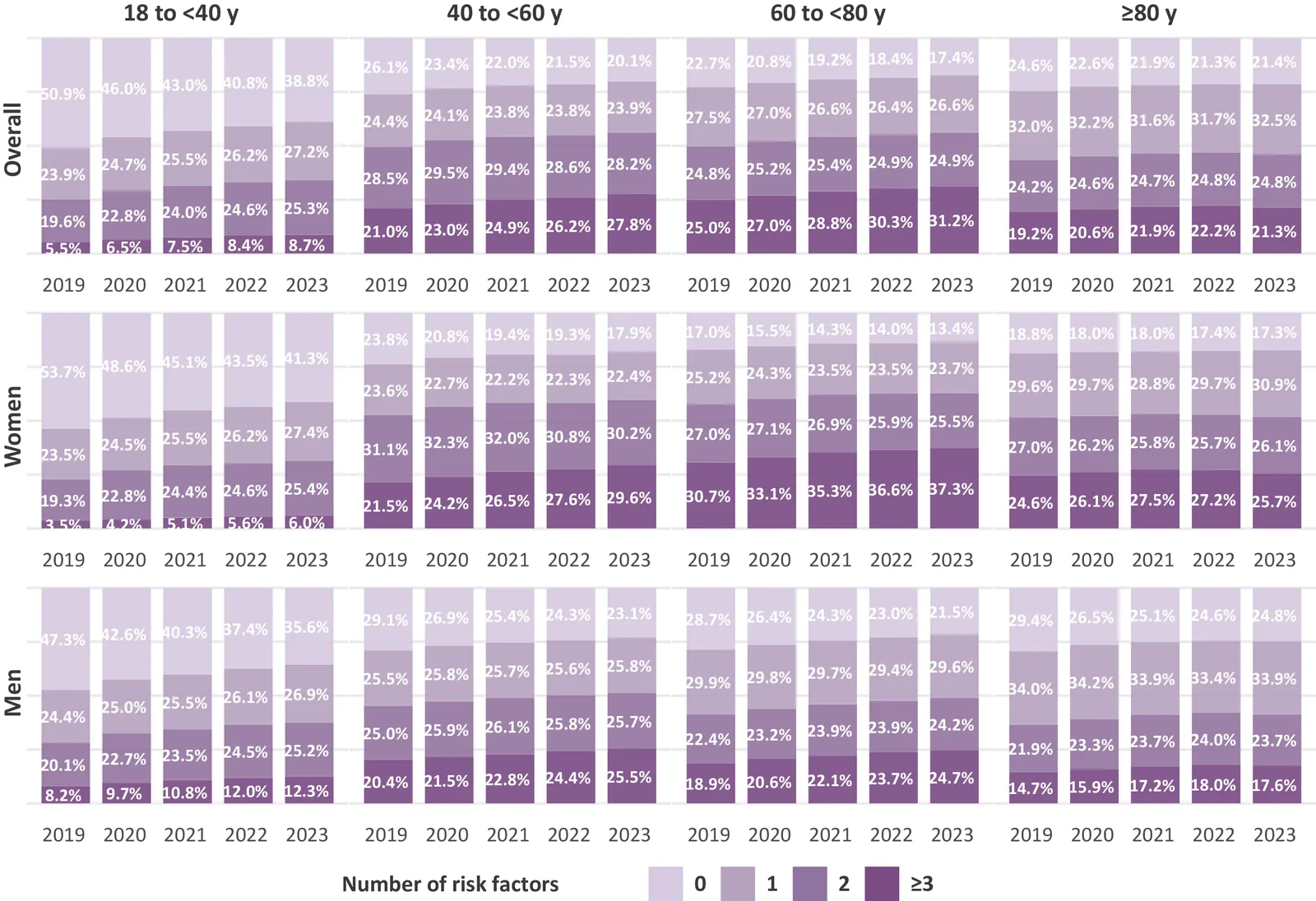
In a prospective cohort of 7,513,828 adults in northwestern China without baseline cardiovascular disease, researchers tracked six metabolic risk factors over a median of 4.5 years. These factors included obesity, hepatic steatosis, hypertension, hyperlipidemia, diabetes, and renal dysfunction across four adult age brackets. Associations between metabolic abnormalities and incident cardiovascular disease were strongest in younger adults and attenuated with advancing age. For hypertension, the hazard ratio declined from 3.60 in people aged 18 to under 40, to 2.12 at ages 40 to under 60, 1.41 at 60 to under 80, and 1.21 in those 80 and older. Obesity accounted for the highest population attributable fraction for cardiovascular disease regardless of age or sex. Moving to a healthier metabolic state within an average of one year was associated with a substantially reduced risk of cardiovascular disease, especially in younger participants.
Why it matters
The findings show that cardiovascular susceptibility to metabolic dysfunction shifts across the adult lifespan, with metabolic insults having a greater relative cardiovascular impact earlier in adulthood.
Caveats
The observational design cannot establish causality, and the cohort was restricted to a single regional population followed for a median duration of 4.5 years.
The paper
Show 12 more authors
Meng-Yuan Miao, Li‐Qiang Qin, Haipeng Wang, Zhongxiao Wan, Qi Huang, Jing Tao, Yuqing Yang, Yuqing Yang, Qian Di, Yining Yang, Yining Yang, Kuiying Gu,Soochow University
The Lancet Regional Health Western Pacific · 19 Sep 2026