High HbA1c-to-HDL-C ratio linked to CVD risk in older adults
Older adults in the highest ratio quartile had a higher risk of incident cardiovascular disease than those in the lowest (HR = 2.111) over five years.
Frontiers in Public Health
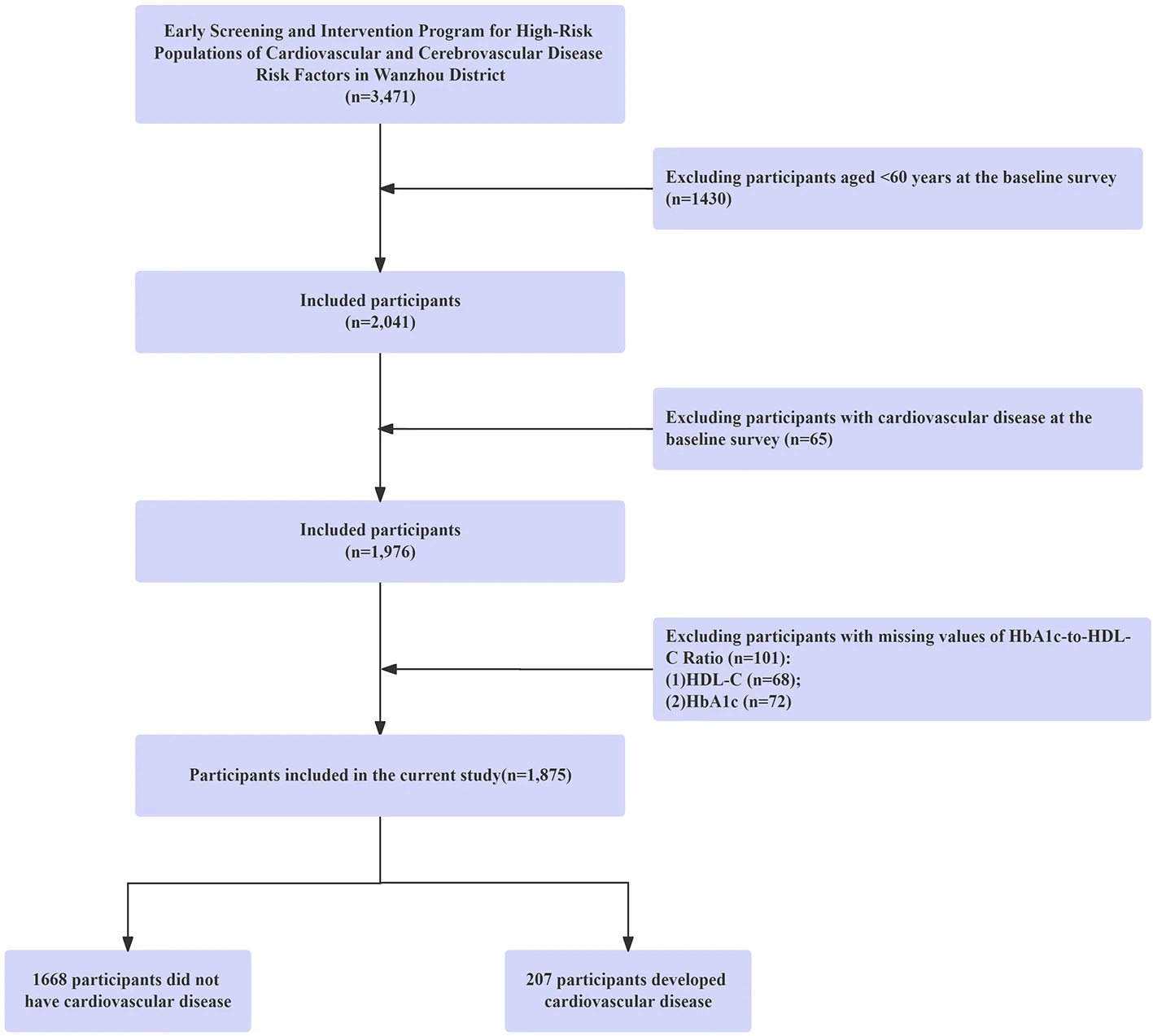
A prospective cohort study followed 1,875 community-dwelling adults aged 60 and older without baseline cardiovascular disease in southwestern China for a median of 5.08 years. Researchers calculated the ratio of glycated hemoglobin to high-density lipoprotein cholesterol from baseline blood tests in 2017 and tracked new cardiovascular events through 2024.
During follow-up, 207 participants developed cardiovascular disease. After adjusting for confounding factors including diabetes and dyslipidemia, participants in the highest ratio quartile faced an elevated risk compared to the lowest quartile (HR = 2.111). Restricted cubic spline analysis showed a nonlinear relationship with an inflection point at a ratio of 4.83. Below 4.83, each one-unit increase raised disease risk by 44.10% (HR = 1.441). Adding the ratio to conventional risk factors improved model discrimination, increasing the C-statistic from 0.777 to 0.795.
Why it matters
The HbA1c-to-HDL-C ratio reflects combined glucose and lipid dysregulation in a single, accessible measure. Combining these markers could provide a simple tool for cardiovascular risk stratification as metabolic function declines with age.
Caveats
The study was conducted in a single regional cohort in China, and ascertainment of conditions like angina pectoris relied solely on self-reported data. In addition, the linear trend across quartiles was only borderline significant, warranting confirmation in larger studies.
The paper
Wanzhou District Center for Disease Control and Prevention · Chongqing University
Frontiers in Public Health · 17 Sep 2026