Metabolic signature links frailty to coronary artery disease
A 36-metabolite signature mediated an estimated 18.5% of the association between frailty and incident coronary artery disease over a median 14.8-year follow-up.
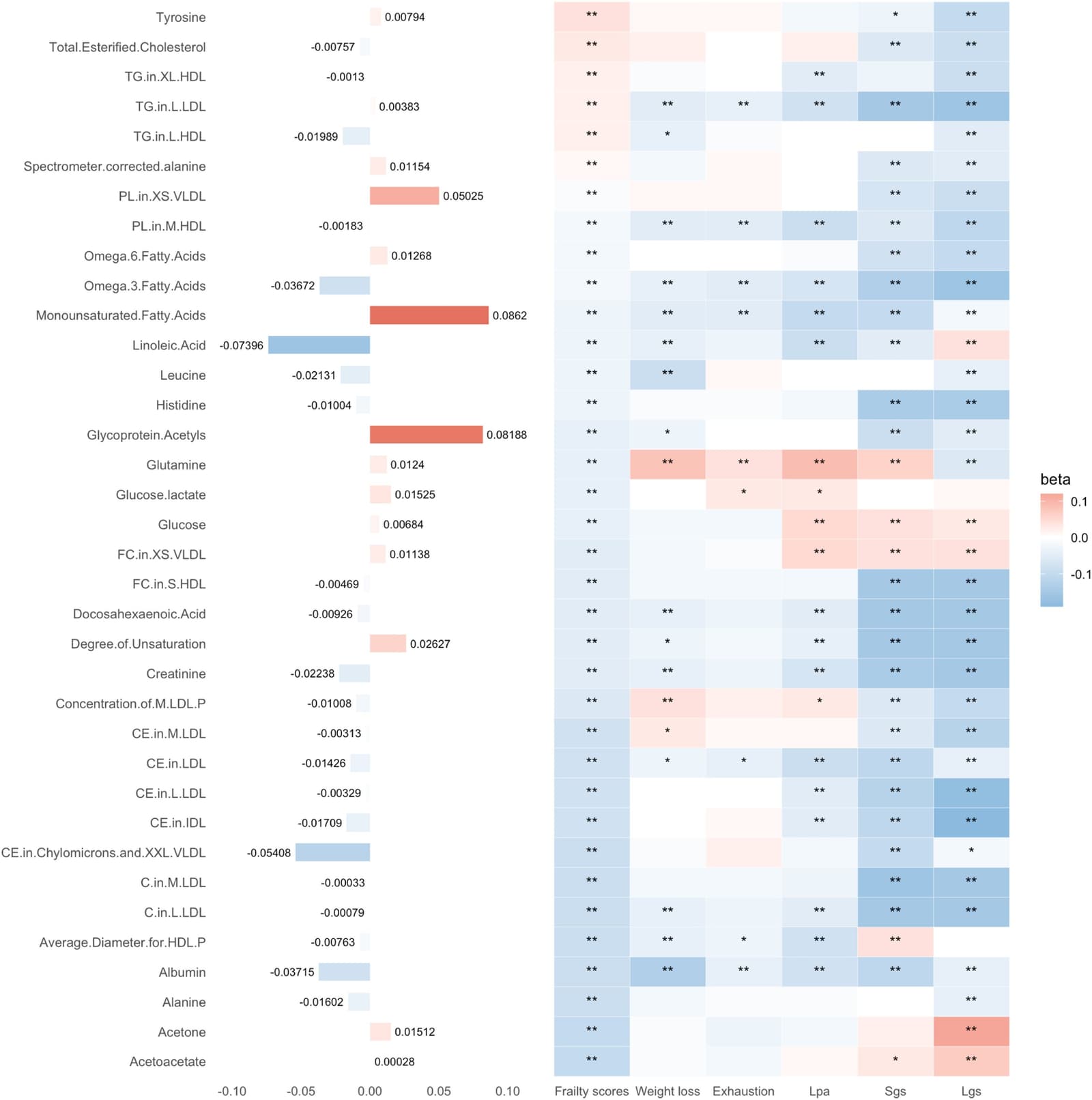
In 223,907 UK Biobank participants free of coronary artery disease at baseline, researchers tracked cardiovascular outcomes over a median of 14.8 years, recording 17,551 disease events. Frailty was associated with a higher risk of coronary artery disease, showing a hazard ratio of 1.78. From nuclear magnetic resonance metabolomics in 122,959 participants, the team identified frailty-related metabolites and built a 36-metabolite signature. This signature accounted for an estimated 18.5% mediation proportion in the association between frailty and coronary artery disease. The signature's association with heart disease varied across polygenic risk strata, and participants with both a high polygenic risk score and high signature levels showed the highest joint risk, with a hazard ratio of 3.48.
Why it matters
The findings suggest that circulating metabolic changes partly explain how physical frailty connects to cardiovascular risk. Integrating metabolic markers with genetic data may clarify how systemic biological decline contributes to age-related vascular disease.
Caveats
The study is observational and cannot prove that the metabolic changes cause the increased risk of coronary artery disease. Furthermore, metabolomic data were available for only a subset of the total cohort.
The paper
Frailty-Related Metabolic Signature in the Association Between Frailty and Coronary Artery Disease: Modification by Genetic Susceptibility
Liu J, Du H, Tang J et al.
The Journal of Nutrition, Health & Aging · 3 Oct 2026