Graphical abstract
Graphical abstractFrom American Journal of Preventive Cardiology
Humans

Carotid thickness partly mediates cardiovascular health benefits

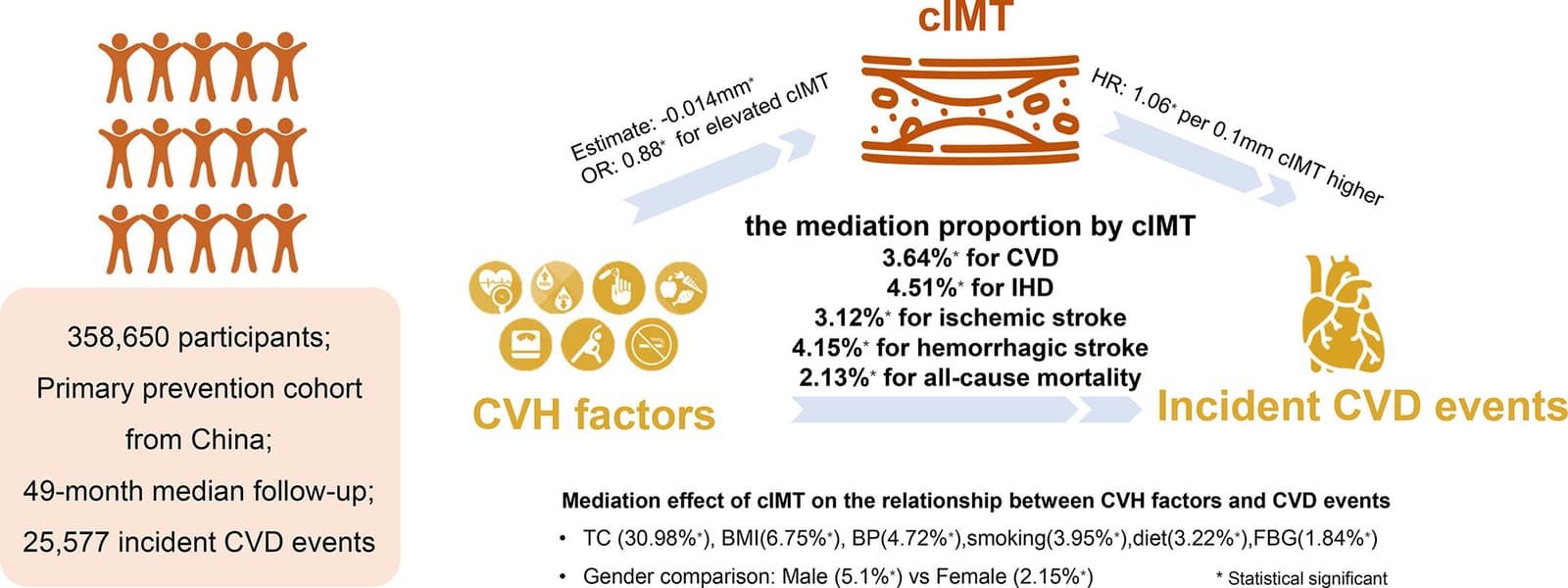
Carotid intima-media thickness mediated 3.64% of the link between cardiovascular health metrics and disease events in 358,650 adults.

American Journal of Preventive Cardiology

A study evaluated 358,650 adults aged 35 to 75 years without baseline cardiovascular disease from a national cohort in China. Researchers tracked cardiovascular health using Life's Simple 7 metrics to evaluate its relationship with carotid intima-media thickness and new-onset cardiovascular events. Participants in the highest quartile of cardiovascular health had a 0.014 mm lower mean-max carotid intima-media thickness and a 12% lower risk of elevated thickness compared to those in the lowest quartile. Each 0.1 mm increase in mean-max thickness was linked to a 6% higher risk of cardiovascular events. Mediation analysis showed that carotid wall thickness accounted for 3.64% of the overall relationship between cardiovascular health and incident disease, with stronger mediation observed in male participants.

Why it matters

Arterial wall thickening reflects structural vascular aging and preclinical damage. Determining how much arterial remodeling mediates disease outcomes helps clarify the structural pathways through which lifestyle and metabolic factors influence cardiovascular aging.

Caveats

The observational design prevents establishing causal relationships. Findings from this Chinese cohort may also not generalize to populations of different ancestral or geographic backgrounds.

The paper

Association between cardiovascular health factors, carotid intima-media thickness and cardiovascular outcomes in primary prevention population for cardiovascular disease

Wu C, Zhang X, Bai X et al.

American Journal of Preventive Cardiology · 6 Mar 2026
bioRxivAnimalsPreprint

Hypothalamic tau impairs pair bonding in male prairie voles

Expressing mutant tau in the paraventricular hypothalamus stopped 18-month-old male prairie voles from forming selective bonds and altered their…Expressing mutant tau in the paraventricular hypothalamus stopped 18-month-old male prairie voles from forming selective bonds and altered their oxytocin signaling. In monogamous prairie voles, expressing dementia-linked tau P301L in the hypothalamus disrupts selective social bonds…

Neurology Open AccessHumans

Epigenetic age links to higher dementia risk in older adults

In 2,606 participants, higher DunedinPACE was associated with increased risks of mild cognitive impairment (hazard ratio 1.16) and all-cause dementia…In 2,606 participants, higher DunedinPACE was associated with increased risks of mild cognitive impairment (hazard ratio 1.16) and all-cause dementia (hazard ratio 1.30). In 2,606 Framingham Heart Study Offspring cohort participants (mean age 66 years), researchers examined how three DNA…

Frontiers in NutritionHumans

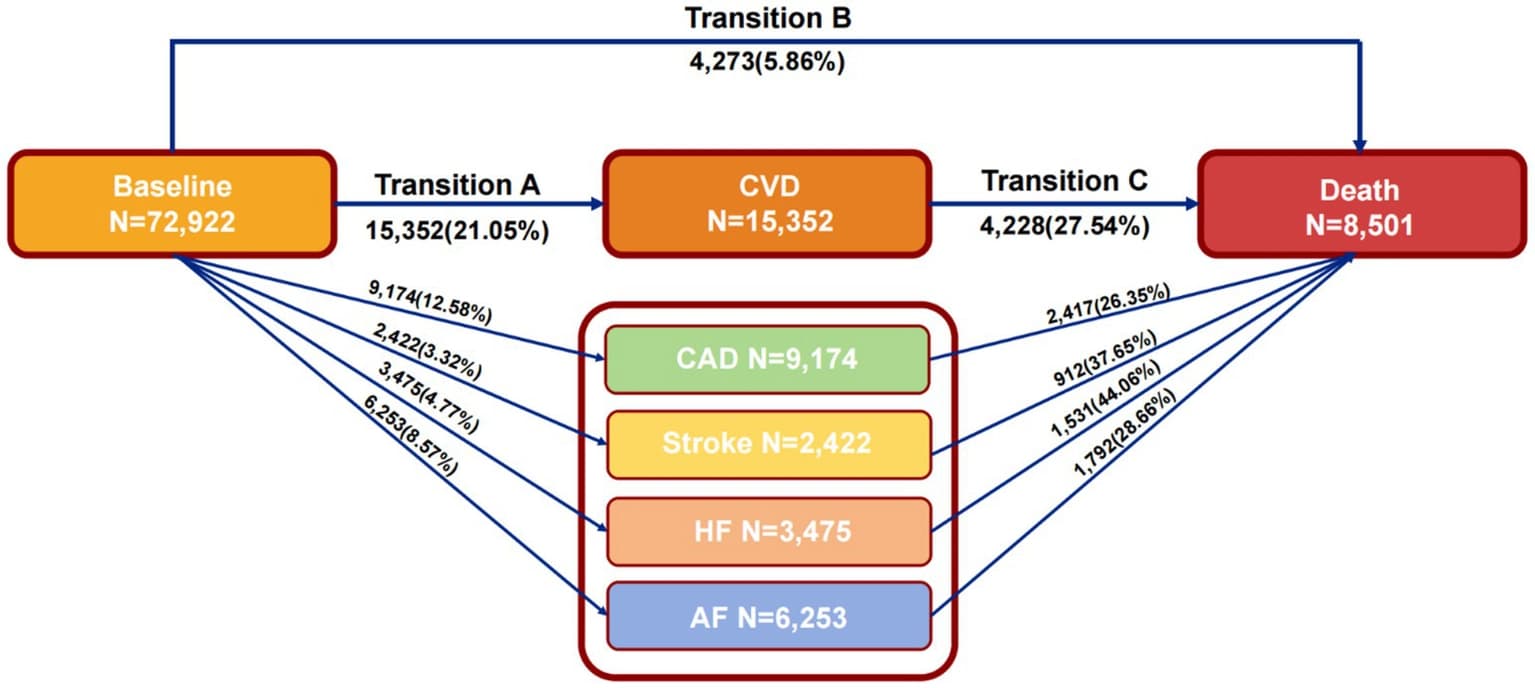
Cardiometabolic burden increases CVD and death risk in MASLD

In 72,922 adults with MASLD, each additional cardiometabolic risk factor raised hazard ratios for incident CVD to 1.17 and subsequent death to 1.13.In 72,922 adults with MASLD, each additional cardiometabolic risk factor raised hazard ratios for incident CVD to 1.17 and subsequent death to 1.13. A prospective cohort study tracked 72,922 UK adults with metabolic dysfunction-associated steatotic liver disease over a median follow-up of…

Figure 1
Frontiers in PhysiologyHuman trial

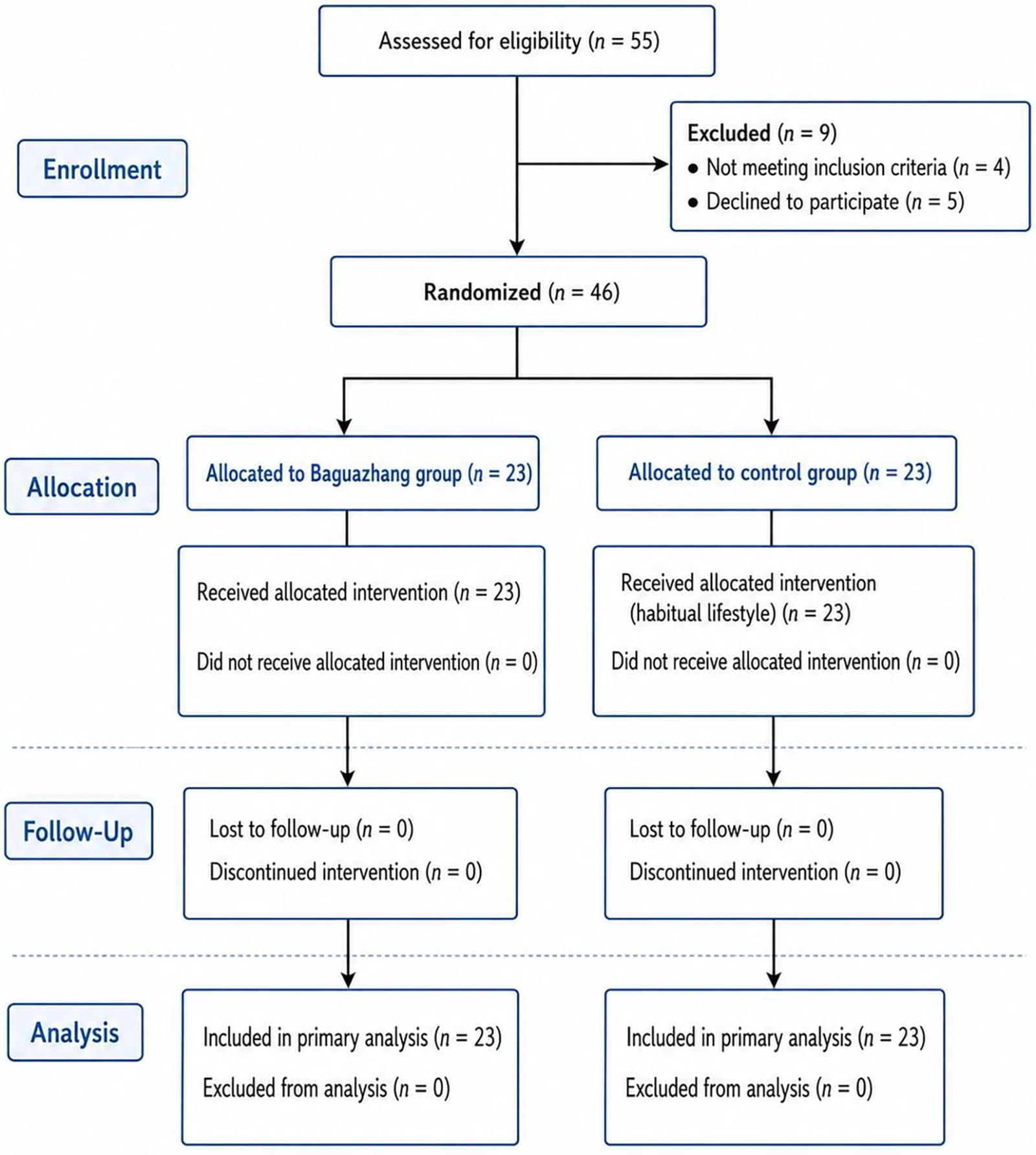
Baguazhang lowers systolic blood pressure in postmenopausal women

In a randomized trial, 12 weeks of the mind-body exercise lowered systolic blood pressure by 7.2 mmHg compared with habitual lifestyle.In a randomized trial, 12 weeks of the mind-body exercise lowered systolic blood pressure by 7.2 mmHg compared with habitual lifestyle. Forty-six sedentary postmenopausal women enrolled in a 12-week randomized controlled trial evaluating Baguazhang, a traditional Chinese mind-body…

Figure 1