Figure 1
Figure 1From Frontiers in Nutrition
Humans

Cardiometabolic burden increases CVD and death risk in MASLD

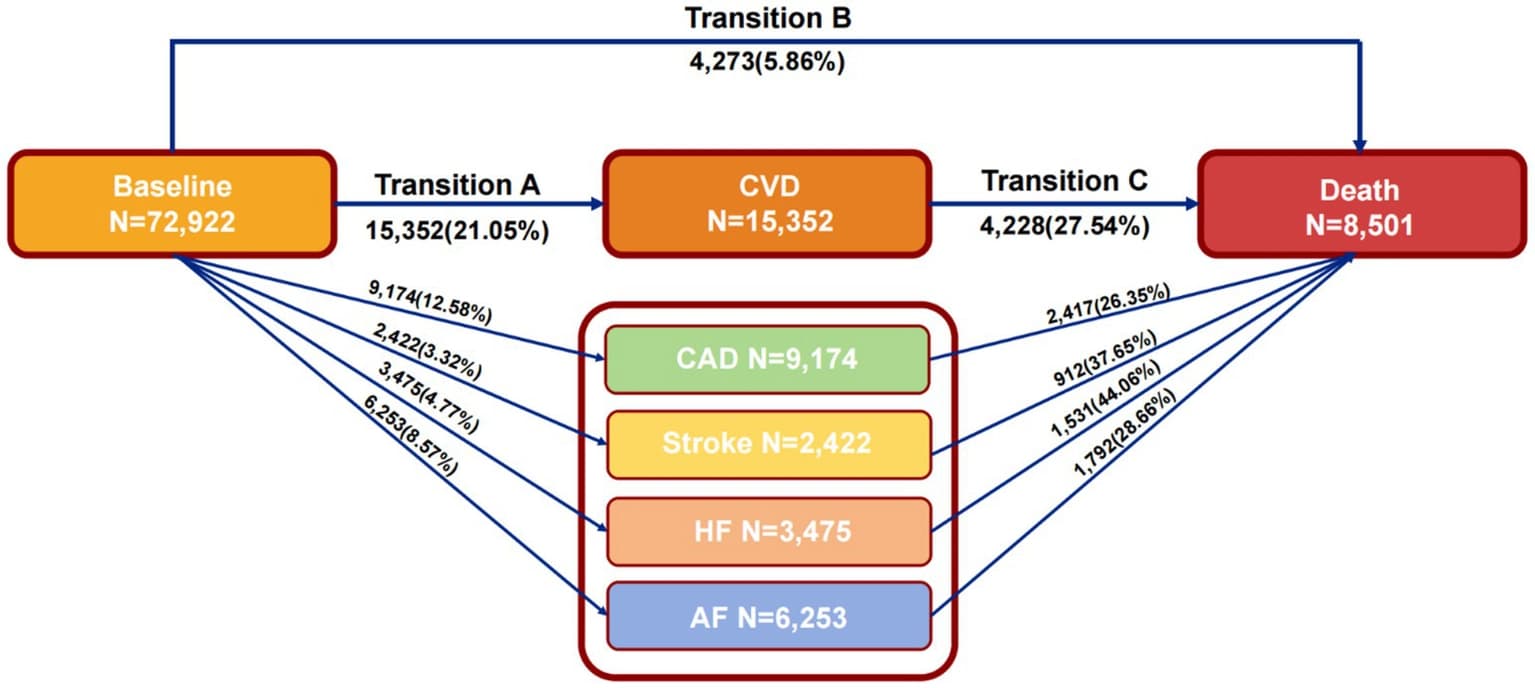
In 72,922 adults with MASLD, each additional cardiometabolic risk factor raised hazard ratios for incident CVD to 1.17 and subsequent death to 1.13.

Frontiers in Nutrition

A prospective cohort study tracked 72,922 UK adults with metabolic dysfunction-associated steatotic liver disease over a median follow-up of 15.9 years. Researchers assessed cardiometabolic burden using risk factor counts and a weighted score, modeling transitions to incident cardiovascular disease (CVD), death without CVD, and death after CVD.

During follow-up, 15,352 participants developed CVD, 4,273 died without CVD, and 4,228 died after CVD. Each additional risk factor increased risks of incident CVD (HR 1.17), death without CVD (HR 1.09), and death after CVD (HR 1.13). Associations were more pronounced in participants under 60 years. Circulating inflammatory markers mediated under 3% of the associations, whereas smoking and drinking status showed larger contributions.

Why it matters

The findings highlight how accumulating metabolic dysfunction accelerates vascular disease and mortality trajectories, especially earlier in adulthood. Mapping discrete transition states clarifies how metabolic pathology compounds across chronological age to erode overall healthspan.

Caveats

Because this study is observational, it cannot establish direct causation between cardiometabolic risk factors and disease transitions. The findings are also based solely on a cohort of UK adults, which may limit generalizability to other populations.

The paper

Associations of cardiometabolic burden with cardiovascular disease-death transitions in metabolic dysfunction-associated steatotic liver disease: a prospective cohort study using multistate analysis

Cui C, Zhao Y, Zhang G et al.

Frontiers in Nutrition · 18 Sep 2026
bioRxivAnimalsPreprint

Hypothalamic tau impairs pair bonding in male prairie voles

Expressing mutant tau in the paraventricular hypothalamus stopped 18-month-old male prairie voles from forming selective bonds and altered their…Expressing mutant tau in the paraventricular hypothalamus stopped 18-month-old male prairie voles from forming selective bonds and altered their oxytocin signaling. In monogamous prairie voles, expressing dementia-linked tau P301L in the hypothalamus disrupts selective social bonds…

Neurology Open AccessHumans

Epigenetic age links to higher dementia risk in older adults

In 2,606 participants, higher DunedinPACE was associated with increased risks of mild cognitive impairment (hazard ratio 1.16) and all-cause dementia…In 2,606 participants, higher DunedinPACE was associated with increased risks of mild cognitive impairment (hazard ratio 1.16) and all-cause dementia (hazard ratio 1.30). In 2,606 Framingham Heart Study Offspring cohort participants (mean age 66 years), researchers examined how three DNA…

Frontiers in PhysiologyHuman trial

Baguazhang lowers systolic blood pressure in postmenopausal women

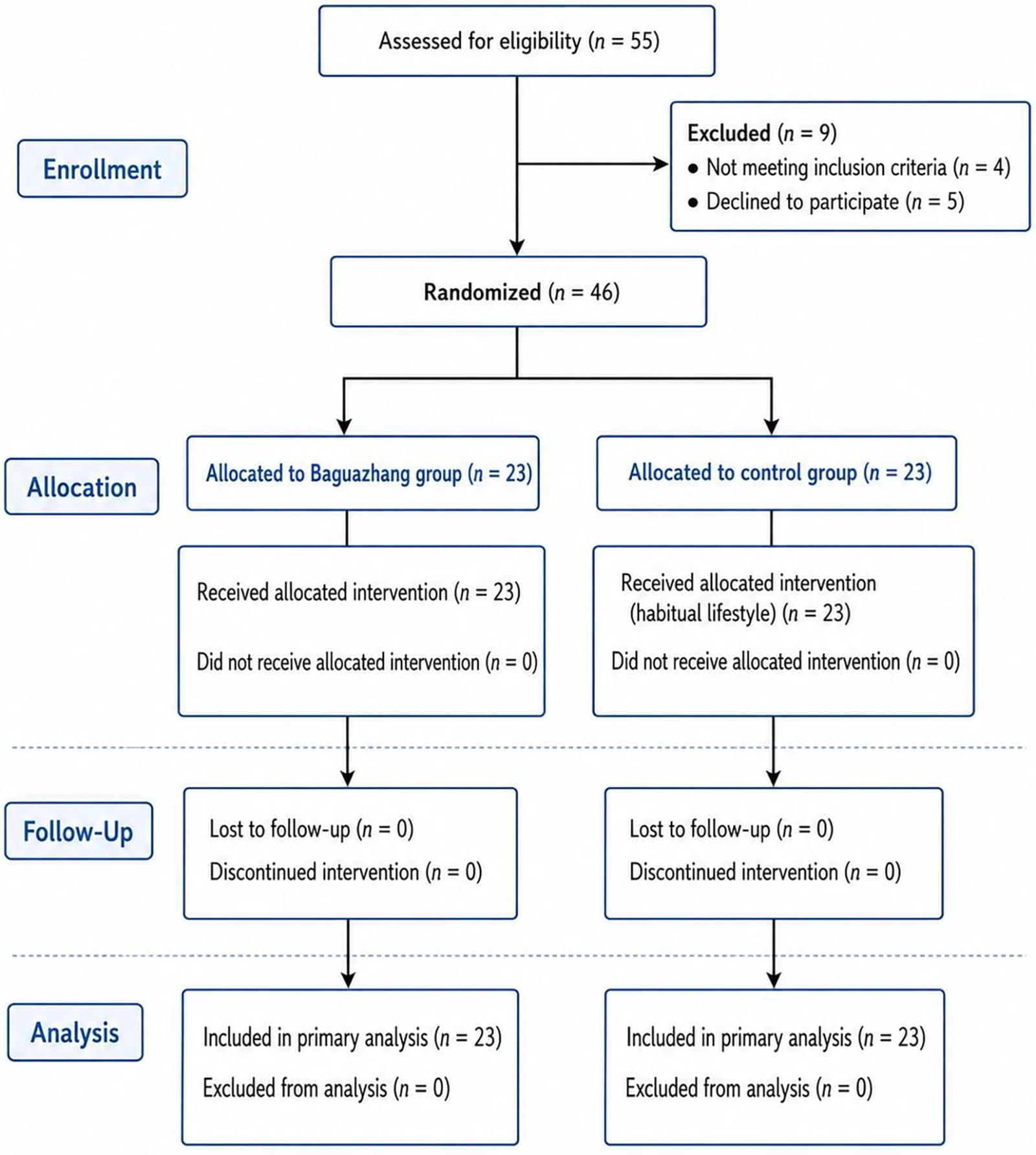
In a randomized trial, 12 weeks of the mind-body exercise lowered systolic blood pressure by 7.2 mmHg compared with habitual lifestyle.In a randomized trial, 12 weeks of the mind-body exercise lowered systolic blood pressure by 7.2 mmHg compared with habitual lifestyle. Forty-six sedentary postmenopausal women enrolled in a 12-week randomized controlled trial evaluating Baguazhang, a traditional Chinese mind-body…

Figure 1
Cerebral Circulation - Cognition and BehaviorHumans

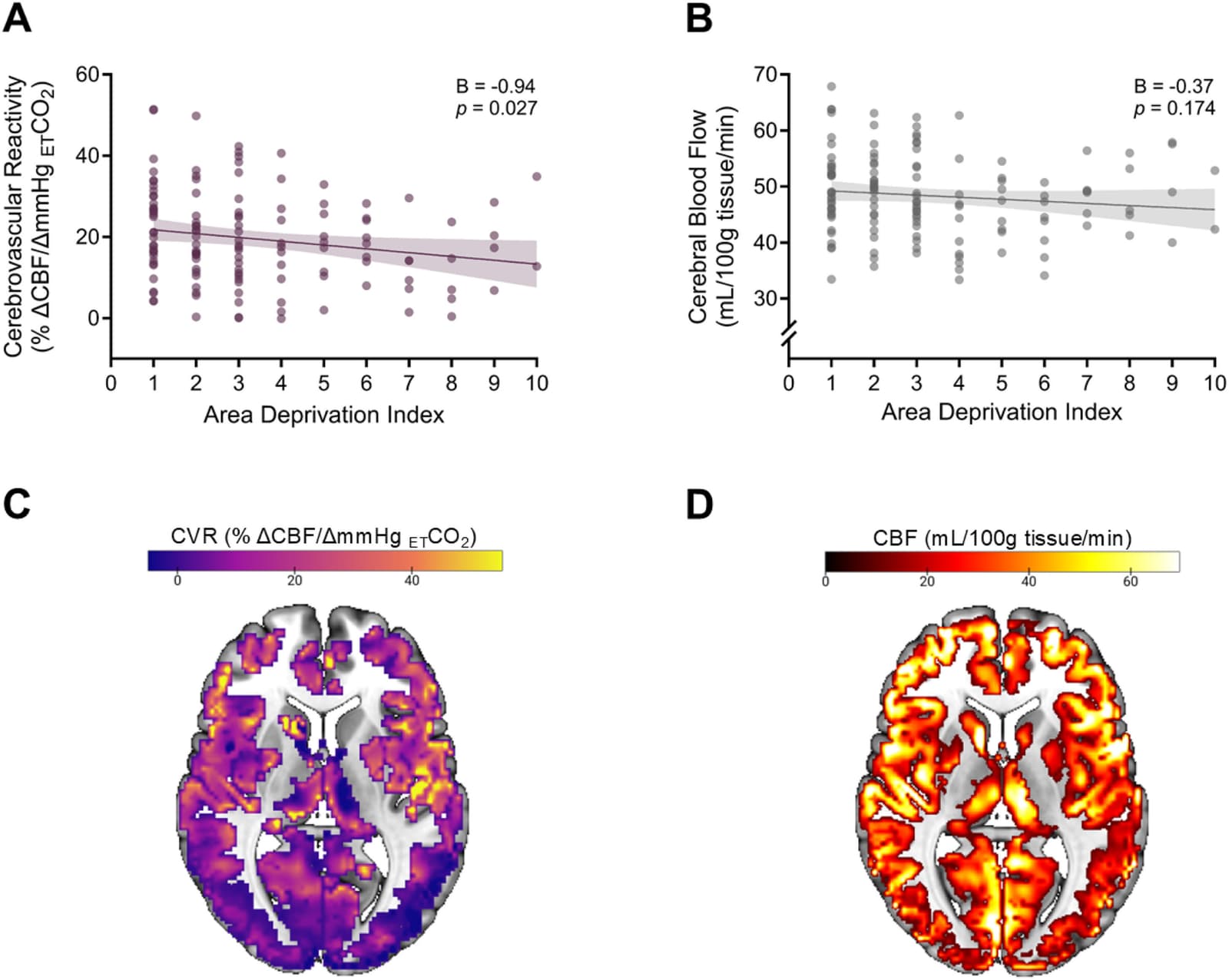
Disadvantaged neighborhoods tie to lower brain vascular function

In 132 older adults, greater neighborhood deprivation was associated with lower whole-brain cerebrovascular reactivity, independent of traditional…In 132 older adults, greater neighborhood deprivation was associated with lower whole-brain cerebrovascular reactivity, independent of traditional vascular risks and Alzheimer's pathology.

Figure 1