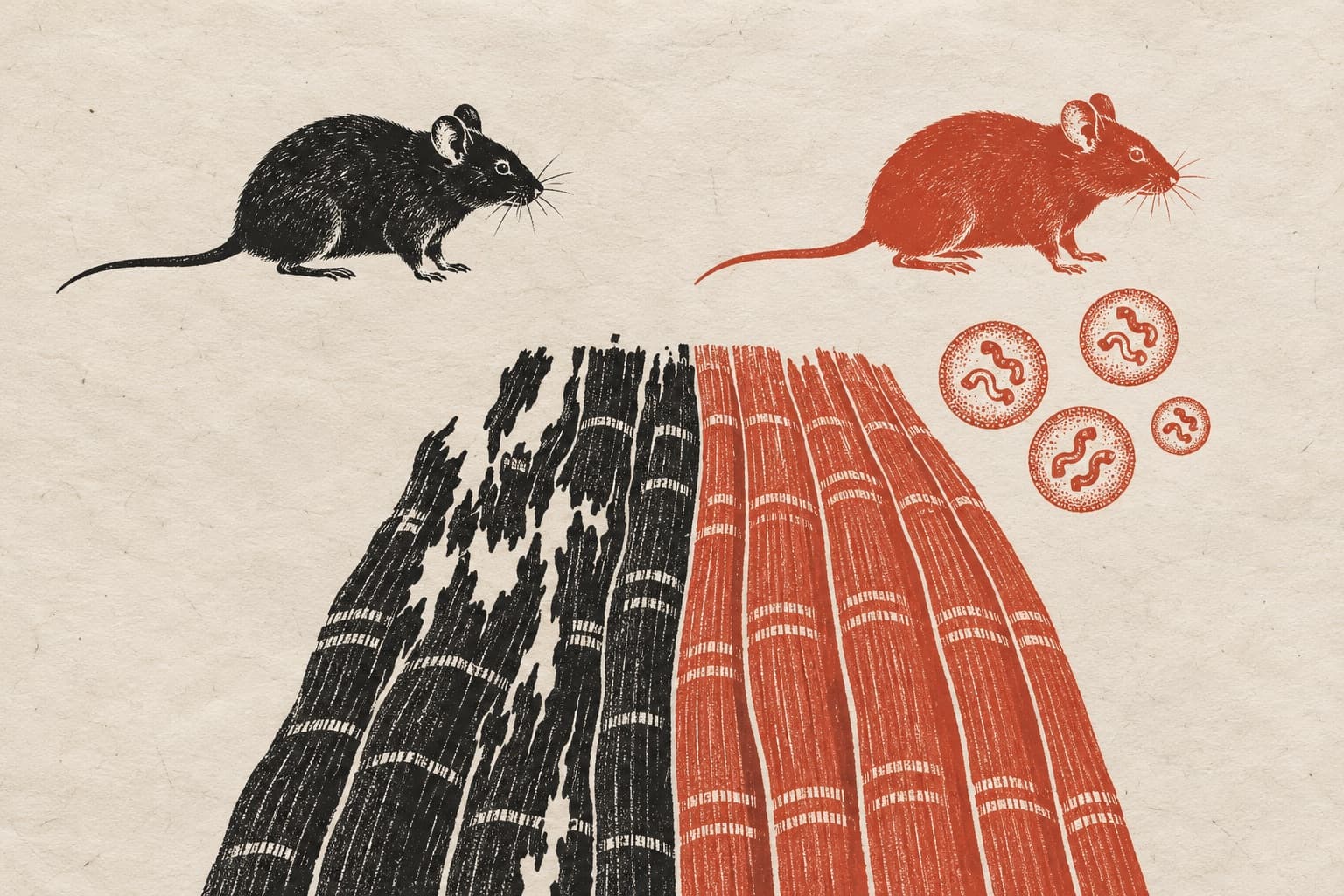
Exercise rejuvenates the "muscle-heart" crosstalk: skeletal muscle-derived exosomal miRNAs in cardiac aging
Abstract
The deleterious intersection of sarcopenia and age-related heart failure represents a profound global health challenge. While skeletal muscle is increasingly recognized as a major endocrine hub, cannot fully account for the persistent epigenetic changes in the aged myocardium. This points to a key mechanistic gap in the "muscle-heart" inter-organ crosstalk. Following PRISMA guidelines, this systematic review (incorporating 51 rigorous in vivo and clinical studies) maps the bimodal skeletal muscle-derived extracellular vesicle (SkM-EV) and microRNA (miRNA) axis in cardiac aging. We delineate a pathological baseline where aging and sarcopenia trigger the release of senescence-associated extracellular vesicles (EVs). These toxic vesicular payloads actively propagate myocardial inflammaging, structural remodeling, and apoptosis. Conversely, regular exercise rejuvenates by this network via an epigenetic mechanism. Mechanical loading stimulates the systemic release of "exerkines"-exercise-conditioned EVs enriched with potent cardioprotective myomiRs (e.g., miR-1, miR-133a, miR-342-5p). By systematically categorizing these findings from single-molecule downstream targets (anti-apoptosis, anti-fibrosis) to macroscopic poly-pathway synergy (antioxidant and metabolic reprogramming), we construct a comprehensive molecular roadmap of EV-mediated myocardial rejuvenation. Ultimately, deciphering this vesicular signaling network will elucidate the fundamental epigenetic mechanisms underlying "exercise as medicine," and paves the way for novel translational horizons. We propose that targeting the bimodal SkM-EV axis will accelerate the development of EV-based liquid biopsies for sarcopenic cardiomyopathy and pioneer cell-free "exercise mimetics" for frail, exercise-intolerant aging populations.
The paper
Shandong University of Aeronautics; Hebei Institute of Communications
Frontiers in Cardiovascular Medicine, 13 Jul 2026, Open access