Extracellular vesicle microRNA promotes muscle regeneration by suppressing AP2M1
Delivering miR-193b-3p improved muscle repair in injured mice and targeted a protein elevated in sarcopenic human tissue.
Molecular Therapy Nucleic Acids
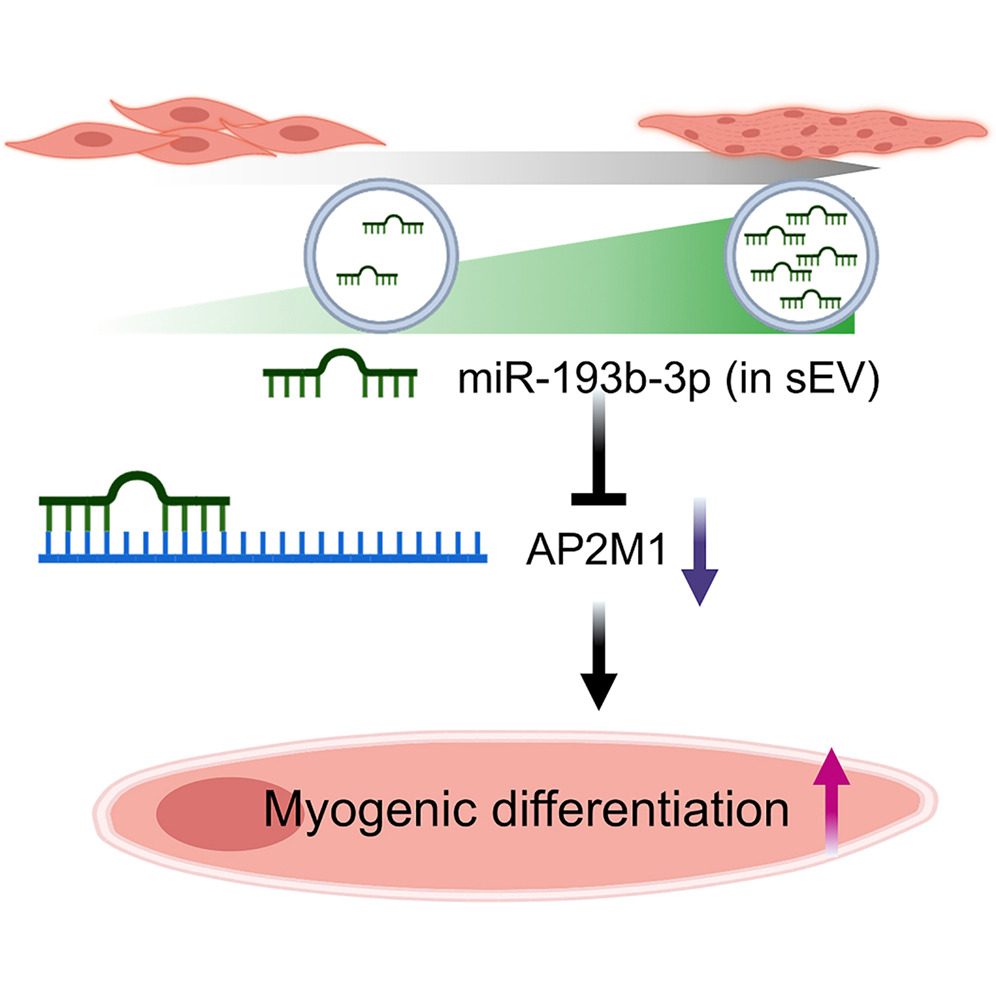
In studies of human myoblasts and mice, researchers investigated how extracellular vesicles guide skeletal muscle repair. The team observed that miR-193b-3p accumulated in small extracellular vesicles during the in vitro differentiation of human skeletal muscle progenitor cells. Delivering this microRNA either synthetically or via vesicles boosted myogenic differentiation in cell culture. In mice with volumetric muscle loss, miR-193b-3p treatment improved histological recovery. Mechanistically, miR-193b-3p suppressed adapter-related protein complex 2 subunit mu 1 (AP2M1), which acts as an inhibitor of muscle progression. Knocking down AP2M1 replicated the benefits of miR-193b-3p. Furthermore, transcriptomic data from aged rodents and sarcopenic humans showed elevated AP2M1 expression in degenerating muscle.
Why it matters
Because AP2M1 is elevated in aged rodents and sarcopenic humans, targeting the miR-193b-3p-AP2M1 axis could offer a strategy to counteract age-related muscle loss.
Caveats
Therapeutic testing in vivo was limited to an acute injury model in mice rather than aged animals. Clinical evidence remains restricted to transcriptomic analyses.
The paper
CHA University
Molecular Therapy Nucleic Acids · 3 Sep 2026