Exercise-primed vesicles enhance cartilage health in aged mice
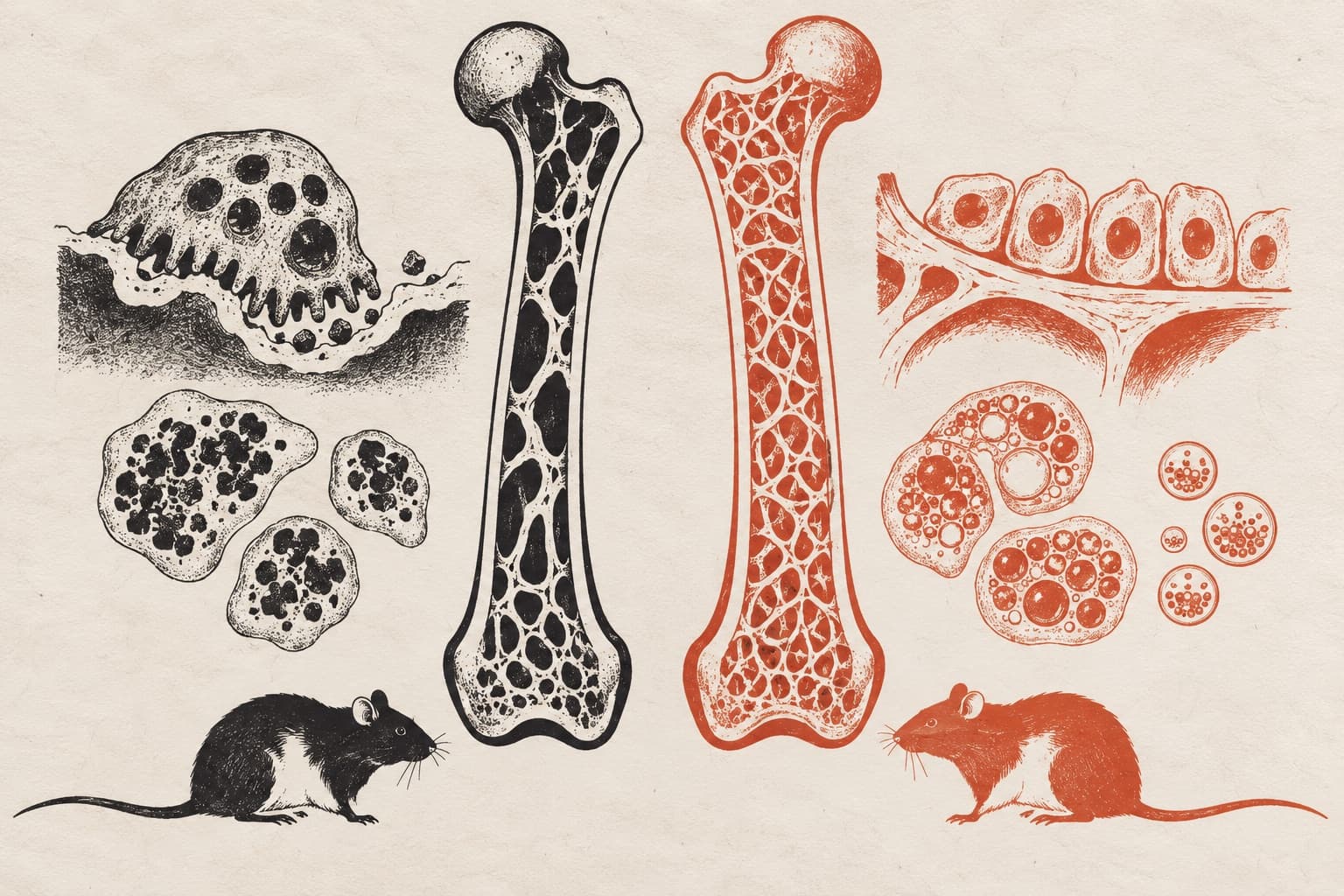
Intra-articular administration of exercise-primed extracellular vesicles enhanced cartilage health in aged mice.
Nature Aging
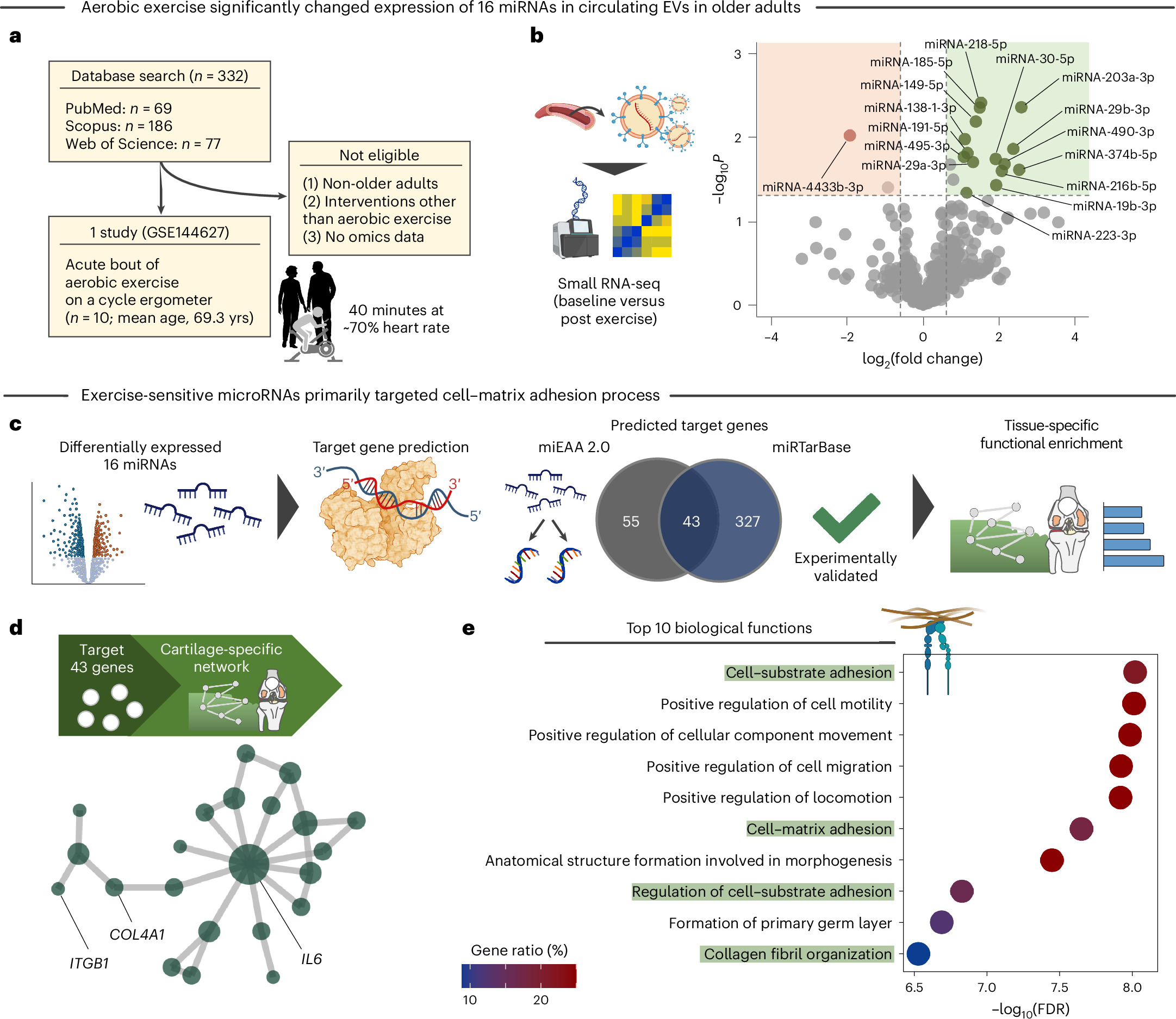
In older adults, a three-month aerobic exercise intervention increased microRNA-29 levels in extracellular vesicles relative to baseline. Network propagation of microRNA perturbations on a cartilage-specific network had predicted microRNA-29 as an exercise-responsive regulator of cellular aging. In cell culture experiments, exercise-primed extracellular vesicles epigenetically de-repressed the KL gene, which encodes the longevity-associated protein α-Klotho, and restored a more youthful chondrocyte phenotype. Extracellular vesicles engineered to express microRNA-29 recapitulated these anabolic effects in a KL-dependent manner. Finally, intra-articular administration of exercise-primed extracellular vesicles into aged mice enhanced cartilage health, highlighting a pathway by which exercise transmits signals to distal tissues through KL regulation.
Why it matters
The findings suggest a mechanism by which physical activity communicates molecular signals to distant tissues via extracellular vesicles, influencing longevity-associated pathways in joint cartilage.
Caveats
Key mechanistic experiments were conducted in vitro, and the abstract does not report the human participant sample size, exercise parameters, or whether the vesicles administered to mice originated from human or animal donors.
- Exercise-primed extracellular vesicles
- Aerobic exercise
- Epigenetic regulation of gene expression
- Klotho–FGF23 axis
- microRNA-29
- Mice
The paper
Exercise enhances aged chondrocyte health through microRNA-29-enriched extracellular vesicles
Show 5 more authors
Adam Mustapha Khay, Ella D'Amico, Wan-Yee Tang, Renee J. Rogers, John M. Jakicic,Harvard University
Nature Aging · 29 Sep 2026