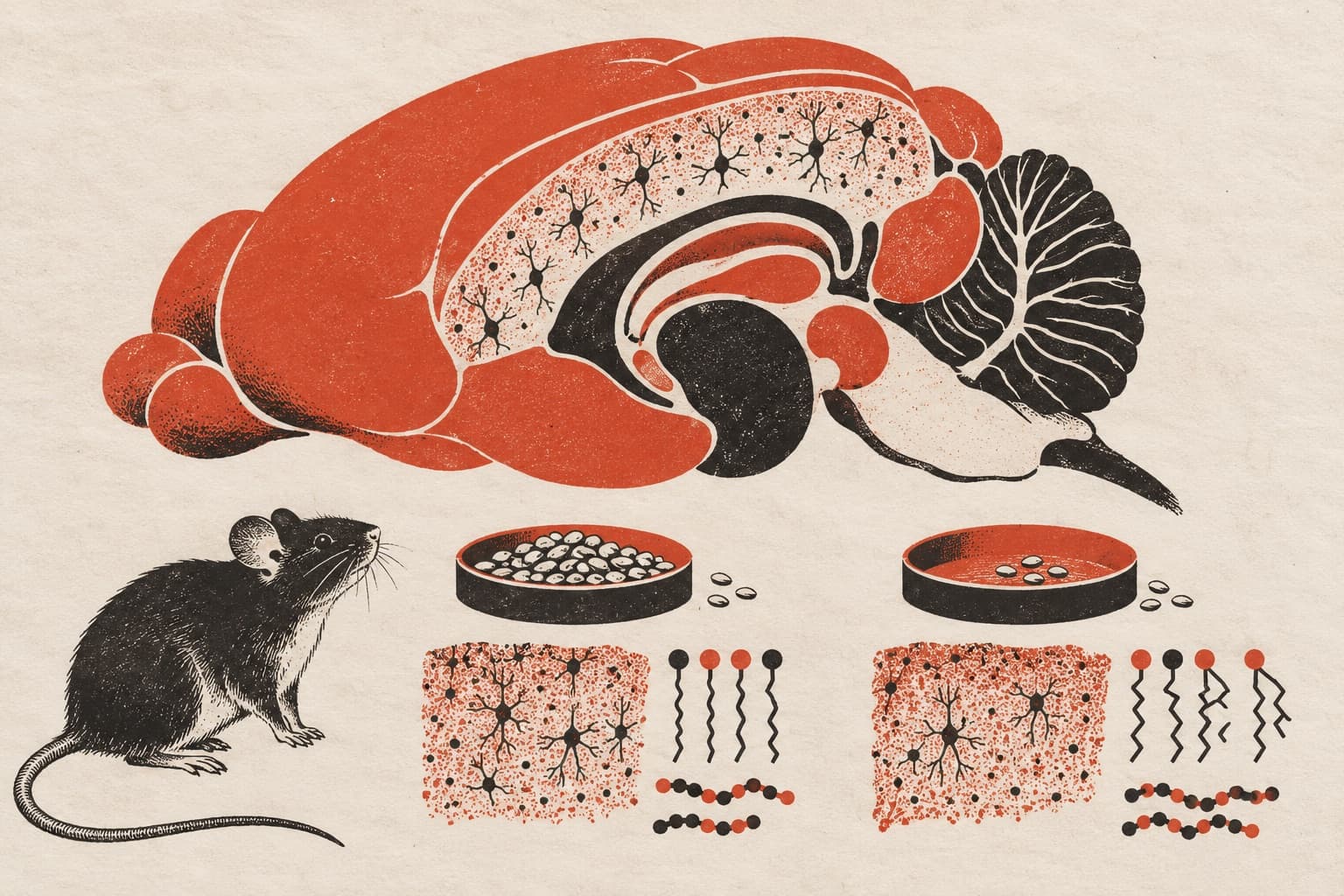
An Ad Libitum-Fed Diet That Matches the Beneficial Lifespan Effects of Caloric Restriction but Acts via Opposite Effects on the Energy-Splicing Axis
Abstract
Caloric restriction (CR) with fasting extends lifespan but is difficult to maintain in humans. Here, we compared conventional CR with periods of fasting to an ad libitum-fed low-protein, high-carbohydrate (LPHC) diet diluted 25% with non-digestible fibre. Both approaches similarly enhanced longevity and metabolic health in mice relative to a control diet. Proteomic analysis of liver tissue revealed that CR increased proteins associated with energy and mitochondrial pathways. By contrast, the LPHC diet reduced these pathways but increased the abundance of proteins associated with RNA metabolism and spliceosome pathways. These results for LPHC support the "energy-splicing resilience" axis theory of ageing. Our results suggest that ad libitum-fed diets can be designed to replicate, and potentially enhance, the geroprotective benefits of CR, albeit via different mechanisms, potentially offering a more sustainable dietary approach to longevity extension.
- Caloric restriction
- Low-protein, high-carbohydrate diet
- Oxidative phosphorylation
- RNA splicing
- Mitochondrion
- Mice
The paper
The University of Sydney
Aging Cell, 21 Oct 2025
doi.org/10.1111/acel.70269PubMed 41116750
Corrected, 8 Mar 2026