Peroxisomal stress drives cellular senescence by relocating SCAF1 to mitochondria
Processed SCAF1 halts mitochondrial ribosome assembly and induces senescence in human cell models following peroxisome import stress.
bioRxiv
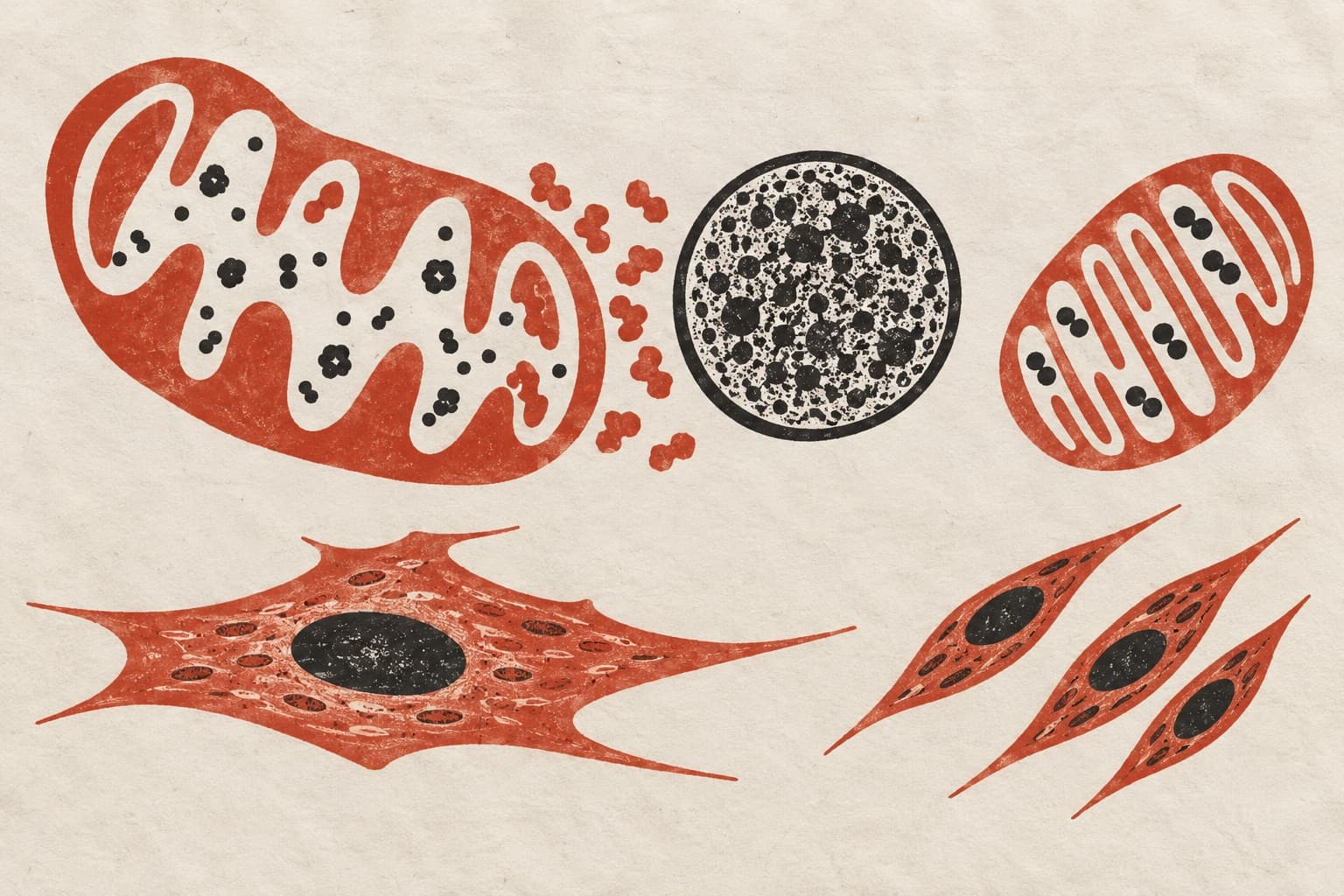
In a preprint using cultured human cells, researchers uncovered a signaling pathway connecting peroxisome stress directly to mitochondrial dysfunction and cellular senescence. The authors performed a genome-wide CRISPR screen in HEK293 cells subjected to peroxisome import stress. They identified SCAF1, a known nuclear pre-mRNA splicing factor, as a critical regulator of mitochondrial homeostasis. Under peroxisomal stress, SCAF1 undergoes proteolytic processing and moves to the mitochondria. Its N-terminal region acts as an autonomous repressor that blocks mitoribosomal subunit joining. Depleting SCAF1 accelerated subunit joining and elevated oxidative phosphorylation protein levels. Conversely, overexpressing SCAF1 in human IMR90 fibroblasts triggered cellular senescence, marked by increased senescence-associated beta-galactosidase staining.
Why it matters
Communication between organelles often deteriorates during aging. This study uncovers a direct molecular mechanism showing how upstream peroxisomal decline impairs downstream mitochondrial translation to drive cellular senescence.
Caveats
The findings are reported in a preprint and have not yet undergone peer review. Additionally, the experiments were conducted exclusively in cultured human cell lines rather than whole animal models.
- Cellular senescence
- SCAF1
- Peroxisome
- Oxidative phosphorylation
- Senescence-associated beta-galactosidase
- Humans
The paper
Iowa State University
bioRxiv · 23 Sep 2026 · Preprint, not peer-reviewed