Senolytics

Papers on senolytics

2,802 papers99 new in 30 days

Thursday, November 19

Advanced Science

Drug-releasing gel reduced brain cancer recurrence in mice

Mice with surgically removed brain tumors lived longer with a gel designed to preferentially kill cancer cells that had stopped dividing.Mice with surgically removed brain tumors lived longer with a gel designed to preferentially kill cancer cells that had stopped dividing.

Figure from Advanced Science
Mouse studyInterventions

Wednesday, November 18

Phytomedicine

Compound reduced kidney injury in mice with diabetes

Experiments in mice with diabetes-induced kidney disease found less kidney tubule cell senescence, a state in which cells stop dividing, after receiving procyanidin C1.Experiments in mice with diabetes-induced kidney disease found less kidney tubule cell senescence, a state in which cells stop dividing, after receiving procyanidin C1.

Figure from Phytomedicine
Mouse studyKidney injury

Tuesday, November 17

Monday, November 16

bioRxiv

Protein levels alter drug sensitivity in lab-grown human cells

Cells still stopped dividing after radiation, but protein levels changed their secreted signals and sensitivity to a drug that kills senescent cells.Cells still stopped dividing after radiation, but protein levels changed their secreted signals and sensitivity to a drug that kills senescent cells.

A large intact fibroblast sits among secreted droplets beneath smaller cells, including a dying cell with a shrunken nucleus and scattered fragments.
Preprint: human cell studyMechanisms

Sunday, November 15

Neuro-Oncology

Older mice had shorter survival with human brain tumors

Median survival after human glioblastoma implantation was 40 days in young mice, compared with 33 days in older mice.Median survival after human glioblastoma implantation was 40 days in young mice, compared with 33 days in older mice.

Brain sections with dark tumors sit beside laboratory mice, with fragmented tissue near the gray mouse and more intact tissue near the smaller mouse.
Mouse studyInterventions

Saturday, November 14

Friday, November 13

NPJ Aging

Skin cells that stopped dividing promoted melanoma growth in mice

Animal experiments found that aging and chronic ultraviolet B exposure changed the skin environment in ways that favored tumor growth.Animal experiments found that aging and chronic ultraviolet B exposure changed the skin environment in ways that favored tumor growth.

Figure from NPJ Aging
Mouse studySkin
Amyotrophic Lateral Sclerosis & Frontotemporal Degeneration

Two drugs improved thinking and muscle function in mice

Quercetin and dasatinib improved thinking and muscle function in genetically modified mice used to model amyotrophic lateral sclerosis, a disease affecting movement.Quercetin and dasatinib improved thinking and muscle function in genetically modified mice used to model amyotrophic lateral sclerosis, a disease affecting movement.

Muscle fibers with dense branching nerves contrast with thin, frayed gray fibers beside flattened cells and droplets, with a mouse near each bundle.
Mouse studyMuscle

Wednesday, November 11

Annals of Allergy, Asthma & Immunology

Fisetin pilot trial hints at benefits in lung disease

At day 90, a lung gas-transfer measure rose by a median 1.36 mL/min/mmHg with fisetin versus 0.13 with placebo.At day 90, a lung gas-transfer measure rose by a median 1.36 mL/min/mmHg with fisetin versus 0.13 with placebo.

Lung air sacs form a large dark blue-green cluster beside a smaller gray cluster, with blood cells along looping capillaries and scattered immune cells.
Randomized trial · 10 peopleFisetin

Tuesday, November 10

Monday, November 9

Immunity & Ageing

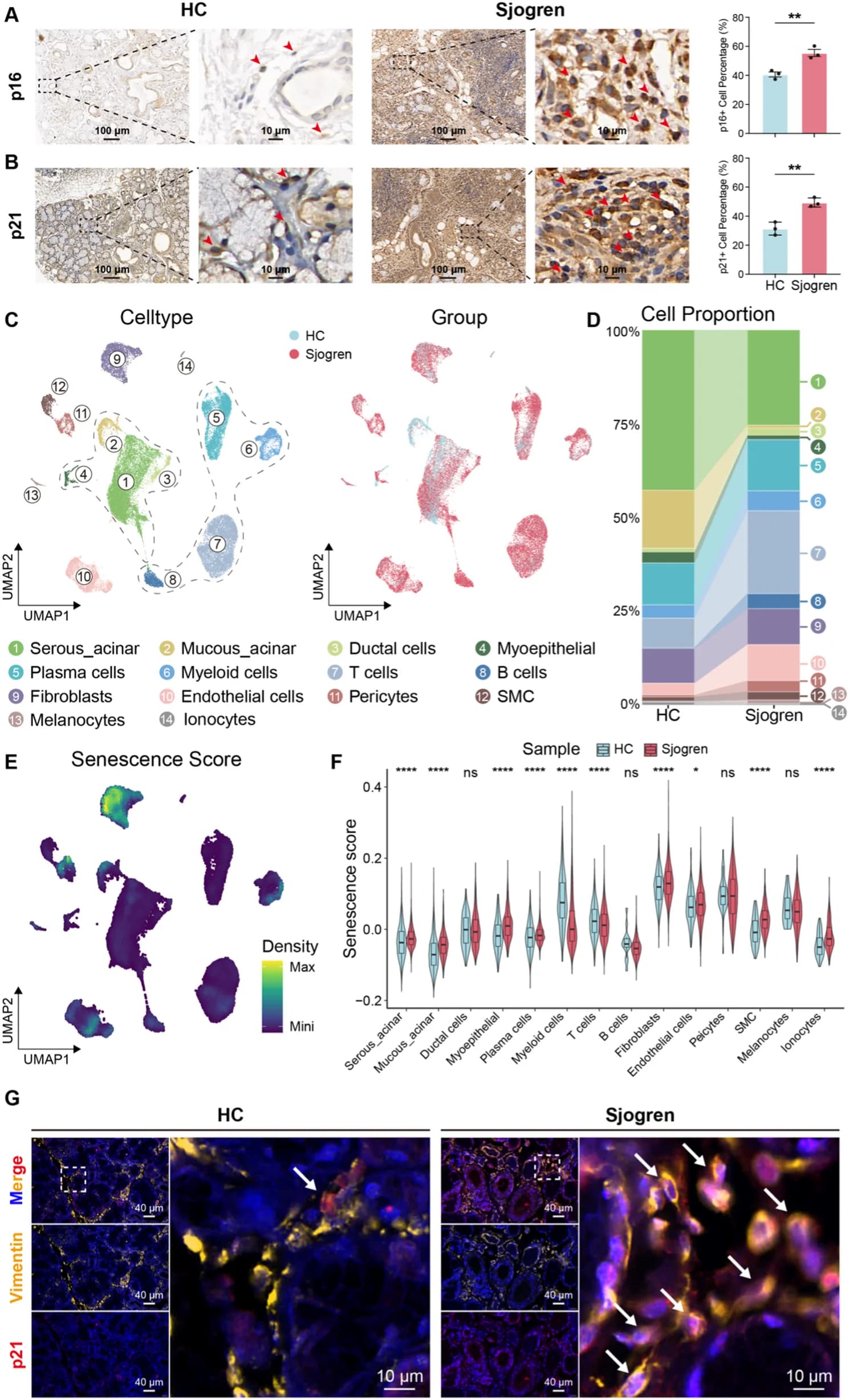
Drug pair restores saliva flow in mice modeling Sjögren’s disease

An experiment with six female mice per group tested dasatinib and quercetin, which reduced immune-cell buildup in salivary glands.An experiment with six female mice per group tested dasatinib and quercetin, which reduced immune-cell buildup in salivary glands.

ScRNA-seq analysis revealed fibroblast senescence in pSjD salivary glands.
Mouse studyInterventions

Saturday, November 7

Friday, November 6

Research Square

Protein deficiency linked to fewer brain aneurysms in mice

Aneurysms occurred in 3 of 12 mice lacking the SPARC protein, versus 10 of 12 untreated mice in an experiment designed to trigger aneurysms.Aneurysms occurred in 3 of 12 mice lacking the SPARC protein, versus 10 of 12 untreated mice in an experiment designed to trigger aneurysms.

Differential expression and functional annotation in the GSE122897 intracranial aneurysm dataset.
Preprint: mouse studyMechanisms