Older mice had shorter survival with human brain tumors
Median survival after human glioblastoma implantation was 40 days in young mice, compared with 33 days in older mice.
Our read
Interventions- Studied:
- Experiments in mice
Editor of record: Boris Djordjevic · AgingResearch.News
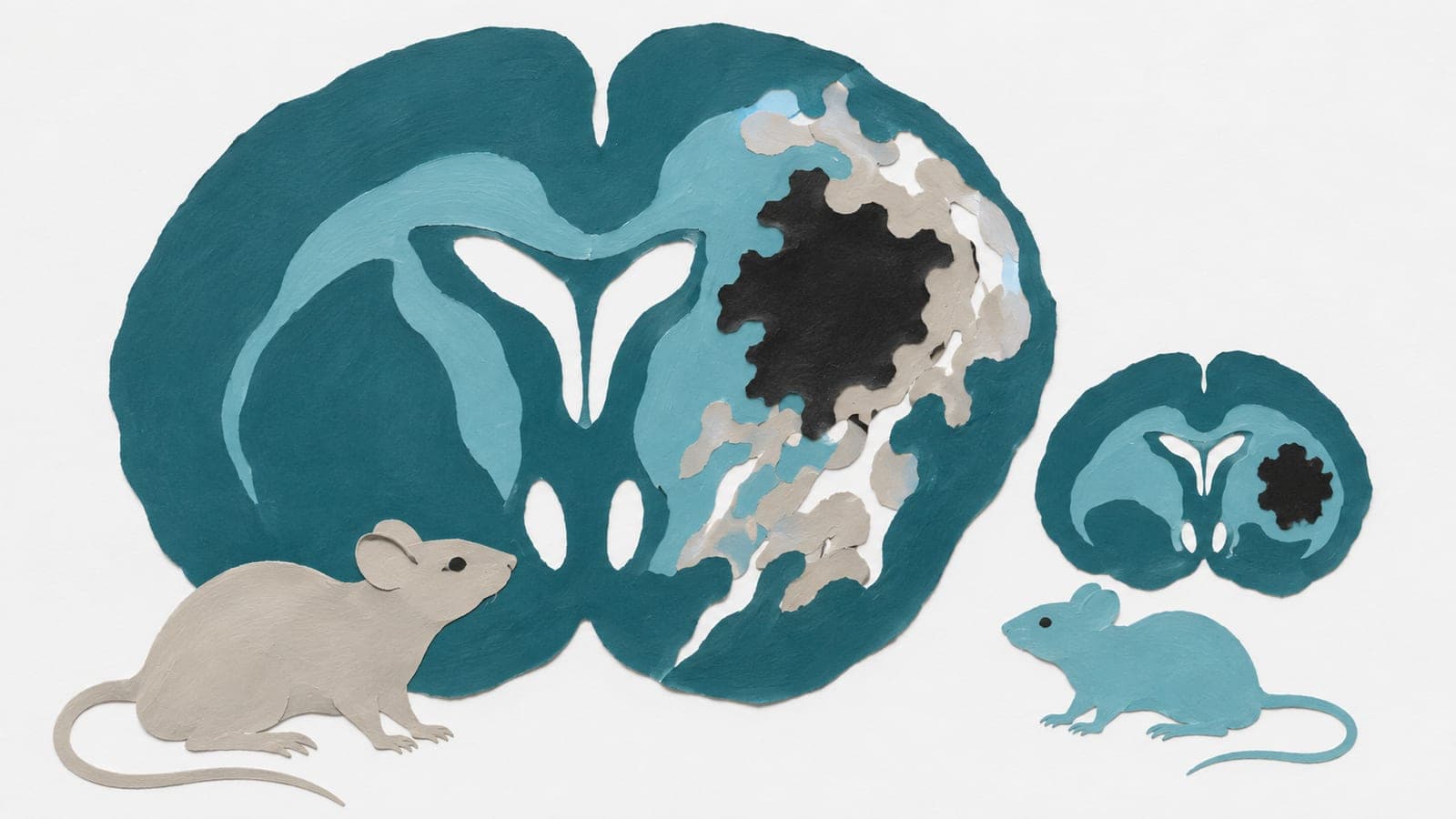
Mice of the C57BL/6 strain, aged 2 months and 23 months, received human glioblastoma, an aggressive brain tumor, implanted into the brain in an animal experiment. The researchers compared mice with and without depletion of several types of immune cells. Tumors developed only when those immune cells were depleted, regardless of age.
Median survival after implantation was 40 days in young mice and 33 days in older mice. In older mice, radiation plus temozolomide, a chemotherapy drug, improved survival compared with no treatment or dasatinib plus quercetin. These latter drugs target senescent cells, which have stopped dividing. Adding dasatinib and quercetin to radiation and temozolomide improved survival over radiation and temozolomide alone in a subset of older mice.
Why it matters
Age-related changes in the brain surrounding glioblastoma may contribute to differences in cancer progression and treatment response. The authors are investigating that surrounding tissue to explore its relationship with age and survival.
Caveats
The human tumors grew only after several types of immune cells were depleted. The age comparison therefore concerned mice without an intact immune system, rather than tumors growing with normal immune defenses.
Comments
Be the first to comment.