Protein deficiency linked to fewer brain aneurysms in mice
Aneurysms occurred in 3 of 12 mice lacking the SPARC protein, versus 10 of 12 untreated mice in an experiment designed to trigger aneurysms.
Our read
Mechanisms- Studied:
- Preprint: experiments in animals
Editor of record: Boris Djordjevic · AgingResearch.News
Mice underwent an experiment designed to induce intracranial aneurysms, bulges in arteries inside the skull. Researchers compared four groups of 12 mice and assessed outcomes without knowing group assignments. They tested deficiency of SPARC, a protein that regulates interactions between cells and their surroundings, and the drugs dasatinib plus quercetin.
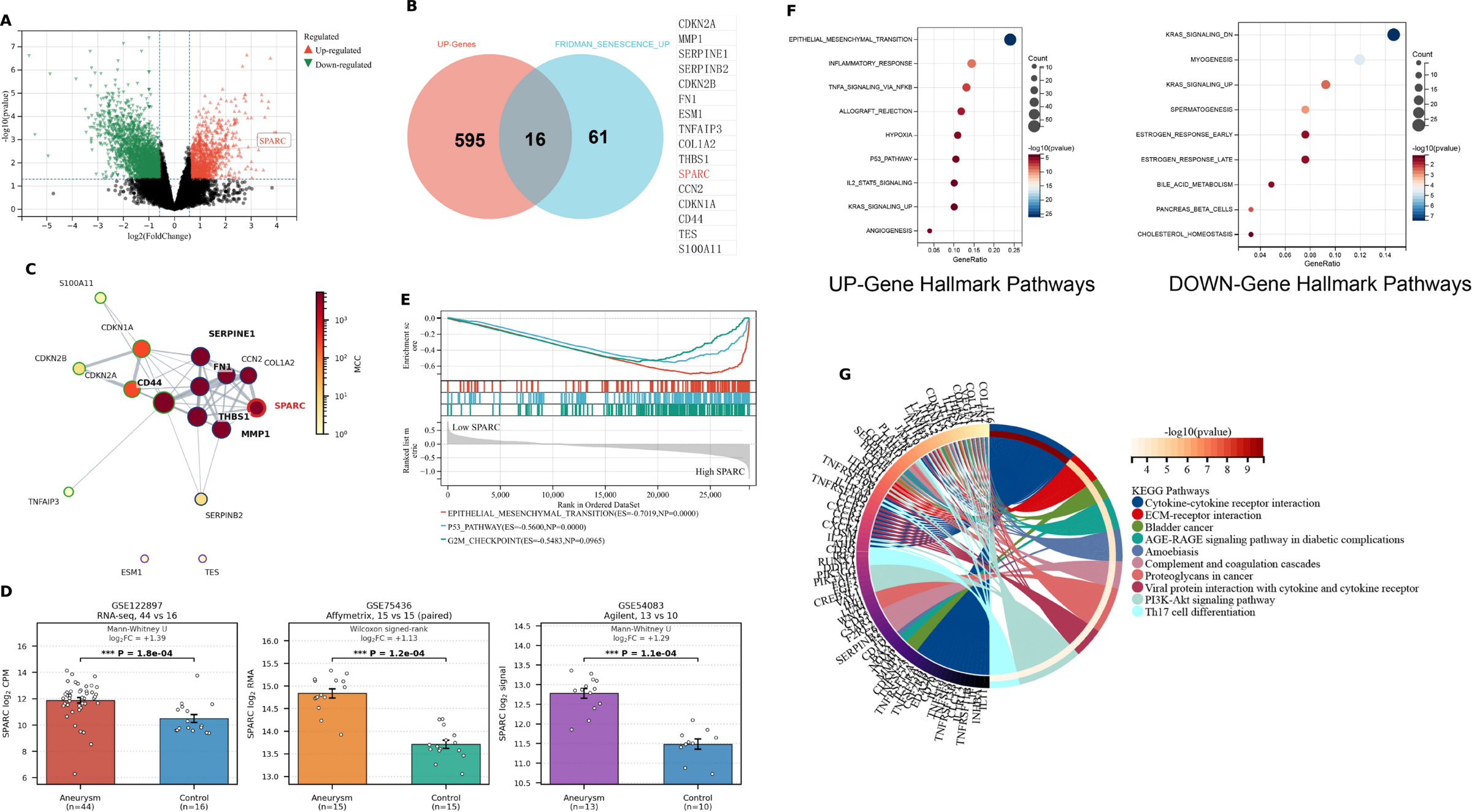
Aneurysms occurred in 10 of 12 untreated mice, 3 of 12 lacking SPARC and 2 of 12 given the drugs. Both interventions were associated with reduced staining for senescence, a state in which cells stop dividing, and preserved markers of artery muscle contraction. In aged mice, SPARC deficiency better preserved wall structure, but the lower aneurysm incidence was not statistically significant. Separately, an observational analysis of eight human aneurysm specimens and three artery specimens from near the temple linked SPARC to senescence-associated artery muscle cell states.
Why it matters
Senescence in artery muscle cells may contribute to aneurysm formation. Identifying its molecular regulators could help guide research toward drugs that stabilize aneurysm walls.
Caveats
The experiments did not establish a mechanism specific to artery muscle cells. The work is a preprint and has not been peer-reviewed.
The paper
Shandong University
Research Square, Nov 5, 2026, Open access, Preprint, not yet peer-reviewed

Comments
Be the first to comment.