RISE UP

Papers on RISE UP

7,564 papers476 new in 30 days

Wednesday, November 11

medRxiv

Obesity and diabetes rose as smoking fell among US adults

From 1999–2000 to 2021–2023, obesity rose from 47.4% to 57.2% and diabetes from 8.2% to 12.7%, while smoking declined.From 1999–2000 to 2021–2023, obesity rose from 47.4% to 57.2% and diabetes from 8.2% to 12.7%, while smoking declined.

Groups of upright adults contrast broader waists, denser glucose specks in blood, and fewer cigarettes with slimmer figures and more cigarettes.
Preprint: cross-sectional · 60,199 peopleDiabetes mellitus

Tuesday, November 10

BMC Gastroenterology

Constipation-linked death rates rose in the United States

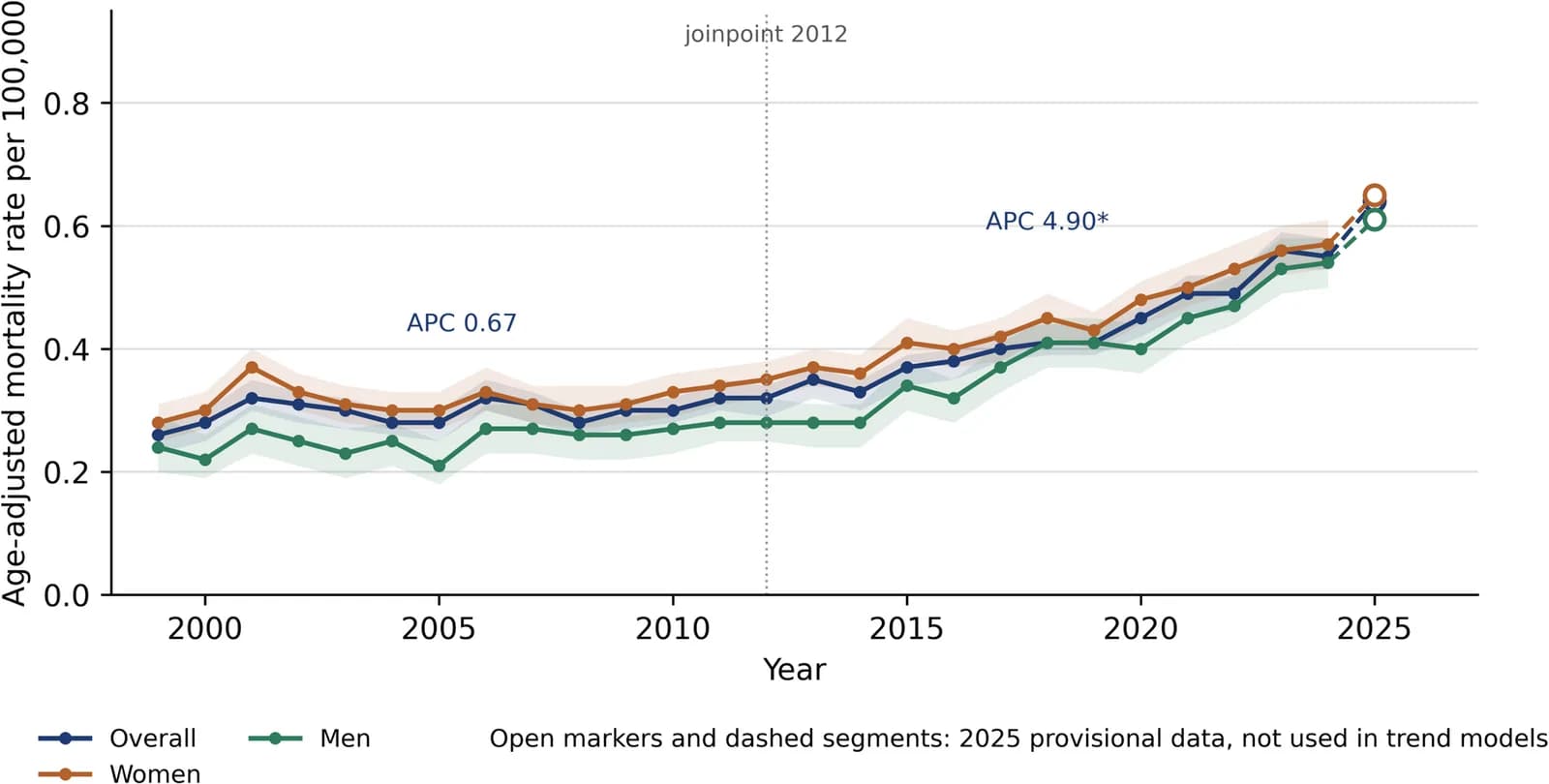
Death rates adjusted for age rose from 0.26 in 1999 to 0.55 in 2024, with faster increases among men.Death rates adjusted for age rose from 0.26 in 1999 to 0.55 in 2024, with faster increases among men.

Overall and sex-stratified age-adjusted mortality rates (per 100,000) for constipation-associated mortality among US adults aged ≥ 25 years, 1999–2024, with the provisional 2025 value shown as a…
Cross-sectional · 22,237 peopleConstipation

Monday, November 9

Neurology

Walking problems linked most strongly to dementia at ages 65–75

At age 65, the estimated rate of developing dementia was 3.13 times as high for walking scores of 11 versus 12.At age 65, the estimated rate of developing dementia was 3.13 times as high for walking scores of 11 versus 12.

Brain sections with wide and narrow tissue gaps sit beside groups of faceless people taking shorter and longer strides.
Cohort · 4,822 peopleIncident dementia
JMIR Aging

Chair rise patterns linked to functional differences in older adults

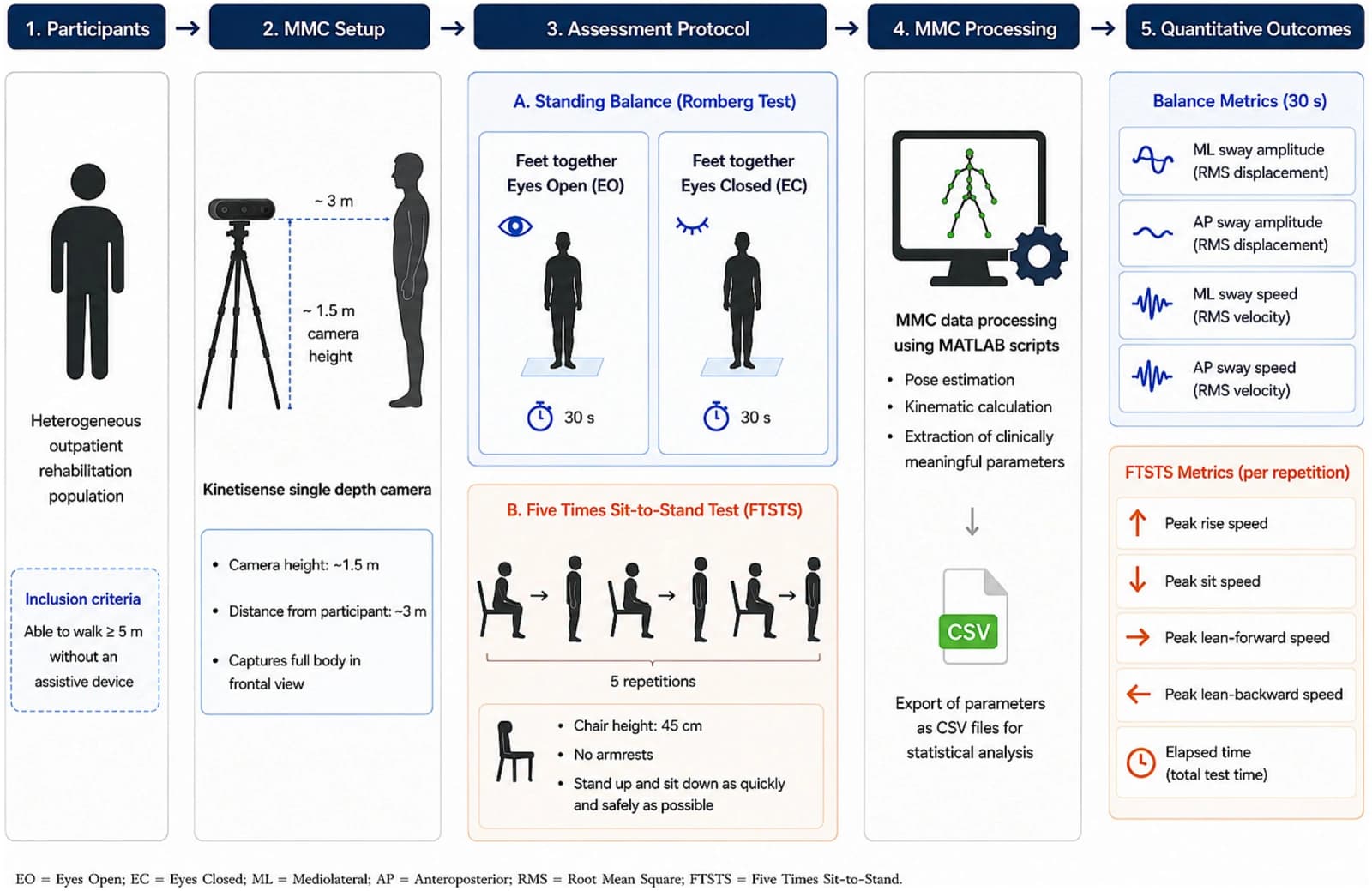
A 24-month observational study of 172 adults aged 70 and older linked two sensor-detected movement patterns to functional differences not captured by stopwatch scoring.A 24-month observational study of 172 adults aged 70 and older linked two sensor-detected movement patterns to functional differences not captured by stopwatch scoring.

Graphical workflow of the study, summarizing participant recruitment, clinical assessment, biomechanical data acquisition, signal processing, dynamic time warping alignment, and machine…
Cohort · 172 peopleBiomarkers
AHA Scientific Sessions 2026 Abstract

Heart failure model predicted risk well overall in US veterans

The model scored 0.81 for distinguishing veterans who developed heart failure from those who did not, and closely matched overall risk over 10 years.The model scored 0.81 for distinguishing veterans who developed heart failure from those who did not, and closely matched overall risk over 10 years.

A heart cross-section with thick muscle walls sits beside upright faceless people and a smaller gray heart with a widened chamber and thinner wall.
Cohort · 1,990,002 peopleHeart failure
AHA Scientific Sessions 2026 Abstract

About 1 in 347 in US carry heart disease-linked gene variants

An observational analysis estimated 990,722 US carriers of disease-linked variants in the gene for titin, a muscle protein, using population genetic data.An observational analysis estimated 990,722 US carriers of disease-linked variants in the gene for titin, a muscle protein, using population genetic data.

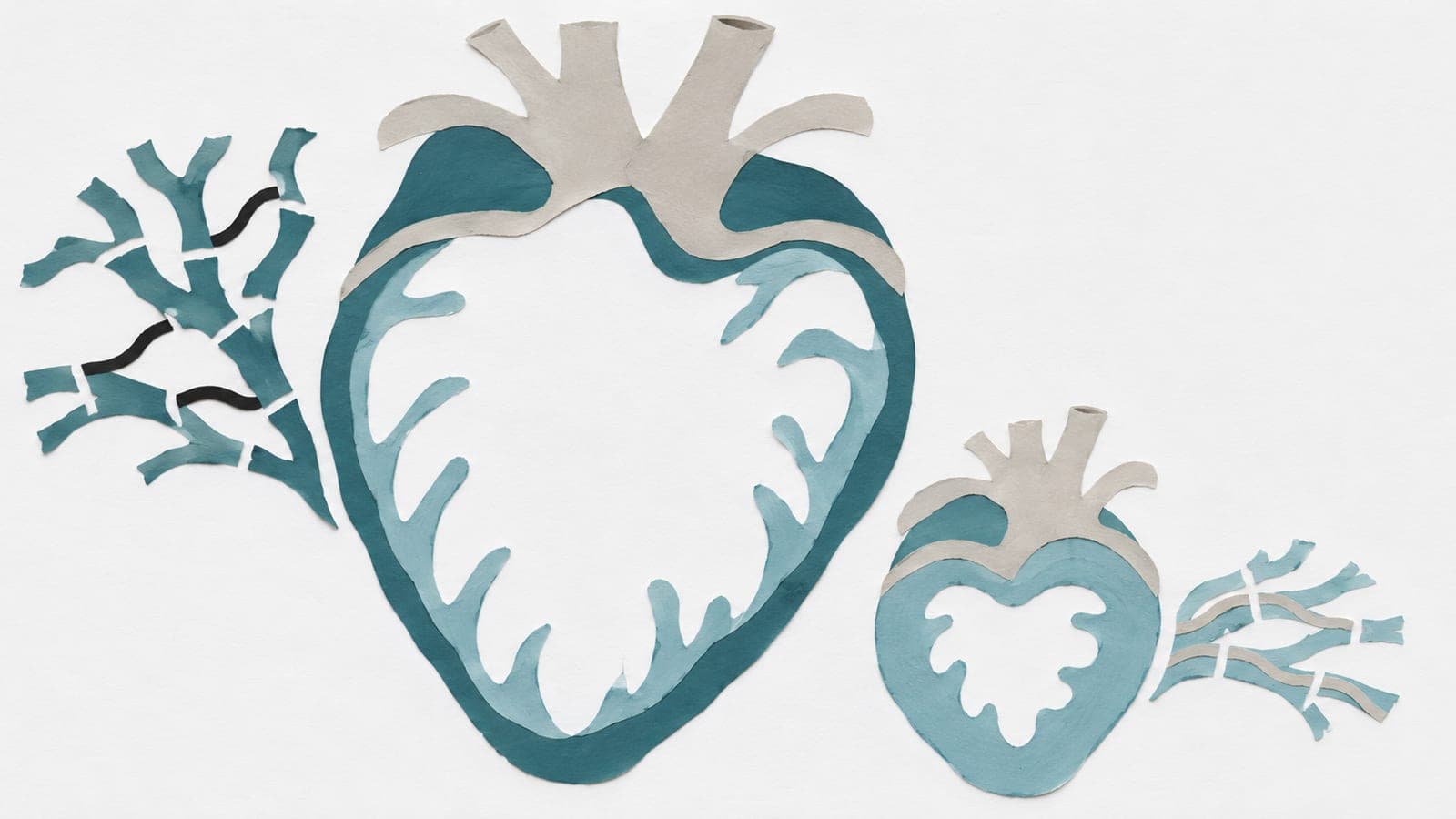
An enlarged, thin-walled heart beside a smaller, thick-walled heart, with nearby muscle fibers showing broken versus continuous strands.
Cross-sectional studyPopulations
AHA Scientific Sessions 2026 Abstract

Three-drug obesity therapy improved blood fat particle profiles

A 26-week randomized trial in adults with obesity but without type 2 diabetes found favorable changes in cholesterol-carrying particles with the three-drug combination.A 26-week randomized trial in adults with obesity but without type 2 diabetes found favorable changes in cholesterol-carrying particles with the three-drug combination.

A cholesterol-carrying particle is surrounded by dense small gray-filled particles on the left and fewer small particles among larger blue-green ones on the…
Randomized trialObesity
AHA Scientific Sessions 2026 Abstract

Modeling genetic risk by age improved disease prediction

Across two health-record cohorts, age-varying genetic effects improved one-year prediction for 27 of 28 diseases compared with a model that kept those effects fixed.Across two health-record cohorts, age-varying genetic effects improved one-year prediction for 27 of 28 diseases compared with a model that kept those effects fixed.

Groups of younger and white-haired adults surround chromosomes with dark patches and artery cross-sections with narrowed and open interiors.
Computational studyBiomarkers