Constipation-linked death rates rose in the United States
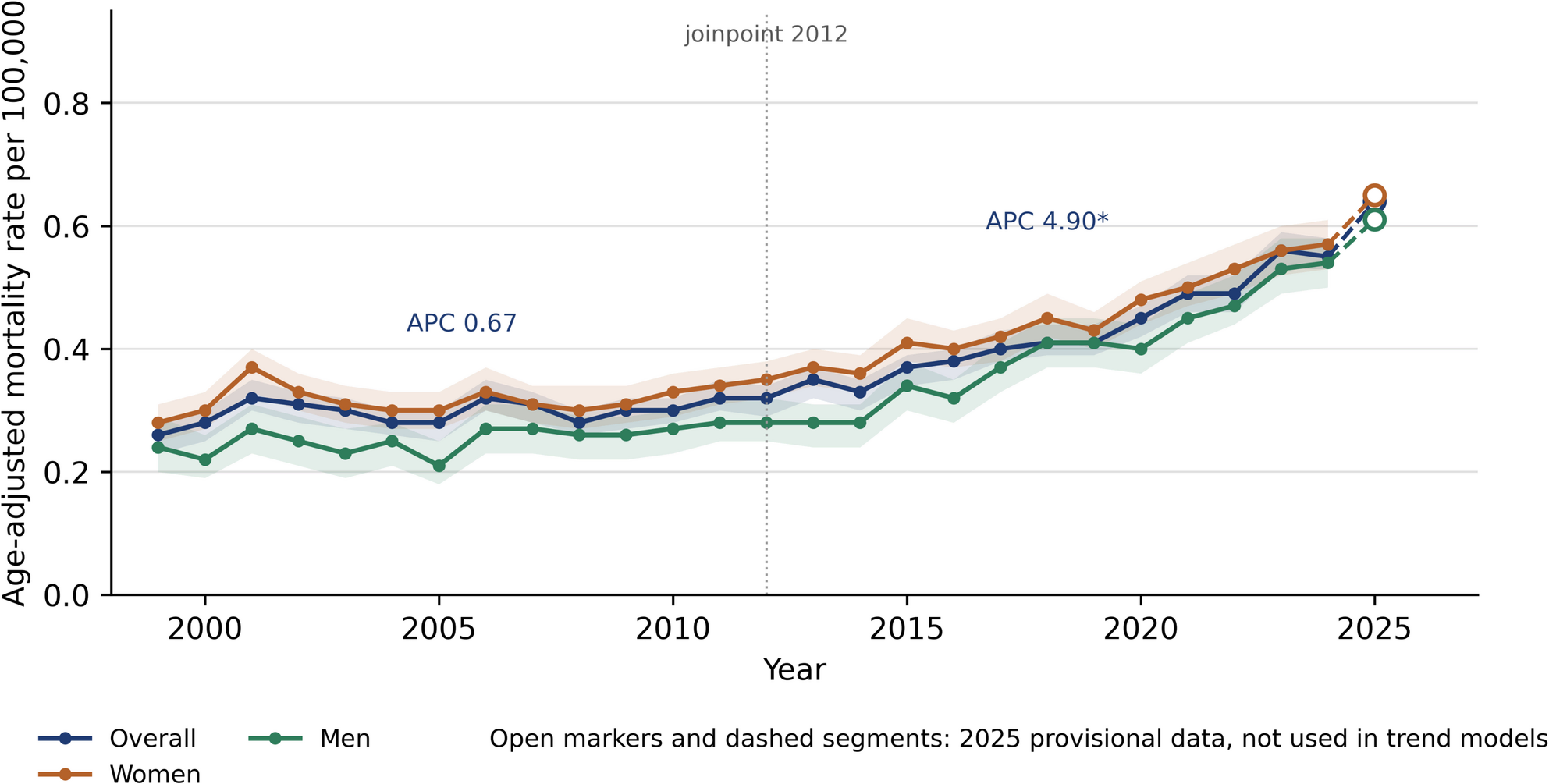
Death rates adjusted for age rose from 0.26 in 1999 to 0.55 in 2024, with faster increases among men.
Our read
Populations- Studied:
- Cross-sectional study of 22,237 US adults aged ≥ 25 years
- What changed:
- Age-adjusted constipation-linked death rates rose from 0.26 to 0.55 per 100,000 between 1999 and 2024
- The catch:
- Improved death-certificate coding over time could inflate the apparent rise in mortality
Editor of record: Boris Djordjevic · AgingResearch.News
US adults aged 25 and older accounted for 22,237 deaths mentioning constipation in a serial cross-sectional analysis of national death certificates from 1999–2024. The researchers counted constipation listed anywhere on a certificate, not just as the underlying cause—the condition that began the chain of events leading to death.
Age-adjusted rates stayed stable through 2012, then rose. Rates increased among women and men, faster among men, and among adults aged 45–64 and 65 or older. Constipation appeared as a contributing cause more often than as the underlying cause. Institutional settings accounted for 75.4% of deaths. Dementia was also recorded in 23.4%, and complications in 37.4%.
Why it matters
Constipation in older adults can involve serious complications, including bowel perforation and sepsis, a life-threatening response to infection. The authors called for standardized bowel-care routines in high-risk settings.
Caveats
The analysis depended on constipation being recorded on death certificates; deaths without that entry were not counted, even if constipation played a role.
From the paper
- Result
The overall AAMR rose from 0.26 per 100,000 (95% CI 0.23–0.28) in 1999 to 0.55 (0.53–0.58) in 2024, an average annual increase of 2.68% (95% CI 2.10–3.26; P < 0.001).
- Limitation
The design was ecological and cross-sectional; therefore, no individual-level inference was possible, and we could not adjust for comorbidities, medication regimens, or constipation severity owing to the aggregate nature of the data.
Quoted word for word from the full text on link.springer.com.
The paper
Alfaisal University
BMC Gastroenterology, Aug 13, 2026, Open access


Comments
Be the first to comment.