Obesity and diabetes rose as smoking fell among US adults
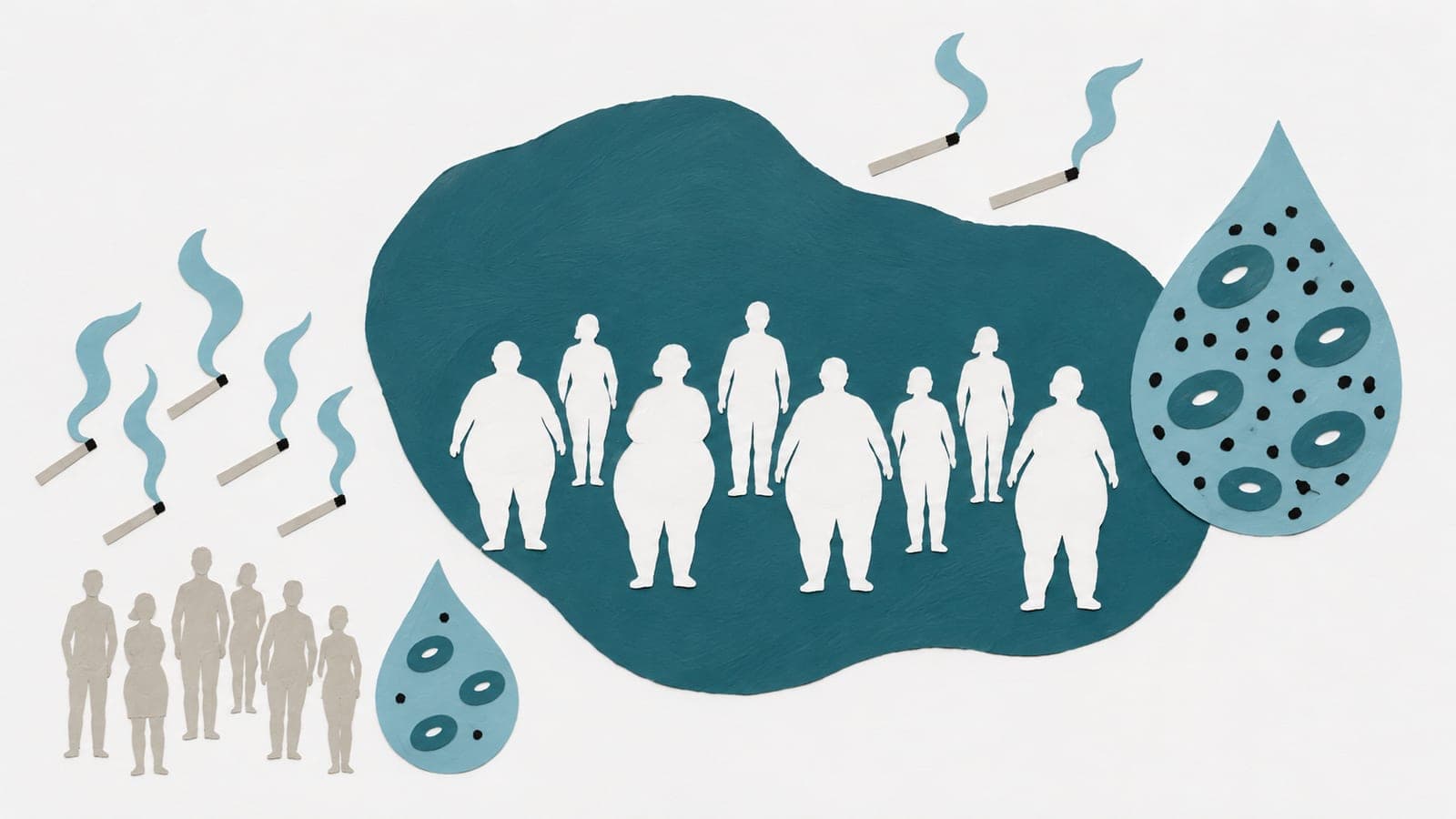
From 1999–2000 to 2021–2023, obesity rose from 47.4% to 57.2% and diabetes from 8.2% to 12.7%, while smoking declined.
Our read
Populations- Studied:
- Preprint: cross-sectional study of 60,199 nonpregnant US adults, against US adults in 1999–2000
- What changed:
- Obesity among US adults rose from 47.4% to 57.2%
- The catch:
- Future cardiovascular disease risks were calculated predictions, not observed illness rates
Editor of record: Boris Djordjevic · AgingResearch.News
Among 60,199 nonpregnant US adults, researchers analyzed 11 National Health and Nutrition Examination Survey periods from 1999–2000 through 2021–2023. This survey analysis compared trends adjusted for age. Smoking fell from 24.4% to 14.9%, while obesity and diabetes increased. Awareness and treatment of high blood pressure and abnormal blood fat levels improved.
Blood pressure control peaked at 32.5% in 2013–2014 before falling to 21.5%. Blood sugar control in diabetes also declined after earlier gains. Among adults without self-reported cardiovascular disease, predicted 10-year total cardiovascular risk fell from 5.66% to 5.28%. Predicted risk of cardiovascular disease involving fatty buildup in arteries declined, while predicted heart failure risk rose. The 30-year predictions showed similar divergence.
Why it matters
The differing predictions bear on how the burden of different cardiovascular diseases may change as US adults grow older.
Caveats
The future disease risks were calculated predictions, not observed rates of illness over those periods. The preprint has not been peer-reviewed, and its study population excluded pregnant adults.
The paper
Faisalabad Medical University
medRxiv, Nov 10, 2026, Open access, CC BY-NC-ND, Preprint, not yet peer-reviewed


Comments
Be the first to comment.