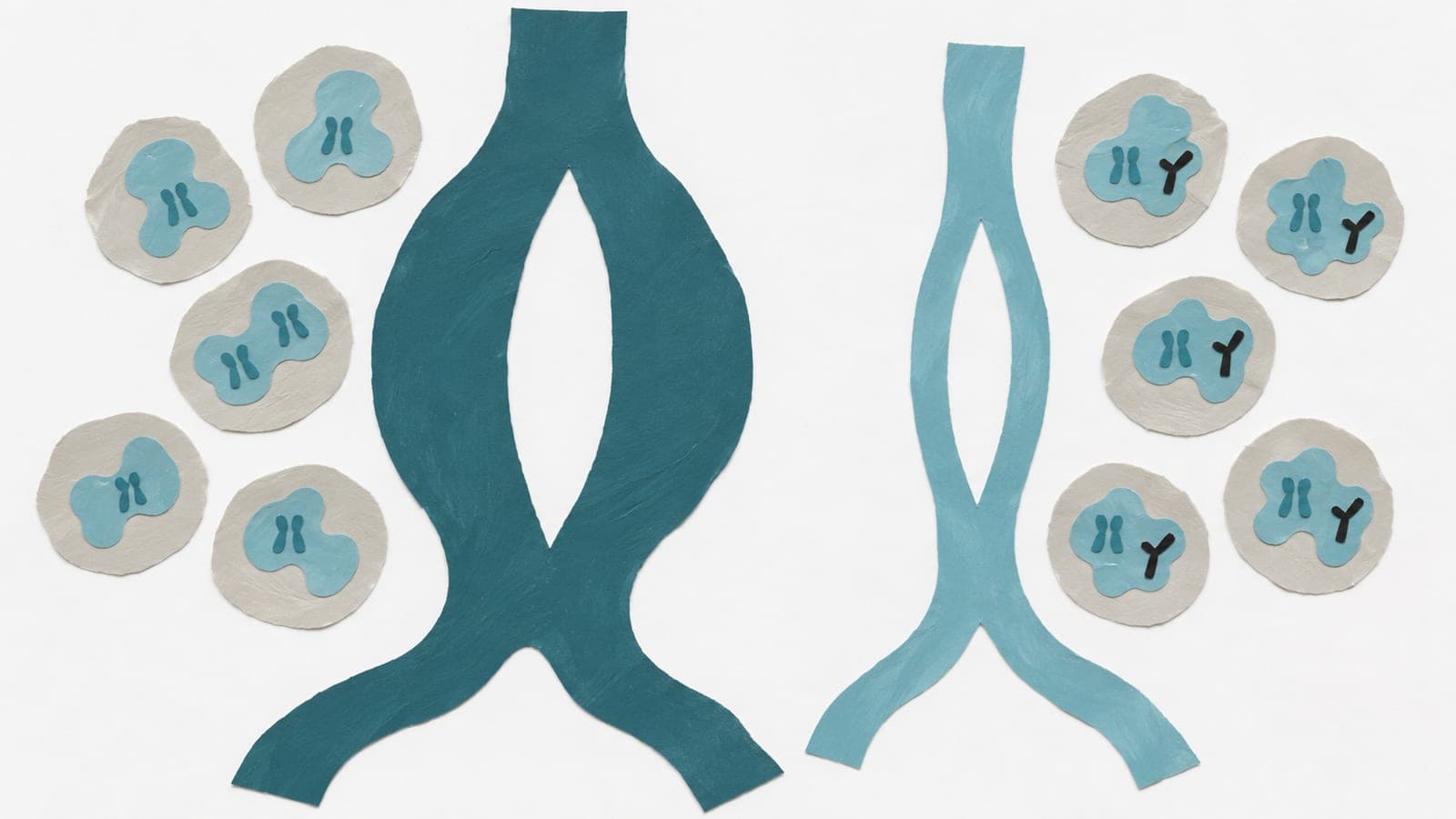
Men with Y chromosome loss in blood cells had a 37% higher relative risk than men without it, after adjustment for other factors.Men with Y chromosome loss in blood cells had a 37% higher relative risk than men without it, after adjustment for other factors.
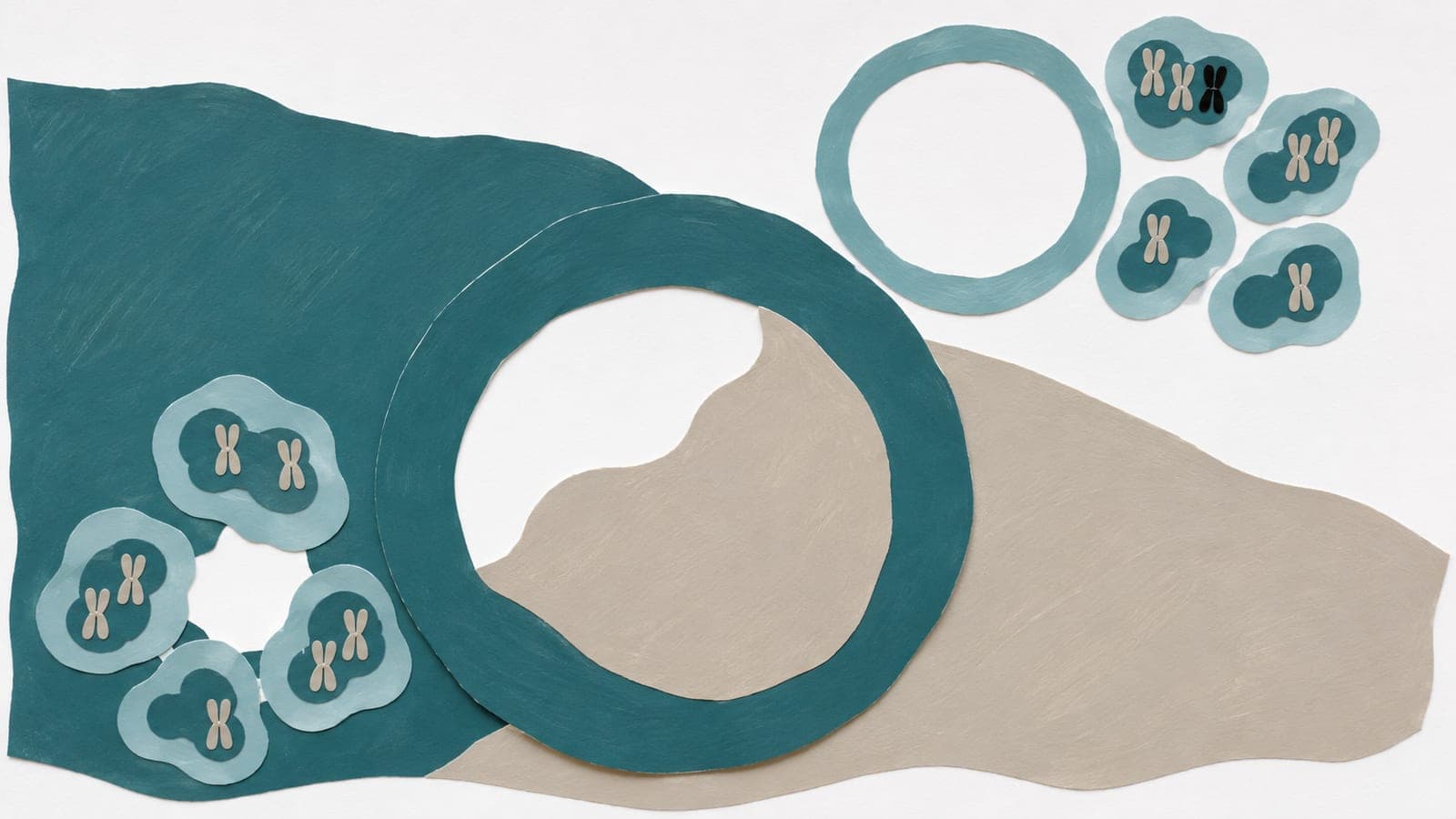
Among 176,468 men followed for a median 15.25 years, Y chromosome loss in blood cells was linked to abdominal aneurysms that caused symptoms.Among 176,468 men followed for a median 15.25 years, Y chromosome loss in blood cells was linked to abdominal aneurysms that caused symptoms.
Who was studied176,468 men free of AAA at baseline, median 15.25 years
What changedIncident symptomatic abdominal aortic aneurysm risk was higher with each standard deviation increase in chromosome Y loss (adjusted HR 1.01-1.09)
The catchThe cohort was predominantly of European ancestry
Hazard ratios, measuring relative disease rates, were 1.08 for non-sex-chromosome changes and 1.04 for Y-chromosome loss, compared with people without the respective…Hazard ratios, measuring relative disease rates, were 1.08 for non-sex-chromosome changes and 1.04 for Y-chromosome loss, compared with people without the respective change.
Who was studied419,762 UK Biobank participants, against people without the respective change
What changedCardiovascular disease incidence was higher: hazard ratios were 1.08 for non-sex-chromosome changes and 1.04 for Y-chromosome loss against people without them
The catchThe study excluded people with existing cardiovascular disease or blood cancer
An observational study of 223,051 UK Biobank men linked Y-chromosome loss in blood cells to later age-related macular degeneration.An observational study of 223,051 UK Biobank men linked Y-chromosome loss in blood cells to later age-related macular degeneration.
Analyses of human kidney tumors, mice and cell lines showed that losing the Y chromosome produces few broad changes in gene activity across cancers.Analyses of human kidney tumors, mice and cell lines showed that losing the Y chromosome produces few broad changes in gene activity across cancers.
A large genomic analysis reveals over 800 inherited variants and structural features that alter how frequently chromosomes missegregate in aging individuals.A large genomic analysis reveals over 800 inherited variants and structural features that alter how frequently chromosomes missegregate in aging individuals.
Preprint: cohort study of 840,853 peopleMechanisms
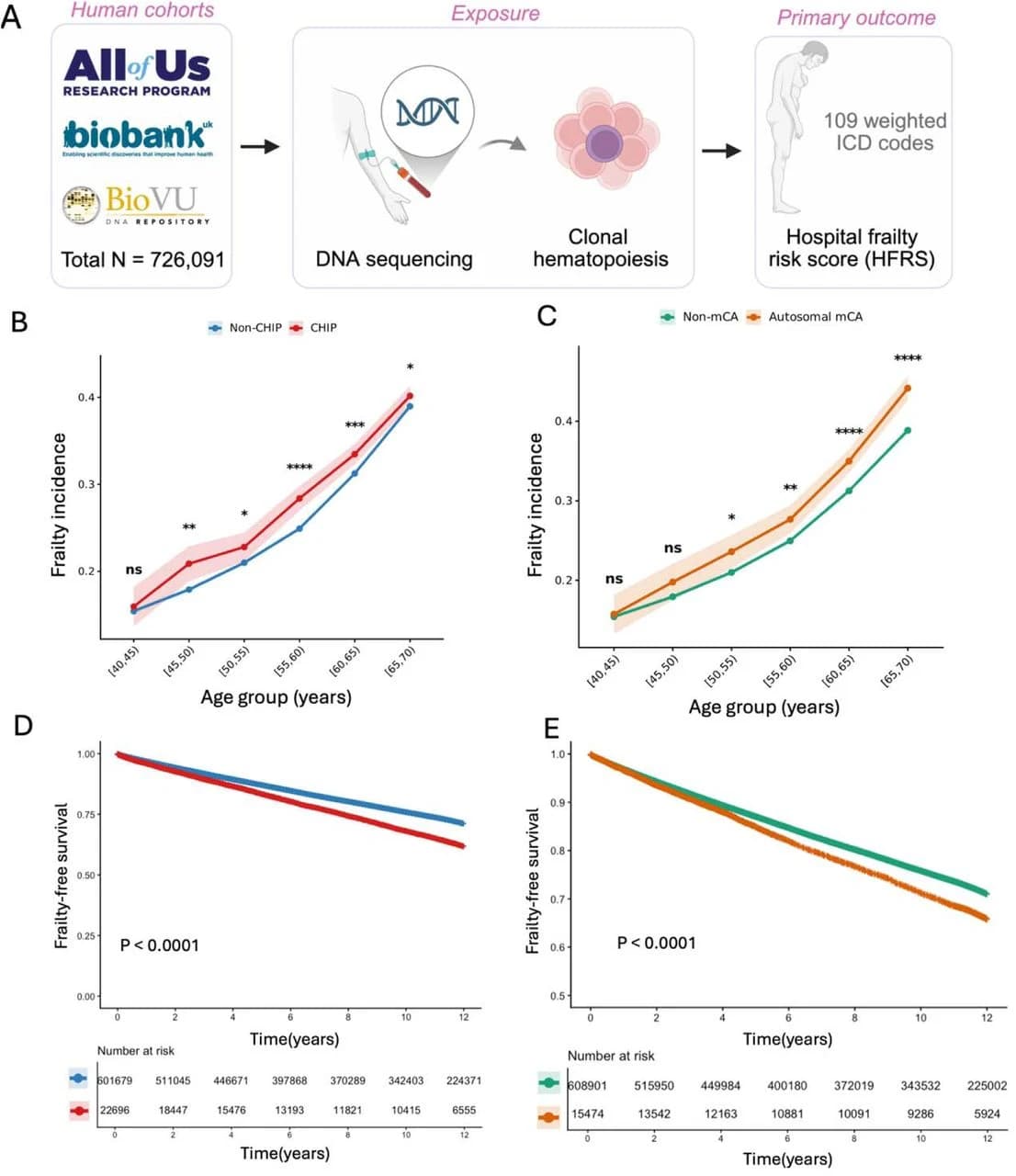
An analysis of 730,088 participants across four cohorts found clonal hematopoiesis was strongly associated with incident frailty and faster functional decline.An analysis of 730,088 participants across four cohorts found clonal hematopoiesis was strongly associated with incident frailty and faster functional decline.
The association appeared in an observational analysis of 537 male patients who received radiation therapy across multiple cancer types.The association appeared in an observational analysis of 537 male patients who received radiation therapy across multiple cancer types.
Chromosome alterations appeared in 8.7% of participants with HIV, compared with 18.1% of those without HIV, in an analysis of 445 older adults.Chromosome alterations appeared in 8.7% of participants with HIV, compared with 18.1% of those without HIV, in an analysis of 445 older adults.
A computational analysis of blood cells from 416 men linked Y chromosome loss to cell-specific gene activity changes and unusual features of X chromosome silencing.A computational analysis of blood cells from 416 men linked Y chromosome loss to cell-specific gene activity changes and unusual features of X chromosome silencing.