Inherited genetic variants influence age-associated mosaic chromosomal errors in human blood
A large genomic analysis reveals over 800 inherited variants and structural features that alter how frequently chromosomes missegregate in aging individuals.
medRxiv
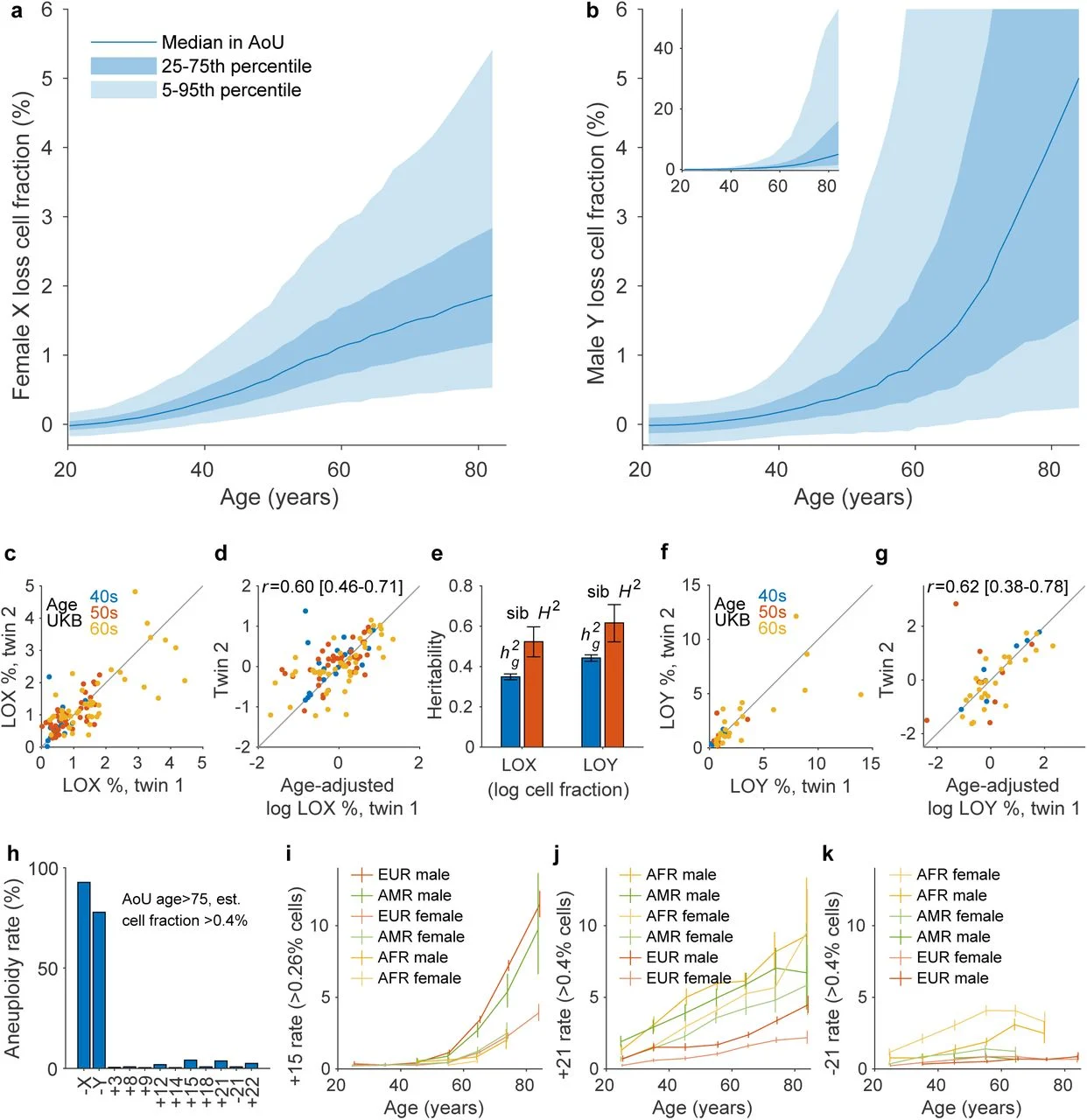
In a preprint analyzing blood whole-genome sequencing from 840,853 humans, researchers investigated how inherited genetics shapes susceptibility to mosaic chromosomal aneuploidies. They identified autosomal gains in approximately 70,000 individuals, as well as ubiquitous loss of the X chromosome in females and the Y chromosome in males, with each sex chromosome loss showing over 50 percent heritability. Genome-wide association analyses of 12 mosaic aneuploidies revealed more than 800 common inherited variants that influence the generation and proliferation of aneuploid cells. Variants in mitotic spindle assembly checkpoint genes consistently influenced aneuploidy across most chromosomes. Conversely, a missense variant in the kinetochore gene PMF1 improved segregation fidelity for some chromosomes at the cost of others. Inherited structural features also exerted large effects, including a hybrid centromere that raised chromosome 22 gain risk four-fold and repeat array variations that drove a four-fold range in X chromosome loss.
Why it matters
Mosaic chromosomal aneuploidies in blood commonly emerge as people age. Identifying the genetic factors behind mitotic errors provides tools to assess how clonal somatic mutations influence health and aging biology.
Caveats
This study is an observational analysis released as a preprint and has not yet completed peer review. The findings are based on leukocyte genomes and may not reflect mosaic aneuploidy dynamics in other tissues.
The paper
Genetic mechanisms of mitotic error in 840,853 blood genomes
Broad Institute
medRxiv · 9 Sep 2026 · Preprint, not peer-reviewed