Compound improved spinal disc health in 24-month-old mice
Long-term delivery of a protein-activating compound improved disc structure and lowered degeneration scores in 24-month-old mice.
Limit: Disc grading used only 7 control and 9 treated mice
Edited by Boris Djordjevic · AgingResearch.News
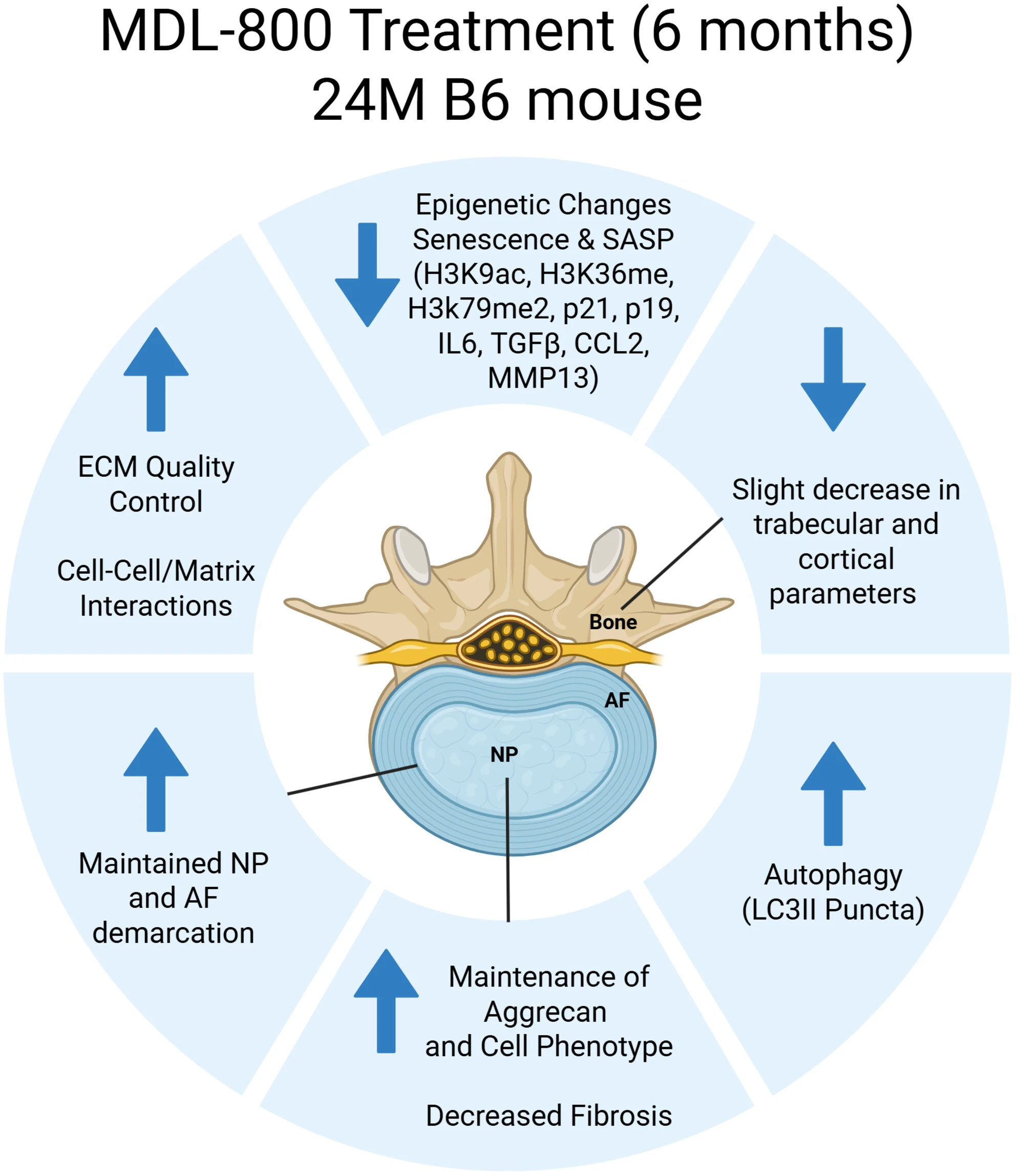
In an animal experiment, 24-month-old mice received MDL-800, a compound that activates SIRT6, a protein that helps maintain spinal disc health. The researchers tested long-term delivery throughout the body. Treated mice had healthier disc structure, improved measures of cell survival and lower scores for disc degeneration. The material surrounding disc cells also improved in quality. The discs showed reduced senescence, a state in which cells stop dividing.
The compound increased autophagy, the process cells use to break down and recycle their components, without changing disc cells’ energy metabolism. Treated mice also had a small decrease in measures of vertebral structure and mildly increased sensitivity to pain. No vertebral fractures occurred, and broader movement and behavior were unaffected.
Why it matters
Spinal disc degeneration contributes to chronic low back pain, and aging is a major risk factor. The work supports investigating SIRT6 activation as a strategy to maintain disc health with age.
Caveats
These animal results do not establish benefits for human disc disease or back pain. The abstract did not give the number of mice, dose or exact treatment duration.
From the paper
- Harms
The open field test, however, showed comparable performance between cohorts, suggesting no adverse effect on overall ambulation in MDL-800-treated mice (Figure S22F).
Quoted word for word from the full text on onlinelibrary.wiley.com.


