Disc degeneration and abnormal nerve growth fell in animals
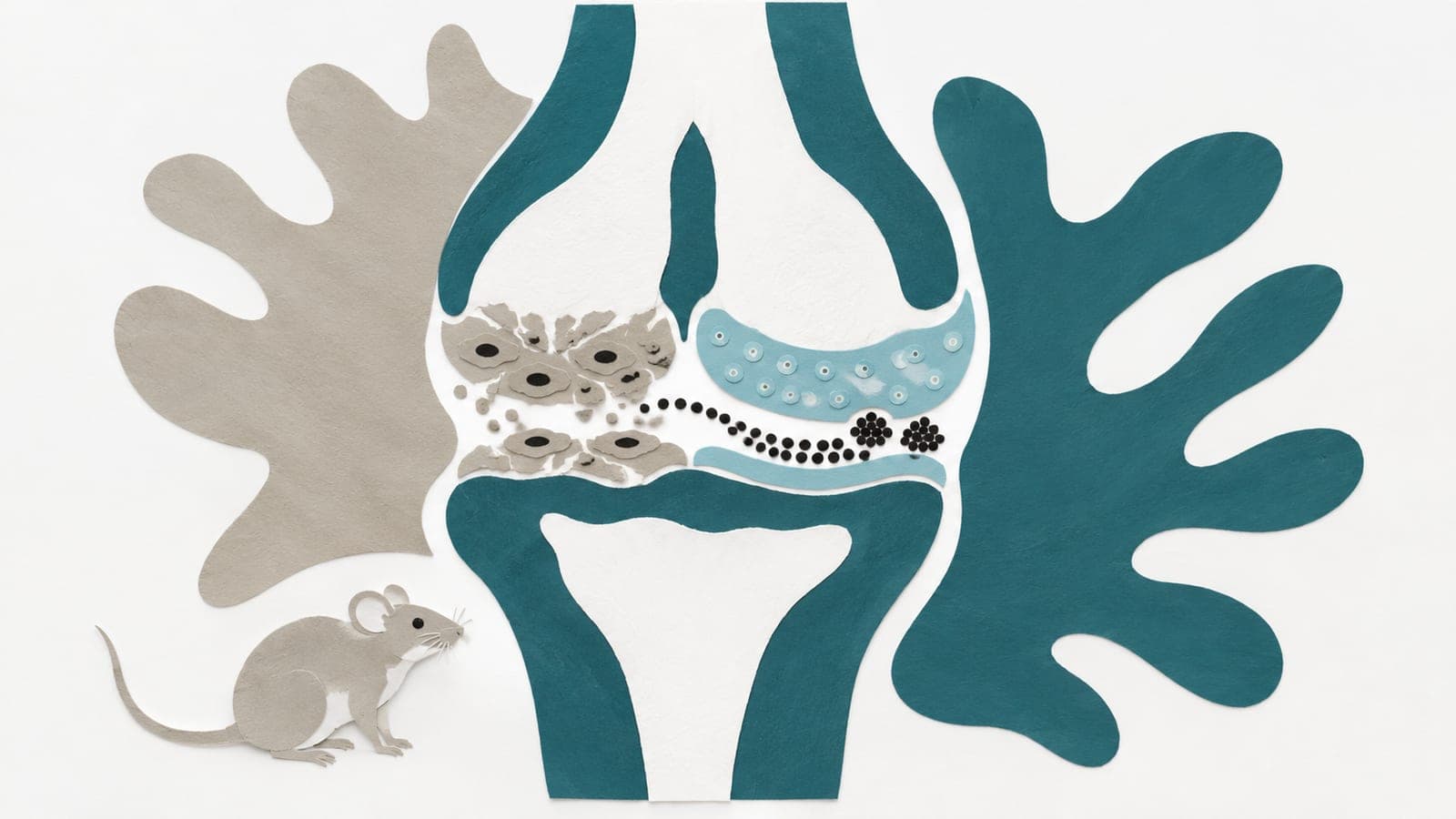
In an animal experiment, a dual-action platform injected into spinal discs also reduced heightened sensitivity to pain.
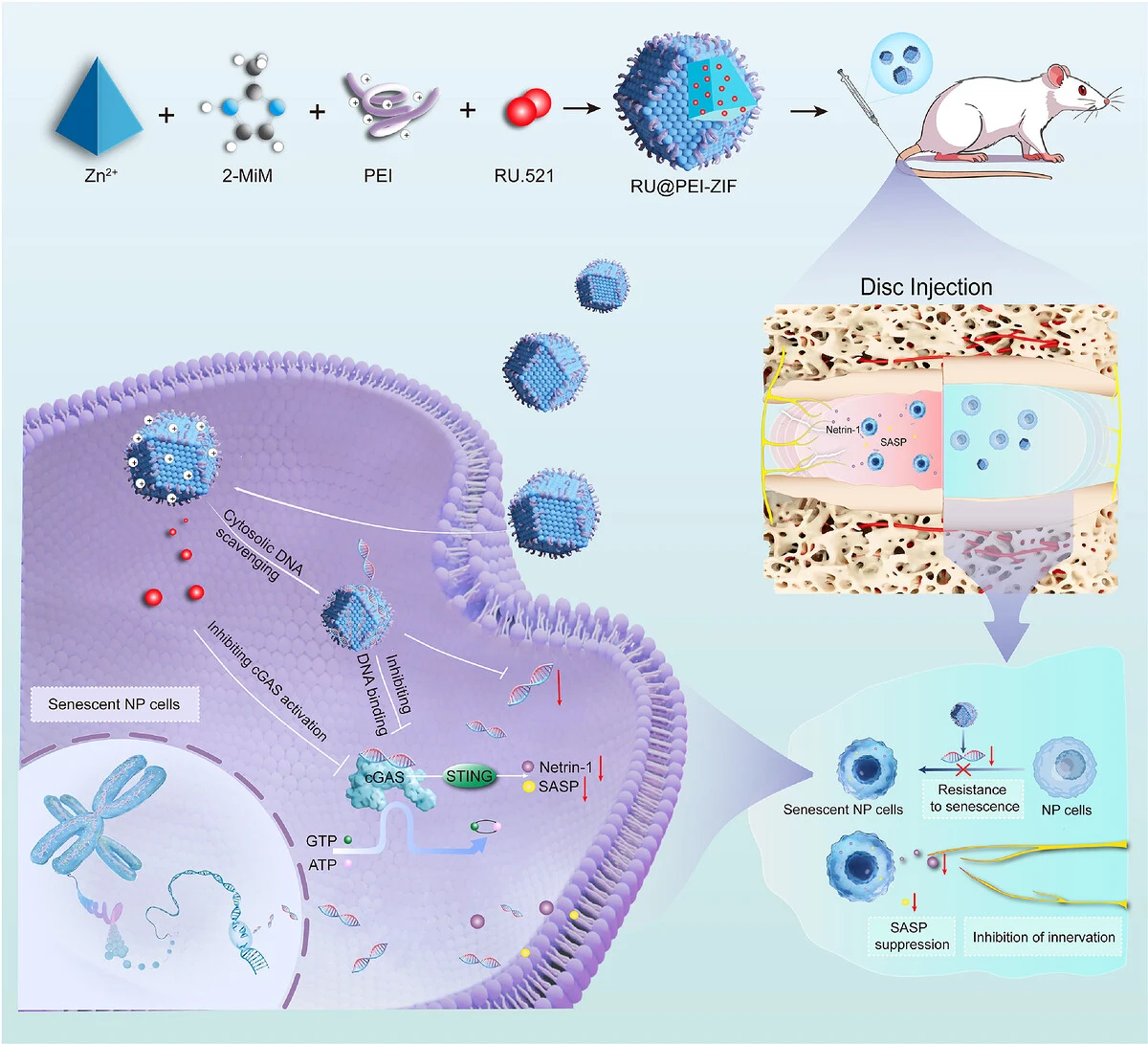
In an experiment using an animal model of disc degeneration, researchers injected a dual-action platform into the discs between spinal bones. It combined DNA binding with delivery of a drug that inhibits cGAS, a protein that senses DNA. The platform reduced disc degeneration, abnormal sensory nerve growth and heightened sensitivity to pain. It also reduced senescence, a state in which cells stop dividing, in cells in the discs’ soft centres.
In separate experiments with senescent cells from this part of the disc, the platform reduced double-stranded DNA outside cells and in the fluid inside them. It also reduced inflammatory signalling and the cells’ ability to promote nerve-cell movement and the growth of extensions from nerve cells.
Why it matters
Cell senescence offers a route to investigate how changes in cell behaviour contribute to tissue deterioration and disc-related pain.
Caveats
These were animal and cell experiments, not tests in people. The abstract did not identify the animal species or report sample sizes or study duration.
The paper
Orthopedic Hospital of Guangdong Province
Advanced Science, 12 Oct 2026