The Mechanism of Dietary Intervention in Delaying Brain Aging and Neurodegenerative Diseases
Abstract
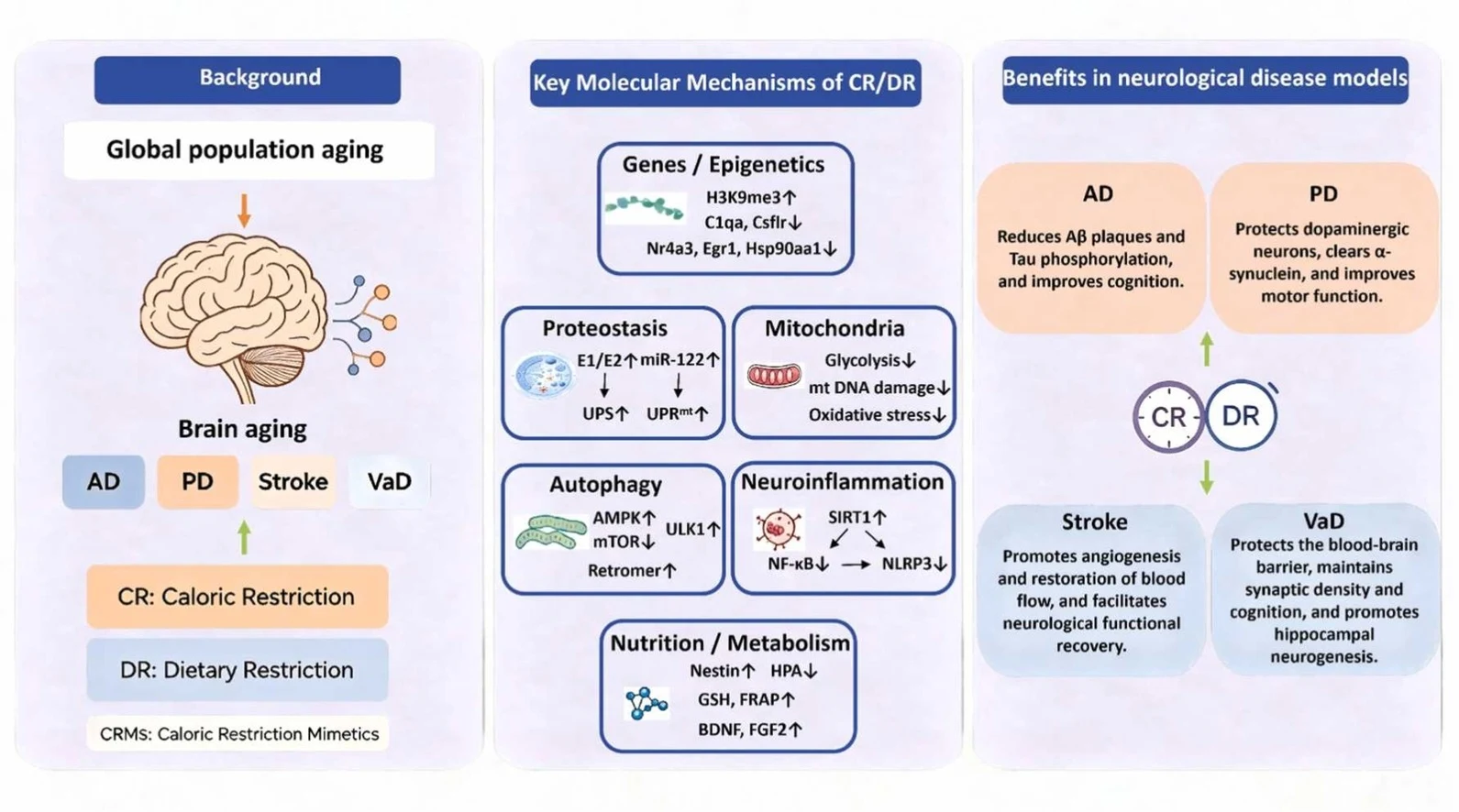
With the global aging population, age-related neurodegenerative diseases and cerebrovascular diseases have become major public health challenges. As a modifiable lifestyle strategy, dietary intervention shows significant potential in delaying brain aging and reducing the risk of neurodegenerative and cerebrovascular diseases. Caloric restriction (CR) and dietary restriction (DR), two important nutritional intervention approaches, exhibit substantial neuroprotective potential through multiple mechanisms. This review systematically summarizes the mechanisms of CR and DR in brain aging and related diseases, focusing on: (1) modulating gene expression and epigenetic modifications; (2) regulating proteostasis and autophagy; (3) inhibiting neuroinflammation to delay inflammaging; (4) improving mitochondrial function and oxidative homeostasis; and (5) optimizing nutrient-sensing pathways and metabolism. Additionally, this review discusses the mechanistic evidence of CR and DR in disease models such as Alzheimer's Disease (AD), Parkinson's Disease (PD), stroke, and Vascular Dementia (VaD). Despite promising preclinical findings, their clinical translation faces challenges including individual variability, safety concerns, and uncertainty regarding mechanism prioritization. Future research should focus on conducting more high-quality clinical trials, integrating multi-omics technologies with precision nutrition strategies to promote the practical application of CR and DR in advancing healthy brain aging.
- Caloric restriction
- Caloric restriction and dietary restriction
- Autophagy
- Epigenetic regulation of gene expression
- Alzheimer's disease
- Cerebrovascular disease
The paper
Heilongjiang University of Chinese Medicine; The First Affiliated Hospital of Heilongjiang University of Chinese Medicine
Ageing Research Reviews, 13 Oct 2026