Stomach surgery reduced Alzheimer’s-related plaques in mice
A 12-month experiment in female mice modelling Alzheimer’s disease found fewer plaques in the brain’s outer layer after stomach-reducing surgery than after a comparison operation.
Randomised
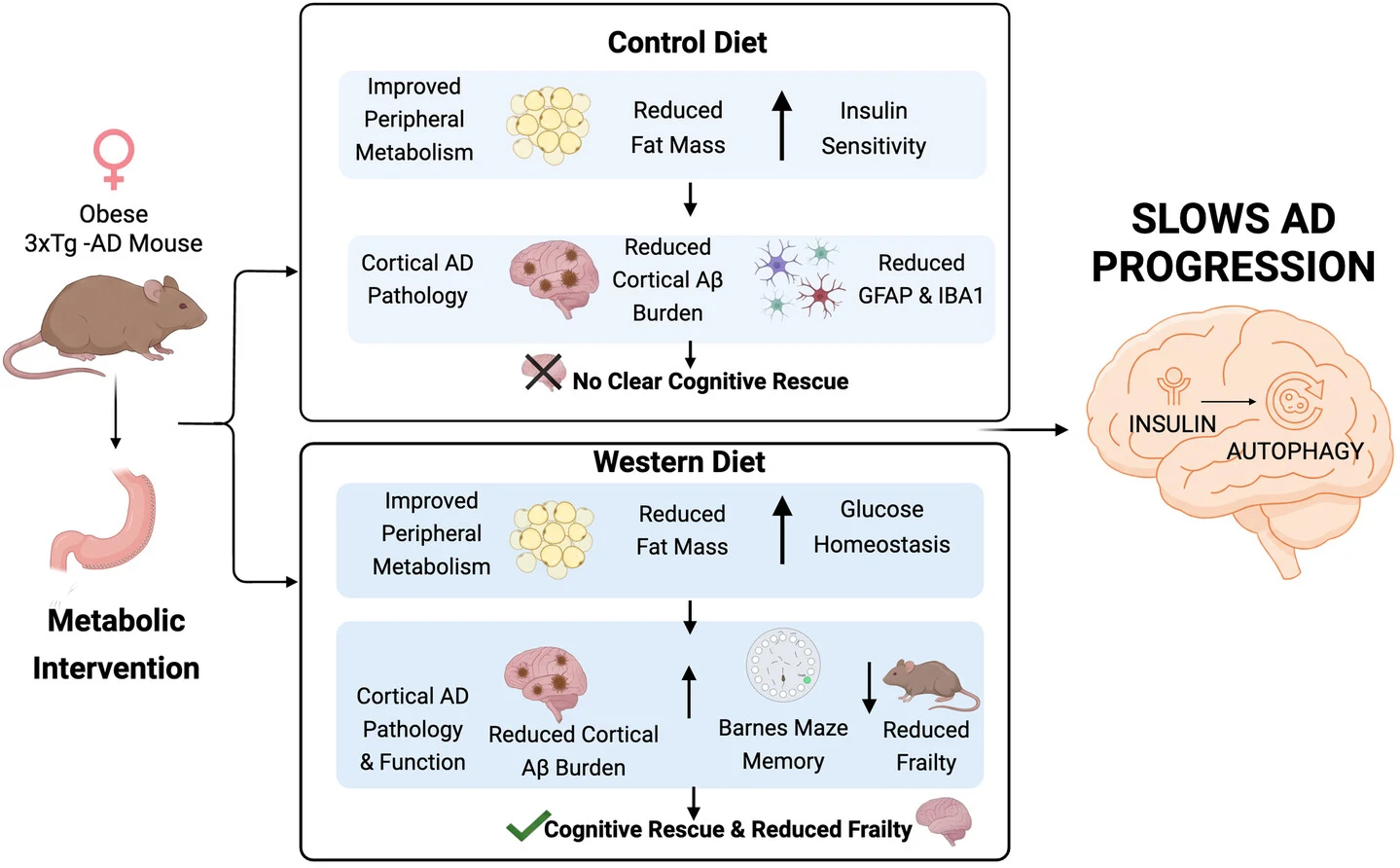
An animal experiment used female 3xTg-AD mice, genetically modified to model Alzheimer’s disease. Starting at five weeks old, they received a Western diet to induce obesity and difficulty controlling blood sugar. Researchers then randomly assigned them to sleeve gastrectomy, surgery that removes part of the stomach, or sham surgery, a comparison operation. The mice ate either a control diet or the continued Western diet for 12 months.
On the control diet, surgery reduced body fat and improved sensitivity to insulin, a hormone that regulates blood sugar, independently of food intake. It also reduced amyloid-beta plaques—protein deposits—in the cortex, the brain’s outer layer, and reduced activation of brain support and immune cells there. On the continued Western diet, surgery improved blood sugar control, reduced fat and frailty, and improved short- and long-term memory for locations in a maze test. These mice also had fewer cortical plaques.
Why it matters
Obesity and diabetes are risk factors for Alzheimer’s disease. The findings support further study of whether metabolic surgery might help prevent the disease in people with obesity.
Caveats
This experiment tested surgery in a mouse model, not Alzheimer’s prevention in people. It included only female mice and studied an intervention early in life.