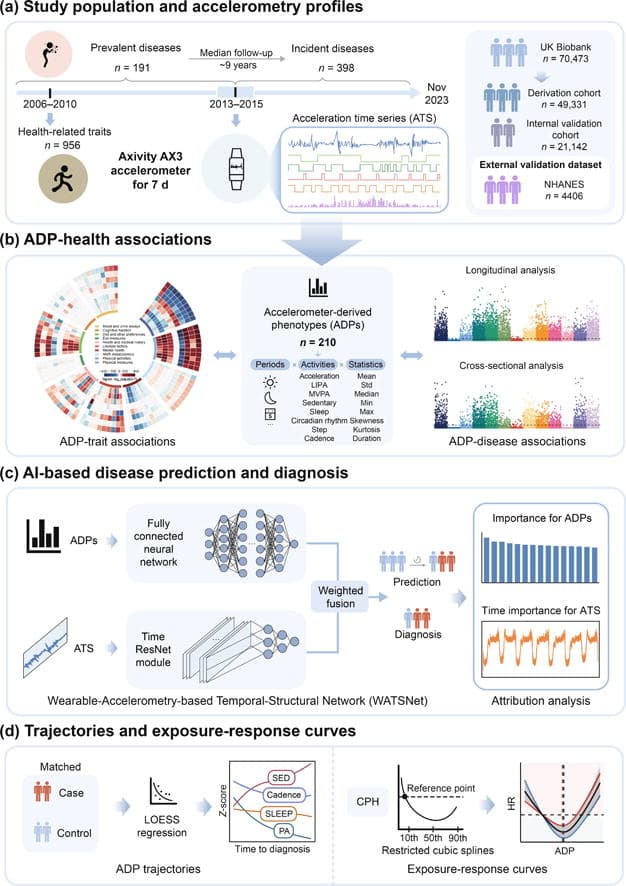
Graphical abstract
Graphical abstractFrom Science Bulletin
Humans

Wearable device metrics link to hundreds of human diseases

In 70,473 people tracked for up to 10 years, wearable metrics mapped 8,149 disease associations and predicted conditions including incident Parkinson's disease and dementia.

Science Bulletin

In a study of 70,473 human participants followed for up to 10 years, researchers used wearable accelerometers to analyze 11.8 million person-hours of behavioral data. The authors extracted 210 movement-derived phenotypes across 406 diseases and 956 health-related traits, identifying 8,149 disease associations. Step intensity and circadian rhythms emerged as the behavioral domains most strongly linked to disease. Using these data, the team built a framework named WATSNet, which achieved discrimination scores above an AUC of 0.7 for 112 incident diseases, including incident Parkinson's disease at an AUC of 0.873 and dementia at 0.841. Lower overall disease risks were associated with at least 0.8 hours daily of moderate-to-vigorous activity, 10,000 steps per day, and 7.8 hours of sleep.

Why it matters

Disrupted circadian rhythms and declining physical activity are hallmark features of aging. The findings demonstrate that digital tracking of these behaviors can help identify risks for age-related conditions like dementia long before clinical diagnosis.

Caveats

Because the design is observational, the reported behavioral benchmarks and phenotype associations do not demonstrate that changing activity patterns directly prevents disease. Predictive performance was externally evaluated in a smaller group of 4,406 individuals.

The paper

A wearable accelerometry landscape of human health and disease

Liang Y, Zhao Y, Deng Y et al.

Science Bulletin · 22 Sep 2026
bioRxivAnimalsPreprint

Hypothalamic tau impairs pair bonding in male prairie voles

Expressing mutant tau in the paraventricular hypothalamus stopped 18-month-old male prairie voles from forming selective bonds and altered their…Expressing mutant tau in the paraventricular hypothalamus stopped 18-month-old male prairie voles from forming selective bonds and altered their oxytocin signaling. In monogamous prairie voles, expressing dementia-linked tau P301L in the hypothalamus disrupts selective social bonds…

Neurology Open AccessHumans

Epigenetic age links to higher dementia risk in older adults

In 2,606 participants, higher DunedinPACE was associated with increased risks of mild cognitive impairment (hazard ratio 1.16) and all-cause dementia…In 2,606 participants, higher DunedinPACE was associated with increased risks of mild cognitive impairment (hazard ratio 1.16) and all-cause dementia (hazard ratio 1.30). In 2,606 Framingham Heart Study Offspring cohort participants (mean age 66 years), researchers examined how three DNA…

Frontiers in NutritionHumans

Cardiometabolic burden increases CVD and death risk in MASLD

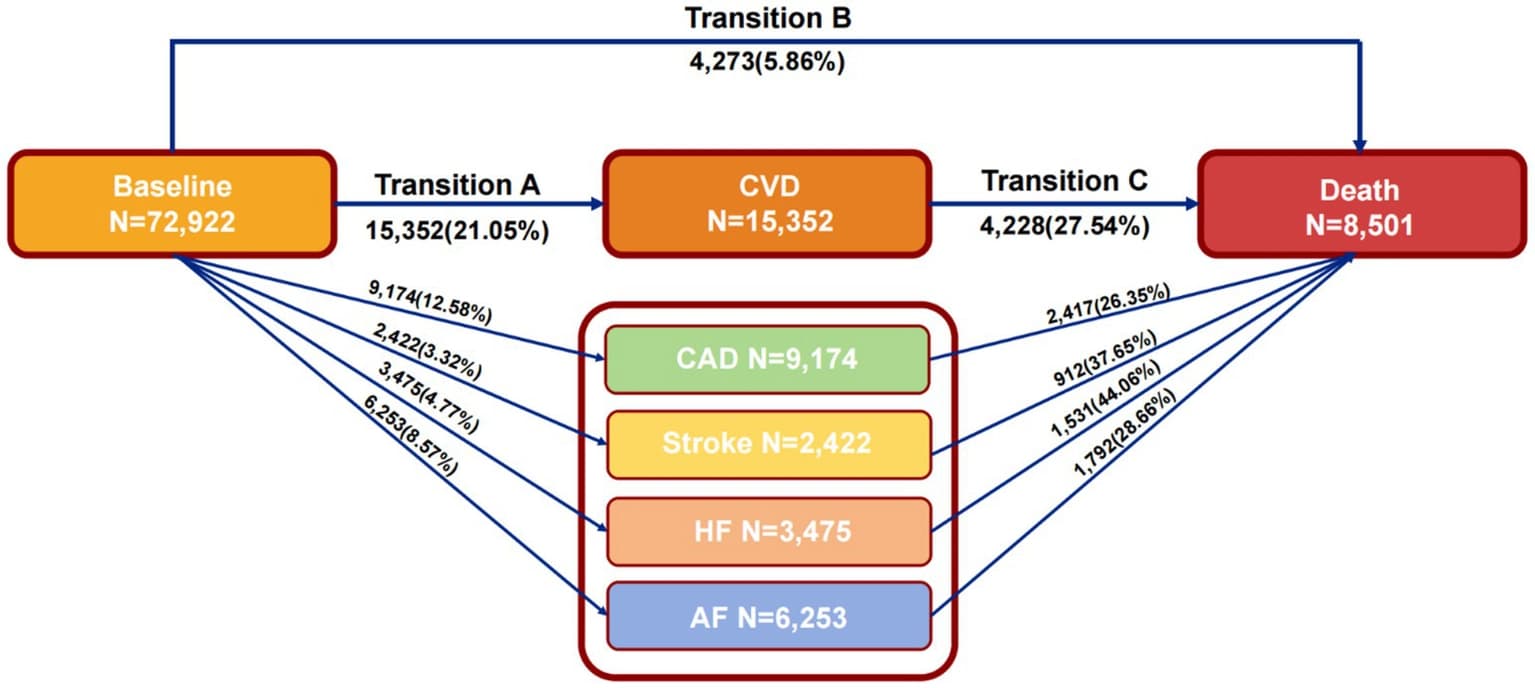
In 72,922 adults with MASLD, each additional cardiometabolic risk factor raised hazard ratios for incident CVD to 1.17 and subsequent death to 1.13.In 72,922 adults with MASLD, each additional cardiometabolic risk factor raised hazard ratios for incident CVD to 1.17 and subsequent death to 1.13. A prospective cohort study tracked 72,922 UK adults with metabolic dysfunction-associated steatotic liver disease over a median follow-up of…

Figure 1
Frontiers in PhysiologyHuman trial

Baguazhang lowers systolic blood pressure in postmenopausal women

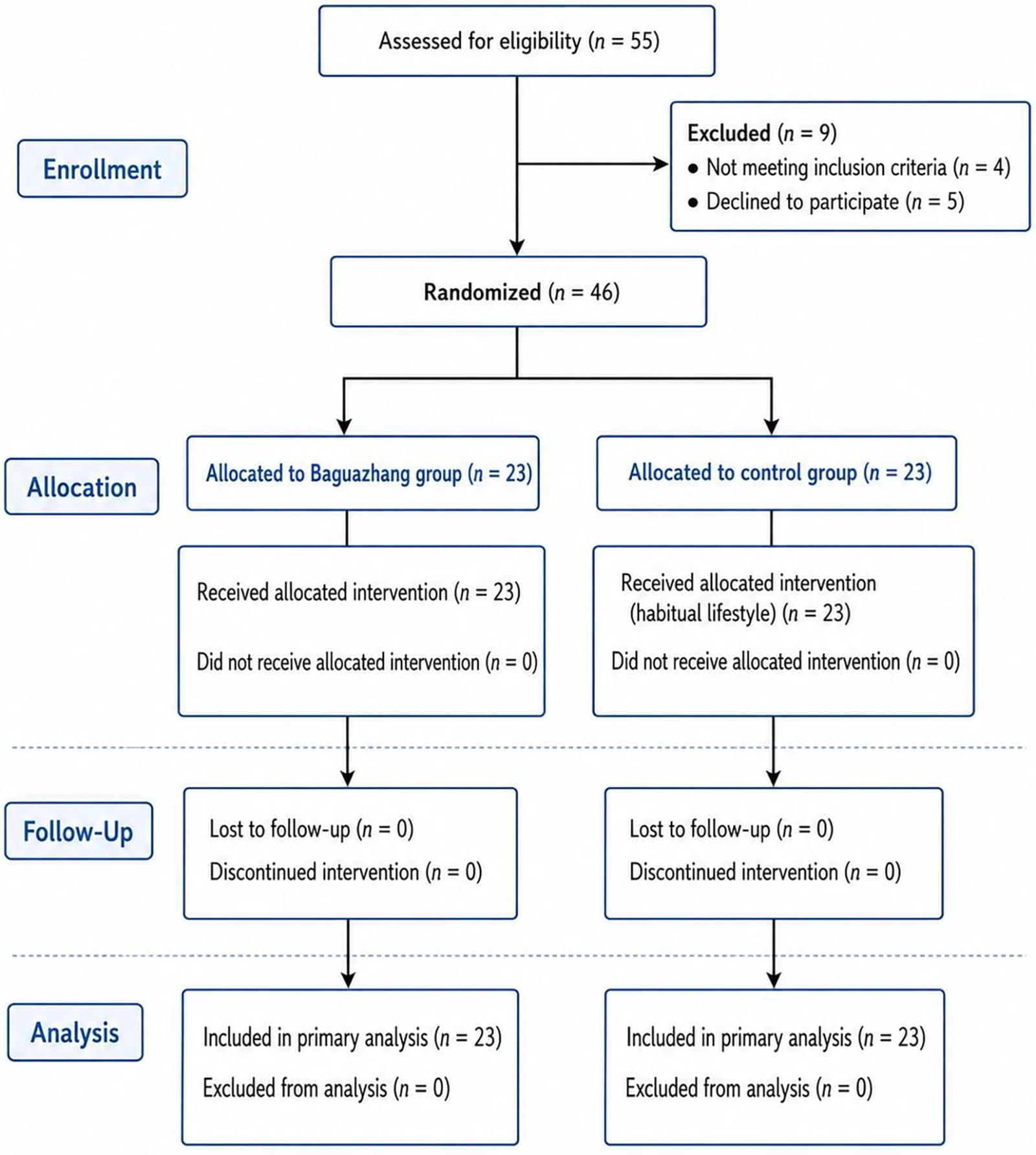
In a randomized trial, 12 weeks of the mind-body exercise lowered systolic blood pressure by 7.2 mmHg compared with habitual lifestyle.In a randomized trial, 12 weeks of the mind-body exercise lowered systolic blood pressure by 7.2 mmHg compared with habitual lifestyle. Forty-six sedentary postmenopausal women enrolled in a 12-week randomized controlled trial evaluating Baguazhang, a traditional Chinese mind-body…

Figure 1