Baguazhang lowers systolic blood pressure in postmenopausal women
In a randomized trial, 12 weeks of the mind-body exercise lowered systolic blood pressure by 7.2 mmHg compared with habitual lifestyle.
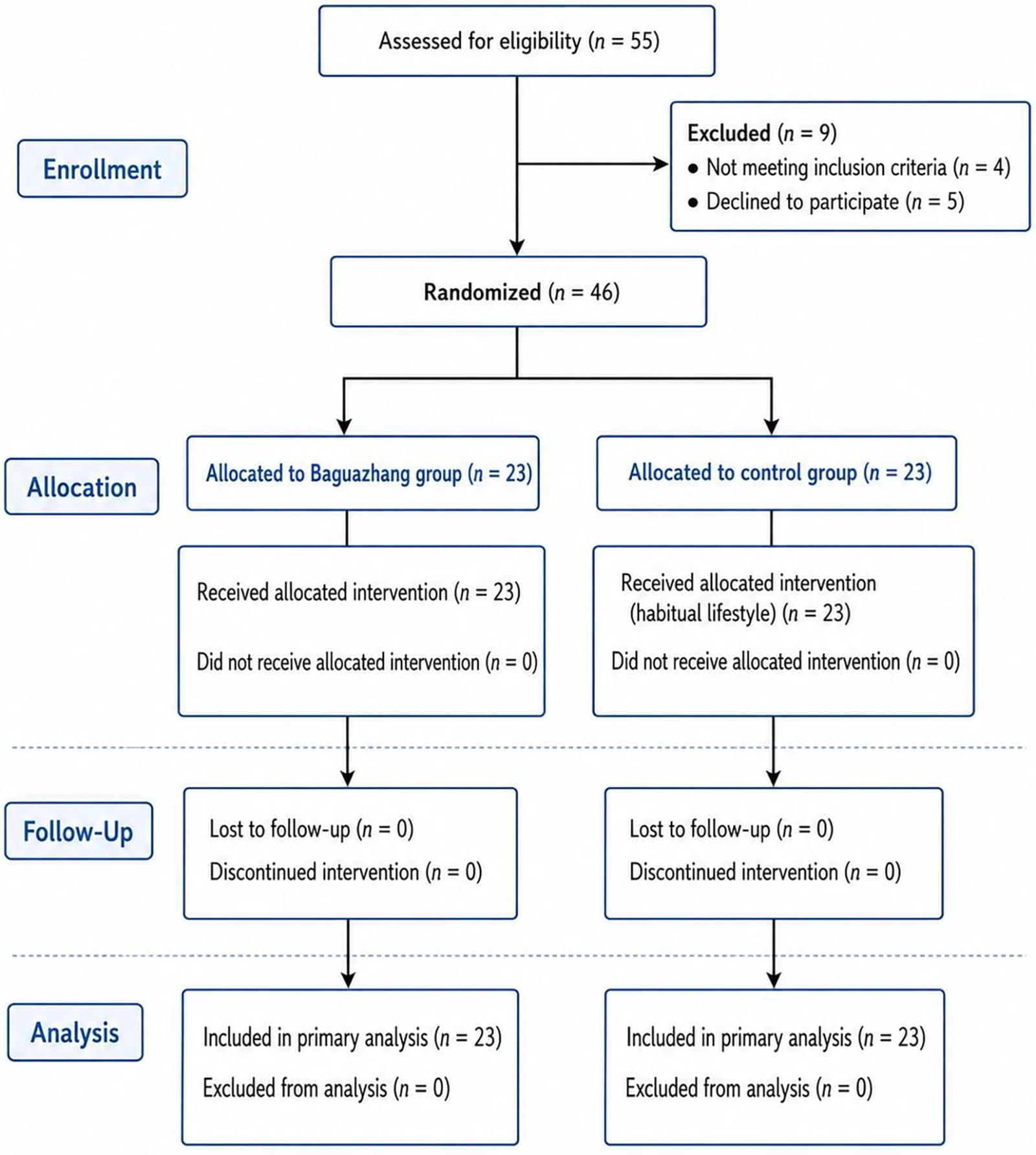
Forty-six sedentary postmenopausal women enrolled in a 12-week randomized controlled trial evaluating Baguazhang, a traditional Chinese mind-body exercise. Participants were assigned to either a habitual-lifestyle control group or three supervised 60-minute training sessions each week. Synchronized chest-strap monitors and waist-mounted accelerometers tracked cardiovascular load and trunk motion throughout the sessions.
The exercise elicited moderate average cardiovascular intensity, peaking during circle-walking phases at an average heart rate of 133.4 beats per minute. Compared with controls, participants practicing Baguazhang achieved lower systolic blood pressure after 12 weeks, with an adjusted mean difference of -7.2 mmHg. Secondary analyses also found lower diastolic blood pressure by 4.4 mmHg, a reduced resting heart rate by 4.5 beats per minute, and increased heart-rate variability.
Why it matters
Cardiovascular and autonomic functions typically decline after menopause, raising the risk of hypertension. Quantifying the physiological demands of multicomponent practices helps clinicians identify measurable, moderate-intensity exercise options to support vascular aging.
Caveats
The trial was small, testing 46 women, and secondary outcomes were not adjusted for multiplicity. In addition, waist accelerometers did not measure joint or musculoskeletal loads, and the design did not assess whether Baguazhang outperforms other exercise formats.
The paper
Wearable biosensors characterize Baguazhang exercise intensity, trunk acceleration, and cardiovascular autonomic adaptations in postmenopausal women
Cao J, Zhang M
Frontiers in Physiology · 18 Sep 2026