Risk factors for atherosclerosis diverge across vascular beds
Across 468,266 adults followed for 13 years, genetics drove initial disease onset, whereas clinical and lifestyle factors dominated subsequent polyvascular spread and mortality.
In an observational study of 468,266 UK Biobank participants followed for 13 years, researchers examined risk factors for atherosclerotic disease across coronary, cerebrovascular, and peripheral artery beds. Over the follow-up period, 2.8% of participants developed coronary artery disease (CAD), 1.9% developed cerebrovascular disease (CeVD), and 1.5% developed peripheral artery disease (PAD).
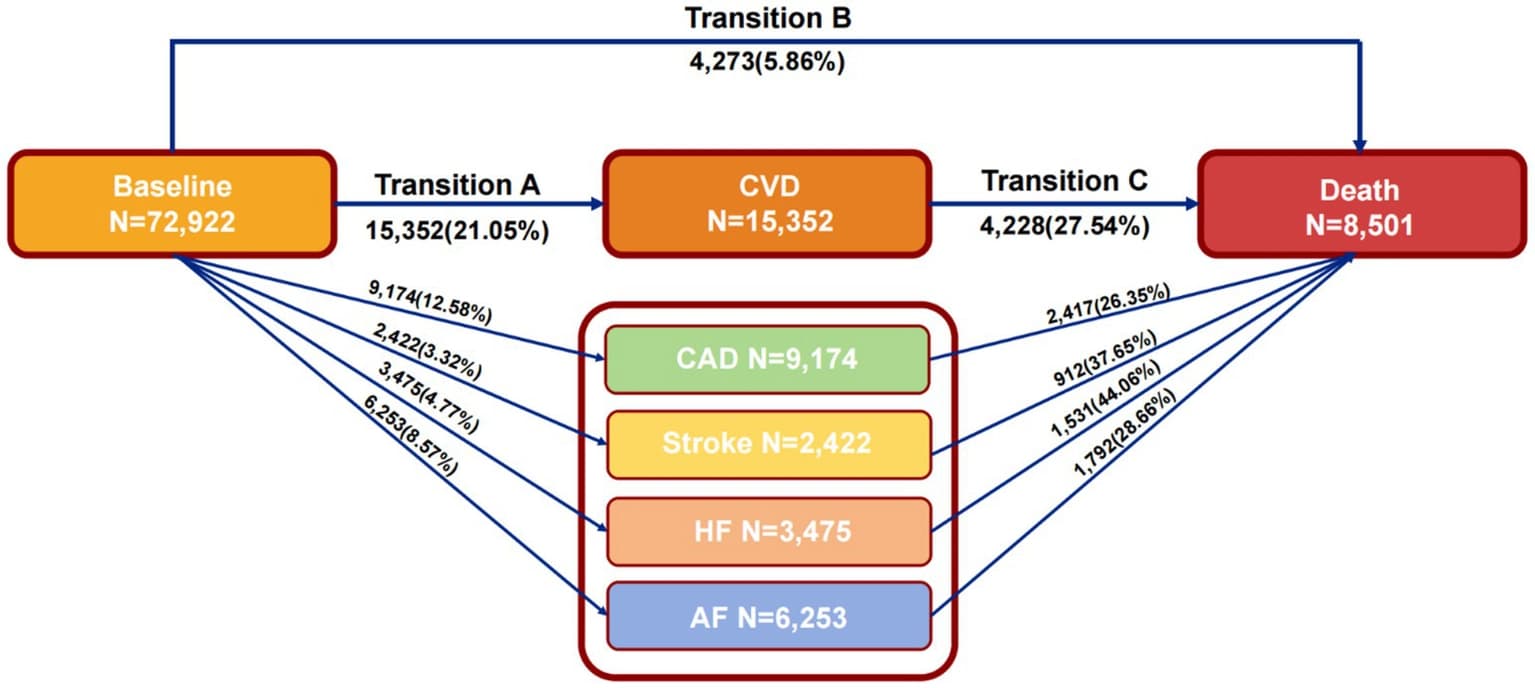
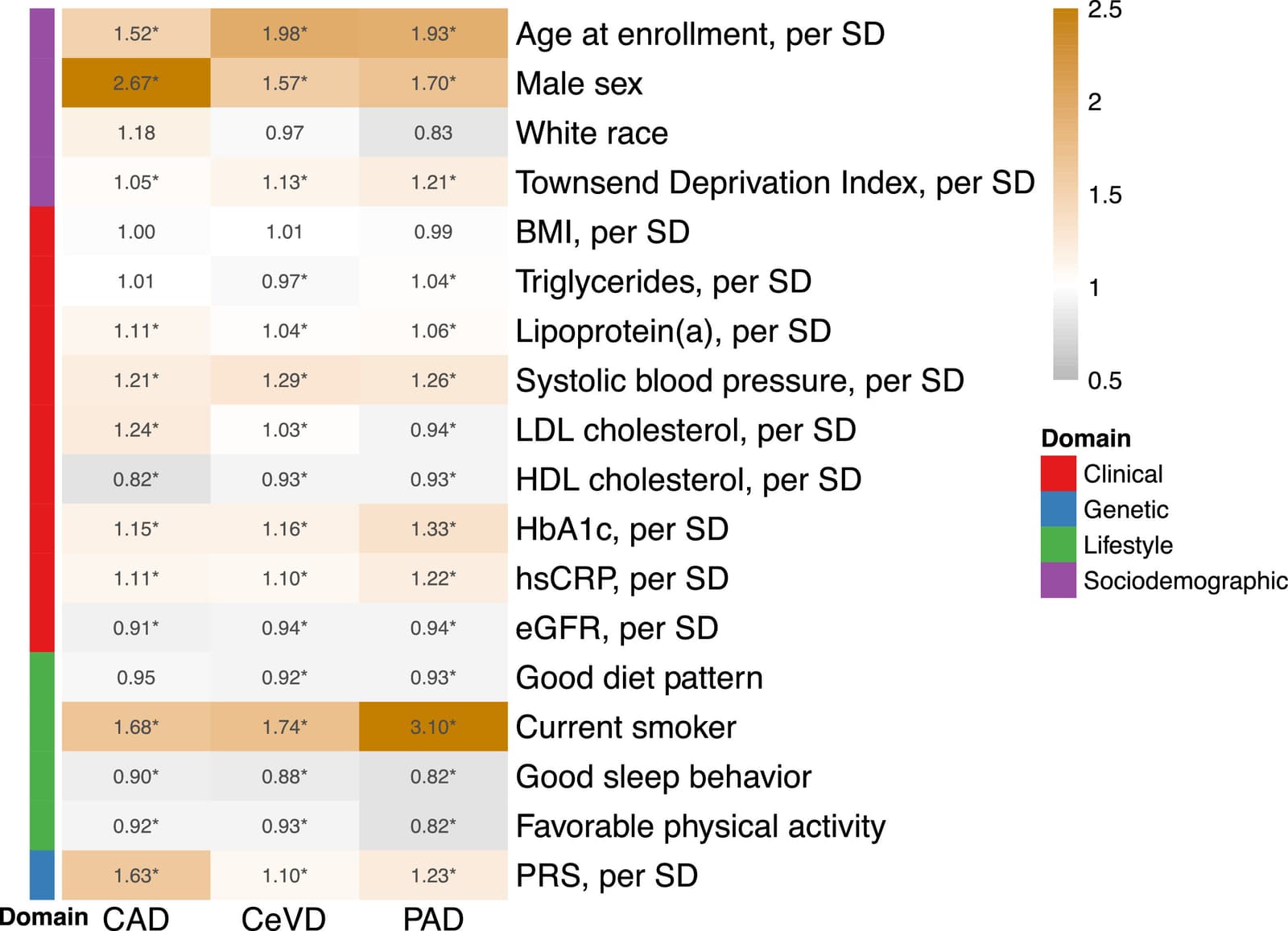
Different vascular beds exhibited divergent risk profiles. Peripheral artery disease was most strongly linked to inflammation, metabolic dysfunction, and smoking, with high-sensitivity C-reactive protein yielding a hazard ratio of 1.22 per standard deviation (95% CI 1.19–1.26). In contrast, coronary artery disease was more strongly tied to LDL cholesterol (HR 1.24, 95% CI 1.21–1.26) and polygenic risk scores. Multistate modeling revealed that polygenic risk scores mainly predicted initial disease transitions, whereas clinical and lifestyle measures more strongly tracked subsequent polyvascular spread and death.
Why it matters
The findings show that vascular aging is not a uniform systemic process. Instead, localized arterial beds follow distinct biological trajectories driven by differing genetic, metabolic, and inflammatory insults over time.
Caveats
The analysis is observational and relies on clinically documented disease events in the UK Biobank, which may undercount subclinical disease.
The paper
Multidomain risk profiles and documented polyvascular involvement across atherosclerotic vascular beds
Supriami K, Flores AM, Sui Y et al.
American Journal of Preventive Cardiology · 19 Jun 2026