Figure 1
Figure 1From Cerebral Circulation - Cognition and Behavior
Brain agingHumans

Disadvantaged neighborhoods tie to lower brain vascular function

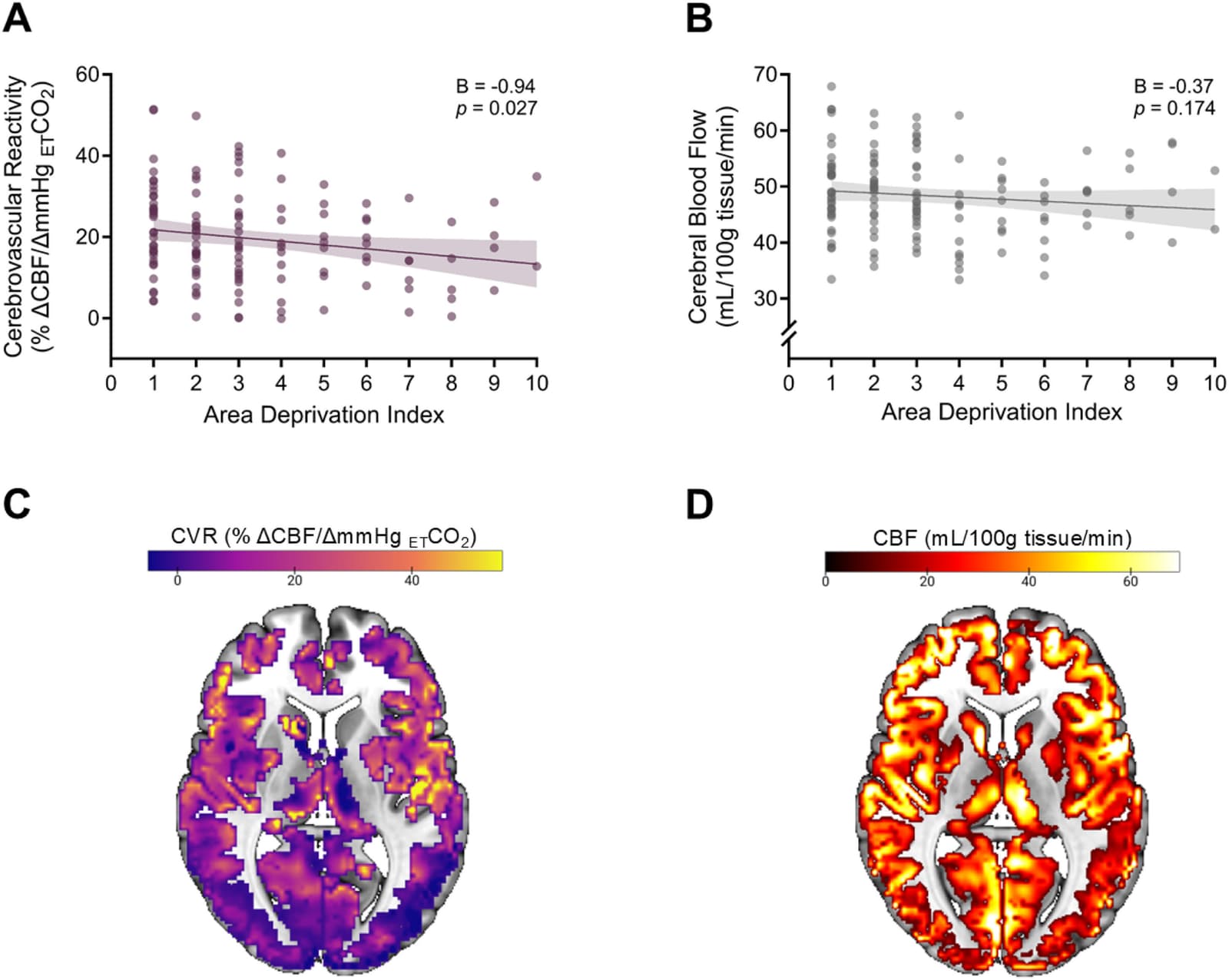
In 132 older adults, greater neighborhood deprivation was associated with lower whole-brain cerebrovascular reactivity, independent of traditional vascular risks and Alzheimer's pathology.

Cerebral Circulation - Cognition and Behavior

In 132 older adults without a history of clinical stroke or dementia, greater neighborhood deprivation was associated with reduced cerebrovascular function. Researchers quantified neighborhood deprivation using the Area Deprivation Index and evaluated participants with brain MRI and venipuncture. They measured spontaneous whole-brain cerebrovascular reactivity as the percent change in resting cerebral blood flow per unit change in end-tidal CO2. Participants living in more disadvantaged neighborhoods showed lower whole-brain cerebrovascular reactivity after adjusting for age and sex (p = 0.027). Further adjustments for APOE ε4 carrier status, vascular risk factors, and the plasma Alzheimer's disease biomarker p-tau217 did not alter the results.

Why it matters

The findings show that social and environmental disadvantage can compromise cerebrovascular function in older age independently of traditional vascular risk factors and Alzheimer's disease pathology.

Caveats

The study was observational in a cohort of 132 older adults, and the authors note that further research using more diverse samples and a life-course model is warranted.

The paper

Older adults in more disadvantaged neighborhoods exhibit brain vascular dysfunction

Law KW, Engstrom AC, Lohman T et al.

Cerebral Circulation - Cognition and Behavior · 15 Sep 2026
See all
bioRxivHumansPreprint

Human neurons accumulate far more mutations over lifespan than shorter-lived mammals

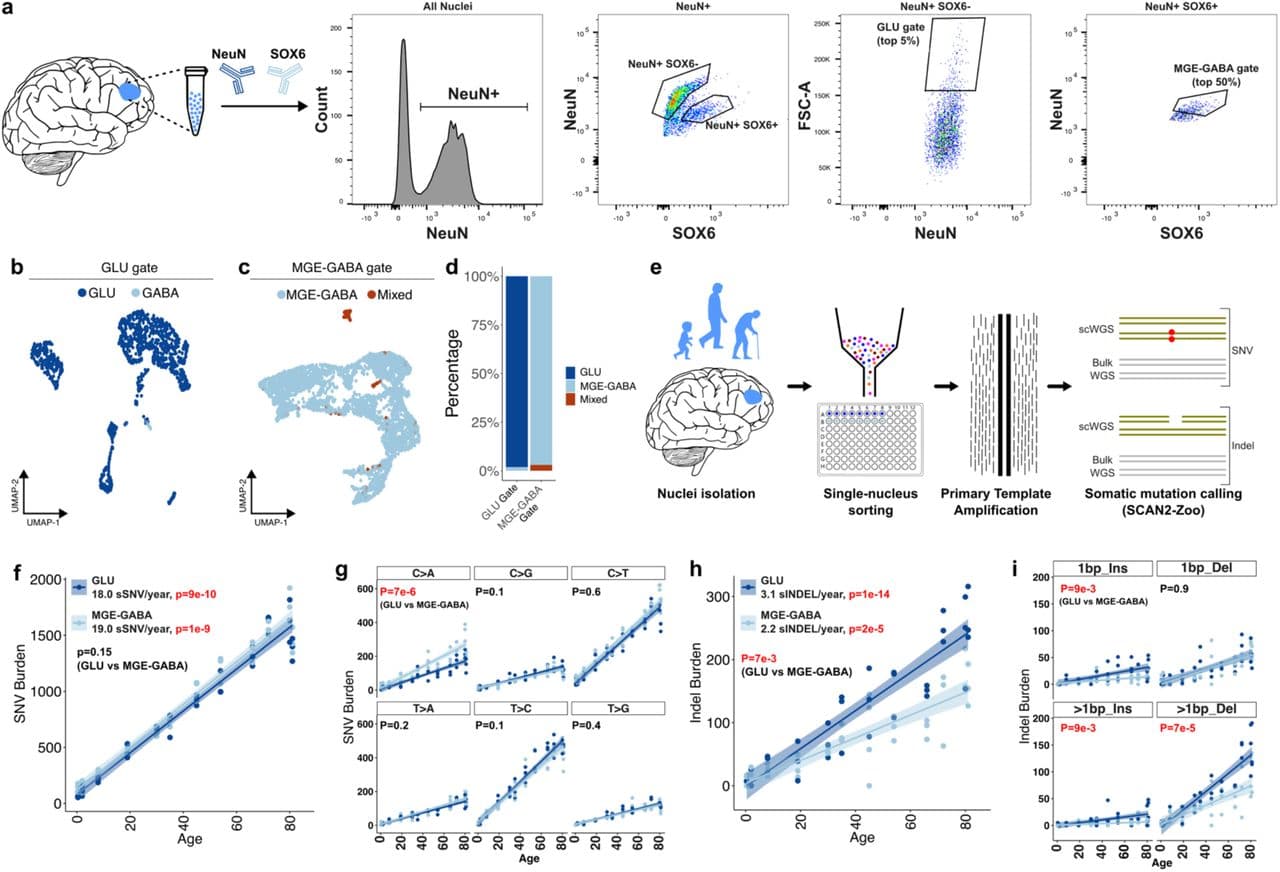
Cortical neurons gain mutations at similar yearly rates across six species, leaving aged humans with uniquely high mutational burdens and…Cortical neurons gain mutations at similar yearly rates across six species, leaving aged humans with uniquely high mutational burdens and transcriptomic dysregulation. In a preprint analyzing humans, chimpanzees, rhesus macaques, marmosets, ferrets, and mice, researchers evaluated genomic…

Distinct cerebral cortical neuronal subtypes display subtle yet specific differences in their mutational landscape.
bioRxivAnimalsPreprint

CAR T cells targeting inflammatory bone marrow progenitors restore cognition in aged mice

Clearing these peripheral myeloid cells remodeled brain macrophages and improved cognitive performance without requiring the engineered immune cells…Clearing these peripheral myeloid cells remodeled brain macrophages and improved cognitive performance without requiring the engineered immune cells to enter the brain. In aged mice and mouse models of Alzheimer's disease, researchers tested CAR T cell therapies targeting inflammatory…

Nature NeuroscienceHumans

Aging and Alzheimer's alter separate functional brain pathways

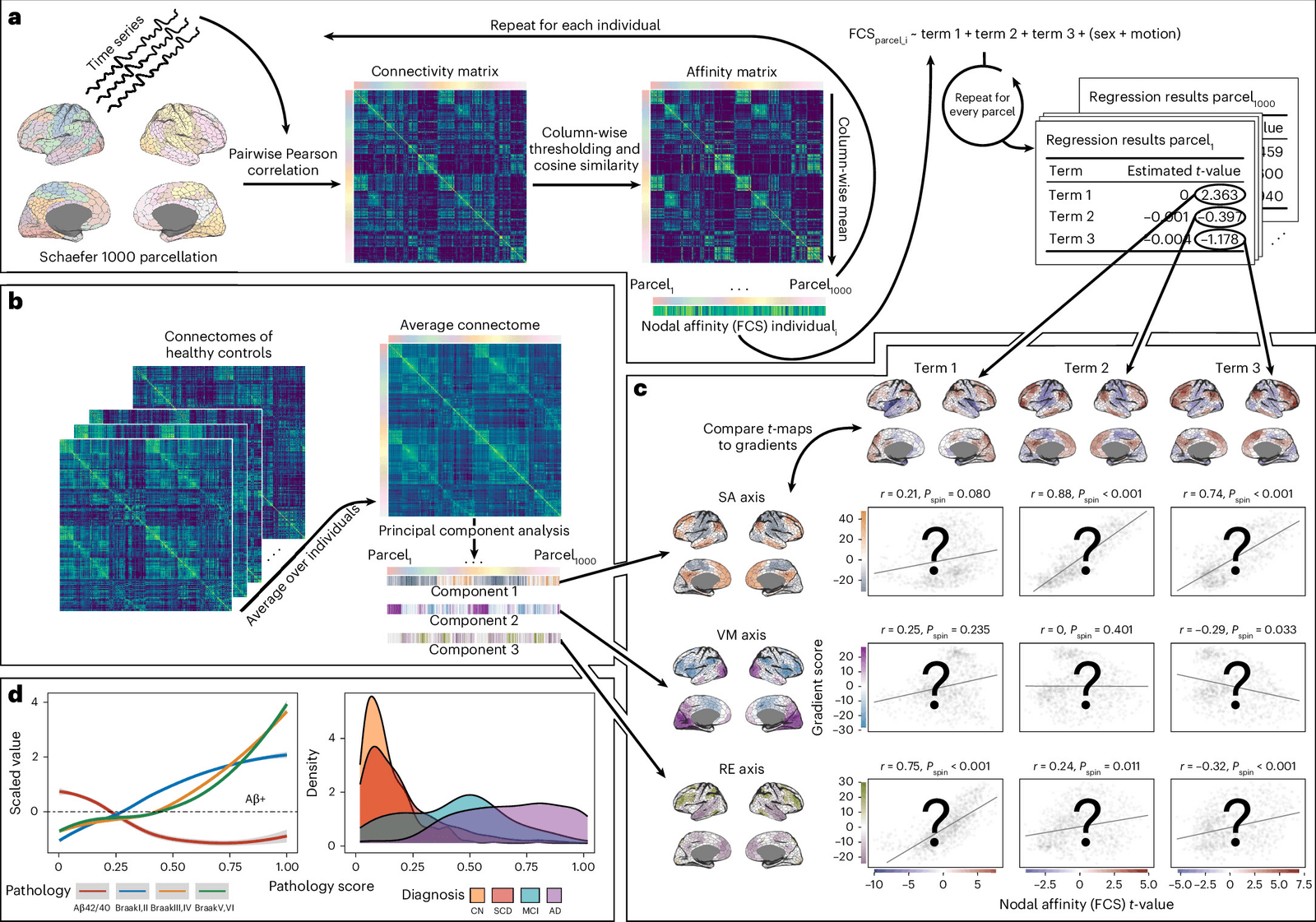
Two human cohorts of 973 and 129 individuals revealed that aging and Alzheimer's disease disrupt separate, orthogonal functional communication axes…Two human cohorts of 973 and 129 individuals revealed that aging and Alzheimer's disease disrupt separate, orthogonal functional communication axes across the brain. In two independent human cohorts (BioFINDER-2, N = 973; Alzheimer's Disease Neuroimaging Initiative, N = 129), researchers…

Figure 1
bioRxivAnimalsPreprint

Extracellular cGAMP drives neuroinflammation and premature aging phenotypes in mice

Loss of the cGAMP-degrading enzyme ENPP1 allows microglia-derived signaling molecules to trigger STING-dependent inflammation across multiple brain…Loss of the cGAMP-degrading enzyme ENPP1 allows microglia-derived signaling molecules to trigger STING-dependent inflammation across multiple brain cell types. In a mouse study, researchers found that advanced age and experimental autoimmune encephalomyelitis cause microglia to accumulate…

medRxivHumansPreprint

Auditory nerve myelin degeneration defines a subtype of age-related hearing loss

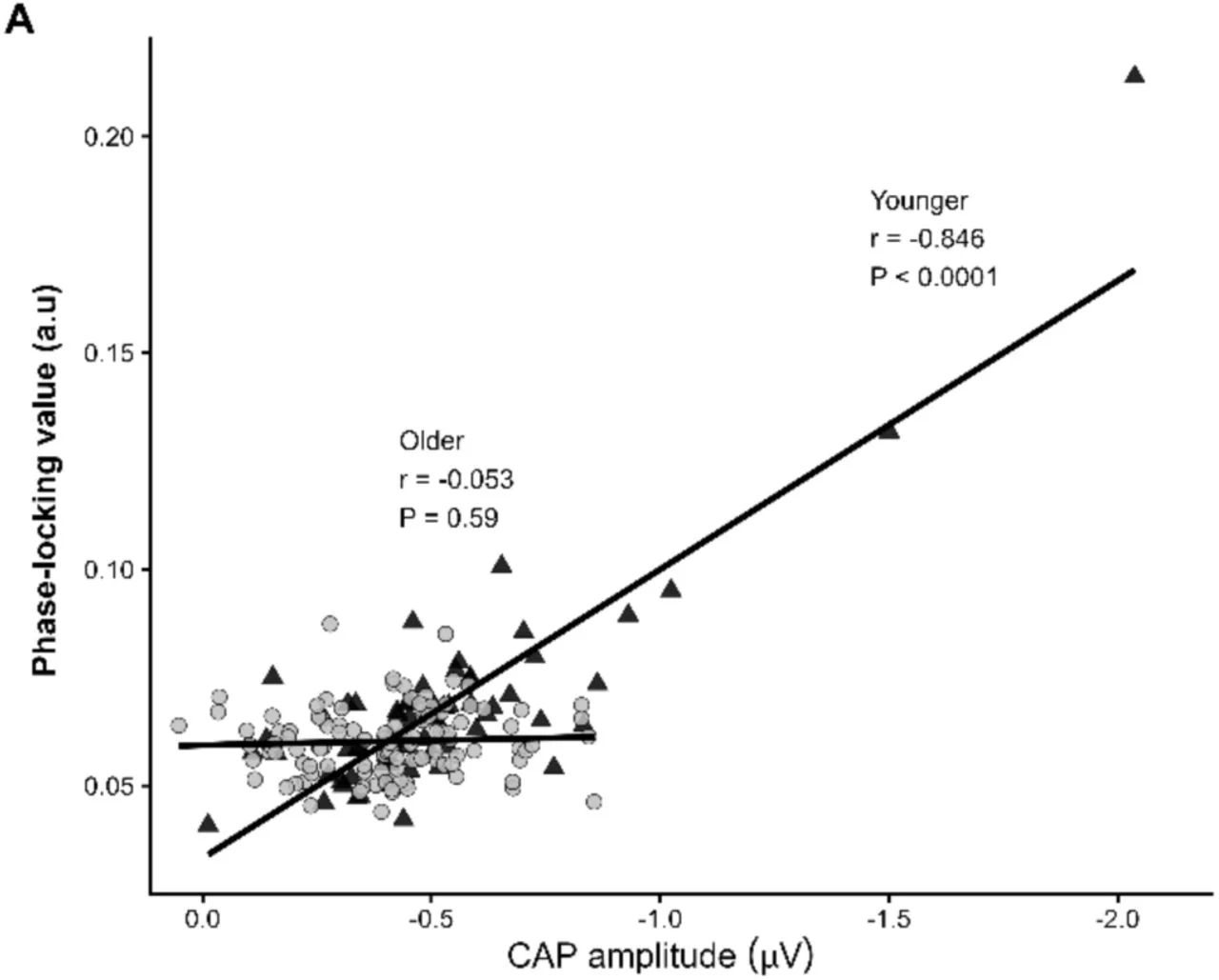
Researchers linked poor auditory nerve synchrony and myelin degradation to amplified communication difficulties in older humans, beyond standard…Researchers linked poor auditory nerve synchrony and myelin degradation to amplified communication difficulties in older humans, beyond standard hearing thresholds. In a human study detailed in a preprint, researchers investigated how auditory nerve changes affect hearing in older adults.

Aging modifies the association between auditory nerve response amplitude and neural synchrony.