Figure 1
Figure 1From Frontiers in Public Health
Humans

Machine learning stratifies disability risk in older adults

An XGBoost model reached an AUC of 0.782 in an external cohort of 2,066 older adults to predict basic activities of daily living disability.

Frontiers in Public Health

In a study of older adults aged 65 and older, researchers developed and externally validated a machine learning model to predict disability risk. The training and internal validation cohorts included 3,599 individuals from the China Health and Retirement Longitudinal Study, while an independent survey of 2,066 older adults served as an external validation cohort. Disability was measured by basic activities of daily living.

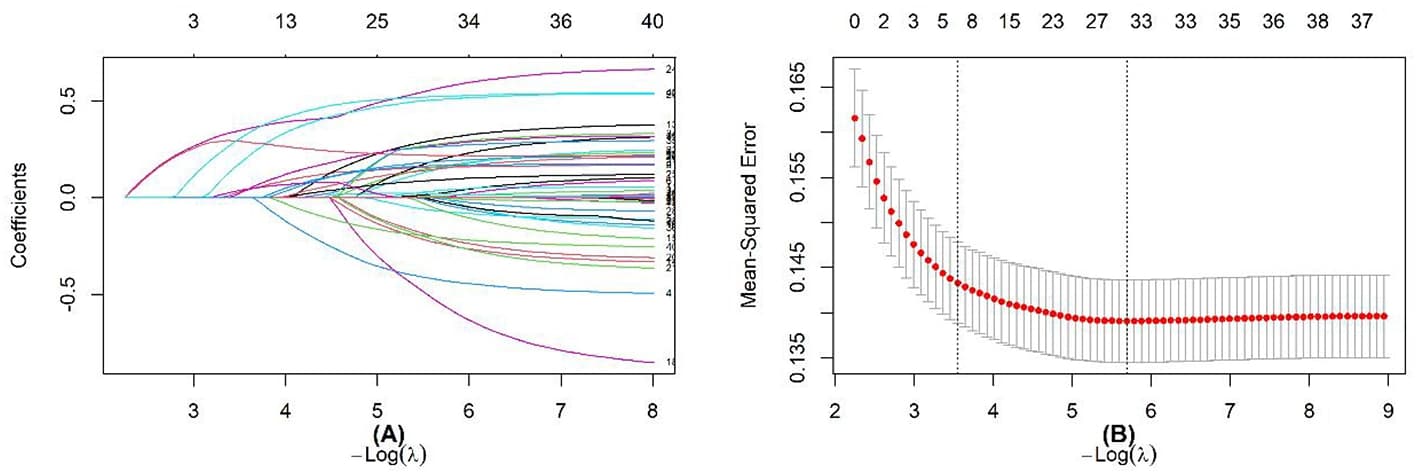
LASSO regression identified seven key predictors. Among five tested approaches, an Extreme Gradient Boosting model showed the best performance, yielding an area under the curve of 0.737 internally and 0.782 externally. Model interpretation identified age, comorbidity burden, and lower limb mobility as the primary predictors. Stratifying individuals into three tiers using risk cutoffs of 33.17% and 65.23% aligned with significant gradient increases in observed disability incidence.

Why it matters

Stratifying disability risk helps clinicians identify functional decline early and prioritize care interventions that preserve independence in aging populations.

Caveats

The external validation set used a cross-sectional design, and both cohorts were drawn exclusively from populations in China.

The paper

Development and external validation of a machine learning model for three-tier disability risk stratification in older adults

Mao Y, Guo Z, Wang J et al.

Frontiers in Public Health · 18 Sep 2026
bioRxivAnimalsPreprint

Hypothalamic tau impairs pair bonding in male prairie voles

Expressing mutant tau in the paraventricular hypothalamus stopped 18-month-old male prairie voles from forming selective bonds and altered their…Expressing mutant tau in the paraventricular hypothalamus stopped 18-month-old male prairie voles from forming selective bonds and altered their oxytocin signaling. In monogamous prairie voles, expressing dementia-linked tau P301L in the hypothalamus disrupts selective social bonds…

Neurology Open AccessHumans

Epigenetic age links to higher dementia risk in older adults

In 2,606 participants, higher DunedinPACE was associated with increased risks of mild cognitive impairment (hazard ratio 1.16) and all-cause dementia…In 2,606 participants, higher DunedinPACE was associated with increased risks of mild cognitive impairment (hazard ratio 1.16) and all-cause dementia (hazard ratio 1.30). In 2,606 Framingham Heart Study Offspring cohort participants (mean age 66 years), researchers examined how three DNA…

Frontiers in NutritionHumans

Cardiometabolic burden increases CVD and death risk in MASLD

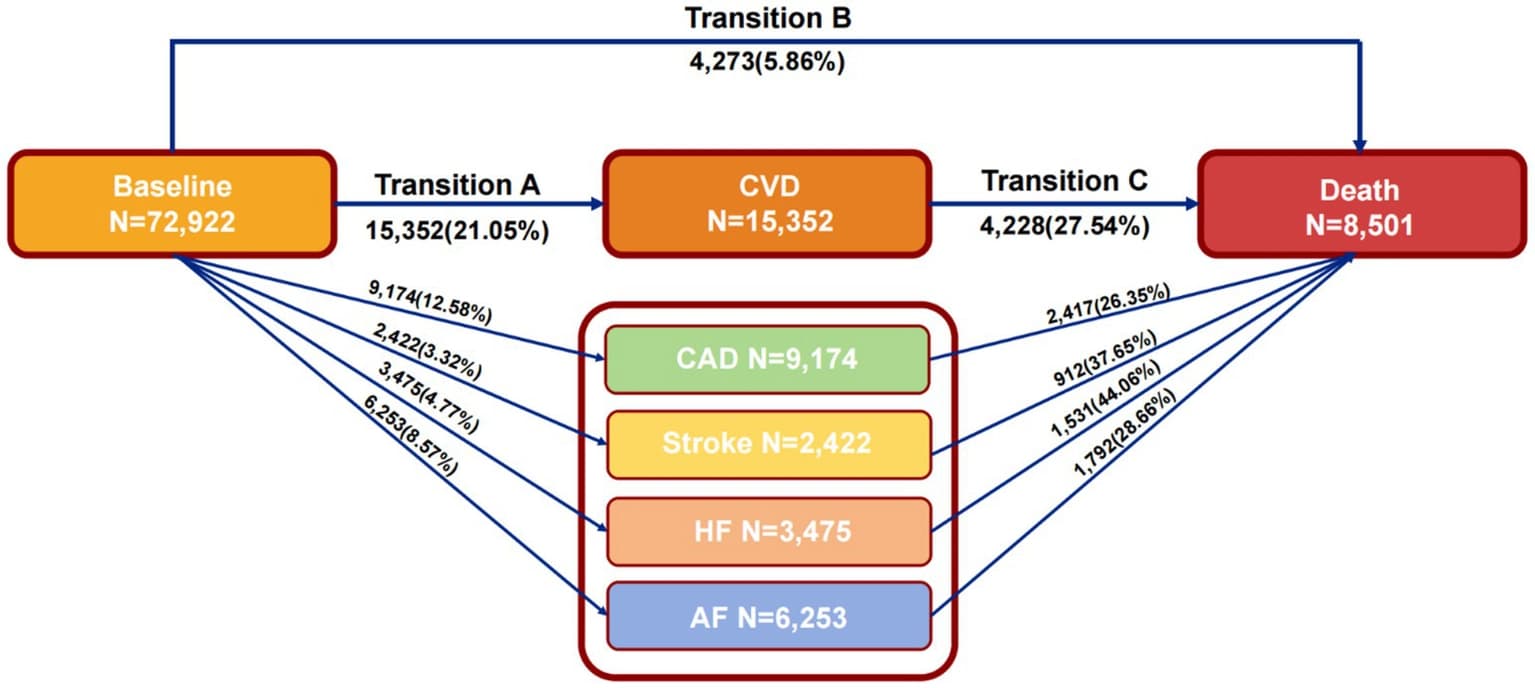
In 72,922 adults with MASLD, each additional cardiometabolic risk factor raised hazard ratios for incident CVD to 1.17 and subsequent death to 1.13.In 72,922 adults with MASLD, each additional cardiometabolic risk factor raised hazard ratios for incident CVD to 1.17 and subsequent death to 1.13. A prospective cohort study tracked 72,922 UK adults with metabolic dysfunction-associated steatotic liver disease over a median follow-up of…

Figure 1
Frontiers in PhysiologyHuman trial

Baguazhang lowers systolic blood pressure in postmenopausal women

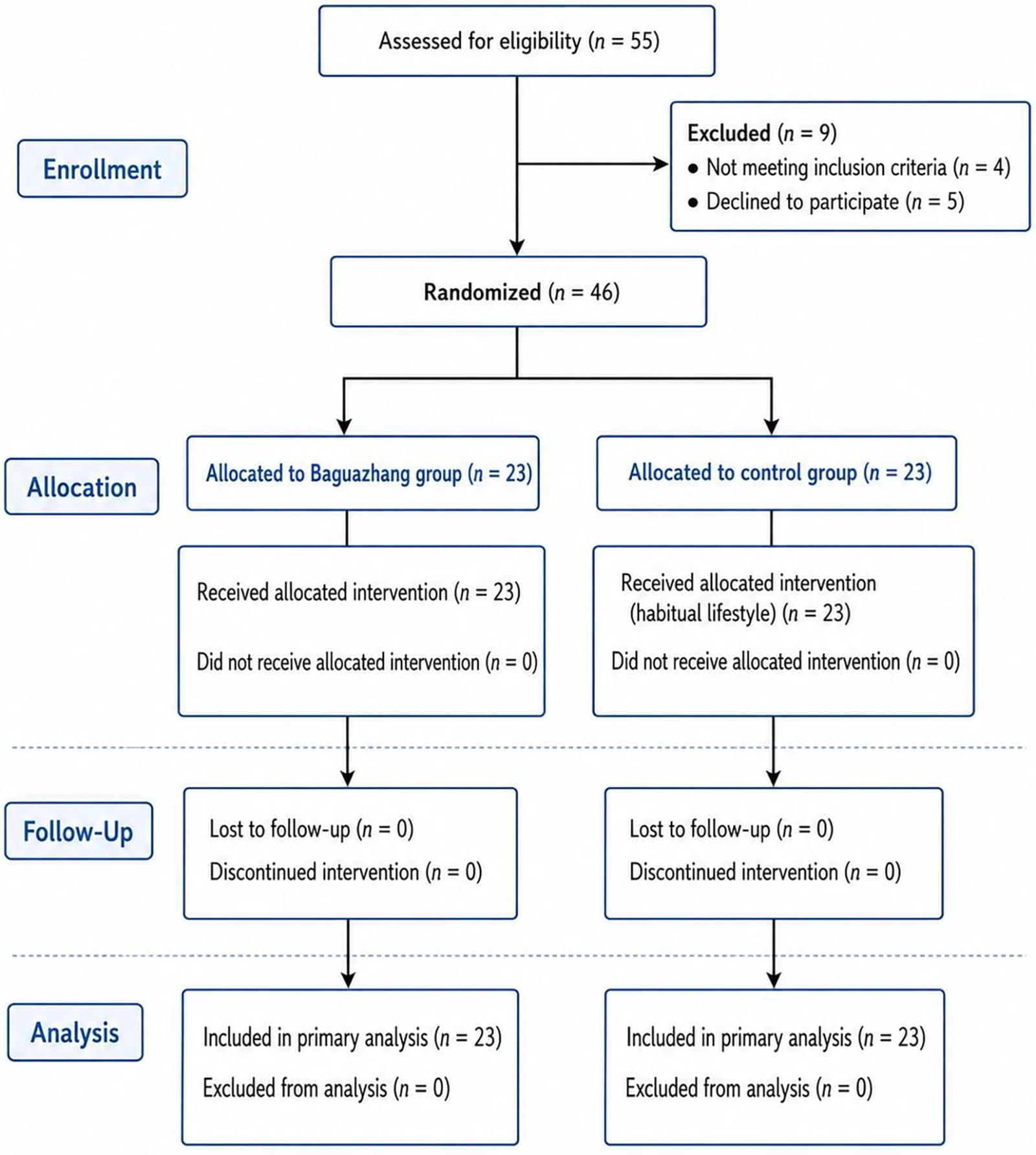
In a randomized trial, 12 weeks of the mind-body exercise lowered systolic blood pressure by 7.2 mmHg compared with habitual lifestyle.In a randomized trial, 12 weeks of the mind-body exercise lowered systolic blood pressure by 7.2 mmHg compared with habitual lifestyle. Forty-six sedentary postmenopausal women enrolled in a 12-week randomized controlled trial evaluating Baguazhang, a traditional Chinese mind-body…

Figure 1