Depression burden links to cardiometabolic multimorbidity
Depression progression raised cardiometabolic multimorbidity risk across cohorts, with hazard ratios of 1.474 in China, 1.325 in the USA, and 1.456 in Europe.
Journal of Global Health
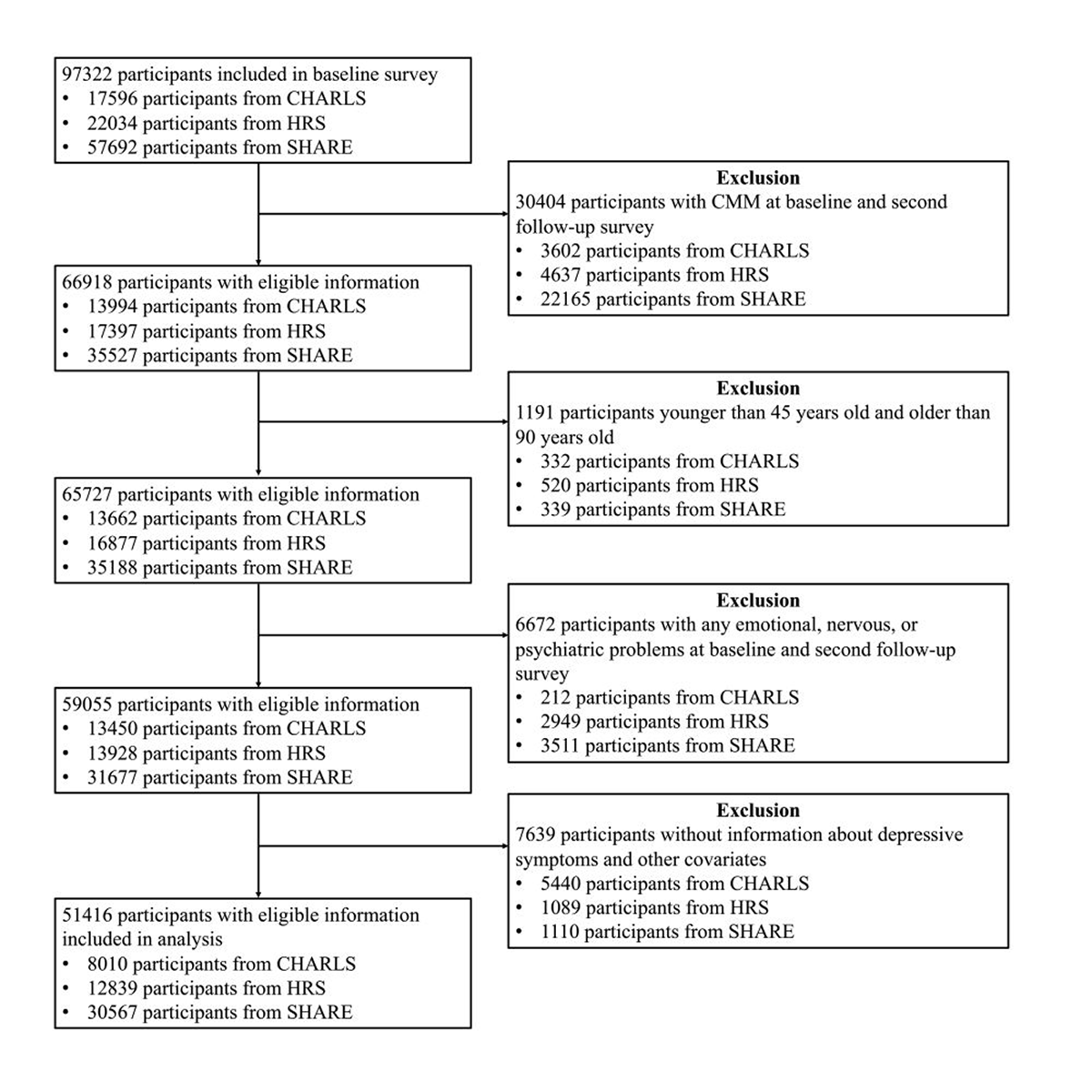
In a prospective study of 51,416 middle-aged and older adults across China, the USA, and Europe, researchers evaluated how long-term depressive burden relates to incident cardiometabolic multimorbidity. The researchers defined cardiometabolic multimorbidity as the co-occurrence of two or more conditions among heart disease, stroke, and diabetes.
Over follow-up periods averaging 6.00 to 7.61 years, 2,689 participants developed cardiometabolic multimorbidity. Depression progression was associated with elevated risk in China (hazard ratio = 1.474), the USA (hazard ratio = 1.325), and Europe (hazard ratio = 1.456). Conversely, depression remission correlated with reduced risk in China (hazard ratio = 0.558) and Europe (hazard ratio = 0.764). Multimorbidity risk rose with each standard deviation increase in cumulative depressive scores, and sex modified these associations in the USA and Europe, showing a stronger impact in females.
Why it matters
Cardiometabolic multimorbidity increasingly impairs healthy aging as global populations grow older. Tracking dynamic changes in depressive burden may help identify adults at high risk of developing multiple chronic cardiometabolic diseases.
Caveats
The observational design demonstrates associations but cannot prove that depression directly causes cardiometabolic multimorbidity. Furthermore, the correlation between depression remission and reduced disease risk did not reach statistical significance in the US cohort.
The paper
Show 8 more authors
Meihao Wu, Dongyao Zhao, Fuyuan Wang, Yongxin Han, Yudong MIAO, Guoguo Jin, Tao Li, Hao Li,Zhengzhou Central Hospital
Journal of Global Health · 2 Oct 2026