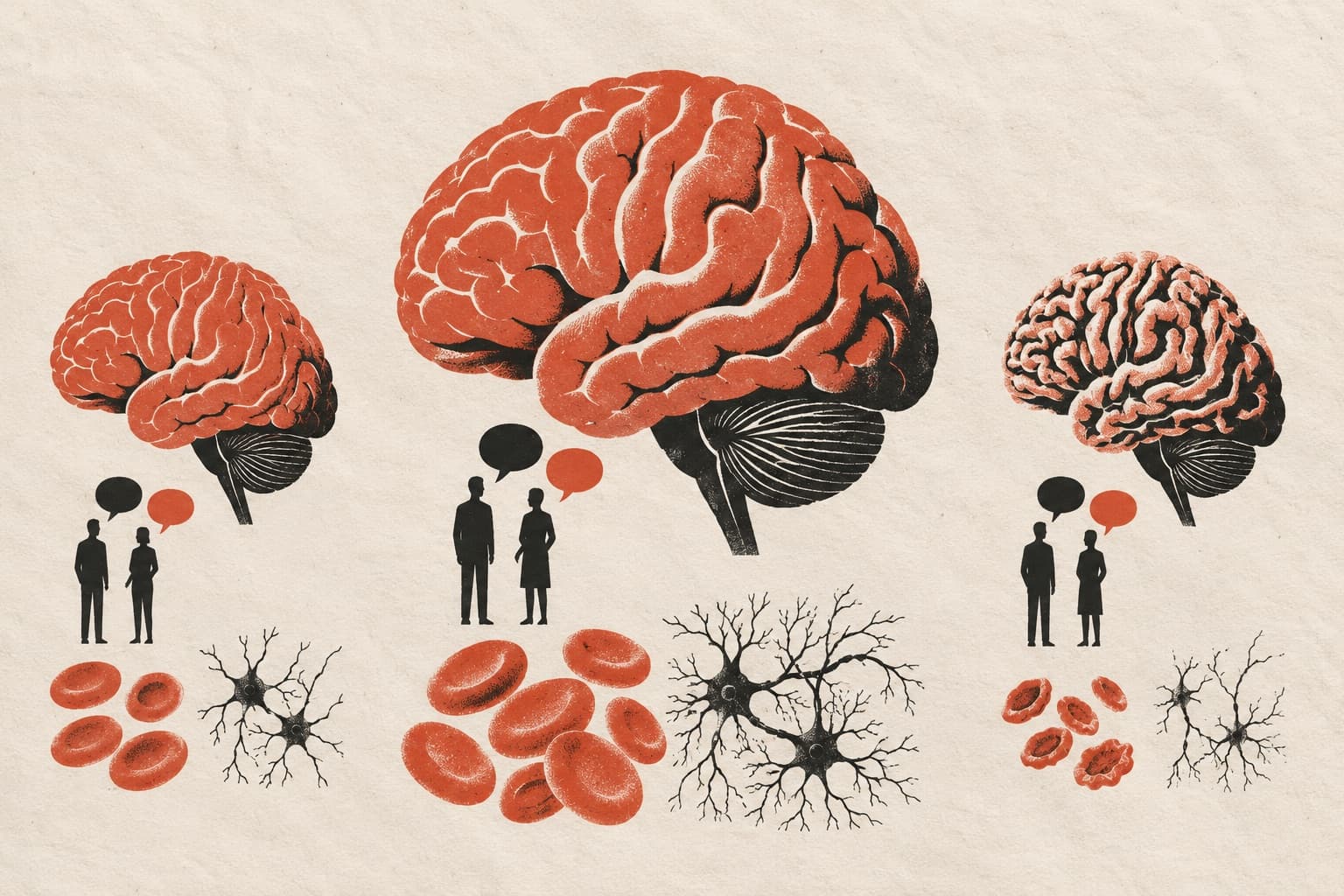
Plasma pTau217 and recall test refine prognosis in Down syndrome
Using Alzheimer Biomarker Consortium-Down Syndrome data, researchers found combining plasma pTau217 with a cued recall task identifies cognitively stable adults facing clinical impairment within seven years.
Annals of Neurology
In individuals with Down syndrome, combining a blood biomarker with a memory assessment can identify who is most likely to develop clinical impairment over the next seven years. People with Down syndrome face a high risk of developing Alzheimer's disease, yet accessible tools for routine clinical screening remain limited. To address this gap, researchers analyzed data from the Alzheimer Biomarker Consortium-Down Syndrome (ABC-DS). They integrated measures of plasma pTau217 with performance on the modified cued recall task. This low-burden, multimodal framework detected a subgroup of cognitively stable individuals at markedly elevated risk of progressing to clinical impairment within seven years. The authors report that the combined approach refines prognosis, supports clinical management, and enables more efficient clinical trial enrichment.
Why it matters
Down syndrome represents a significant genetic risk condition for Alzheimer's disease, making accessible biomarkers critical for tracking neurodegenerative aging. Pinpointing early vulnerability helps researchers time interventions before irreversible cognitive decline occurs.
Caveats
The findings are based on observational cohort data from the ABC-DS consortium and require confirmation across broader clinical settings.
The paper
Memory and Plasma pTau217 Refine Prognosis in Down Syndrome
University of California, Irvine
Annals of Neurology · 2 Oct 2026