High neutrophil-to-lymphocyte ratio predicts cognitive decline
During five years of follow-up, 42.55% of older adults with high ratios progressed to mild cognitive impairment or dementia compared with 30.82% with normal ratios.
Frontiers in Aging Neuroscience
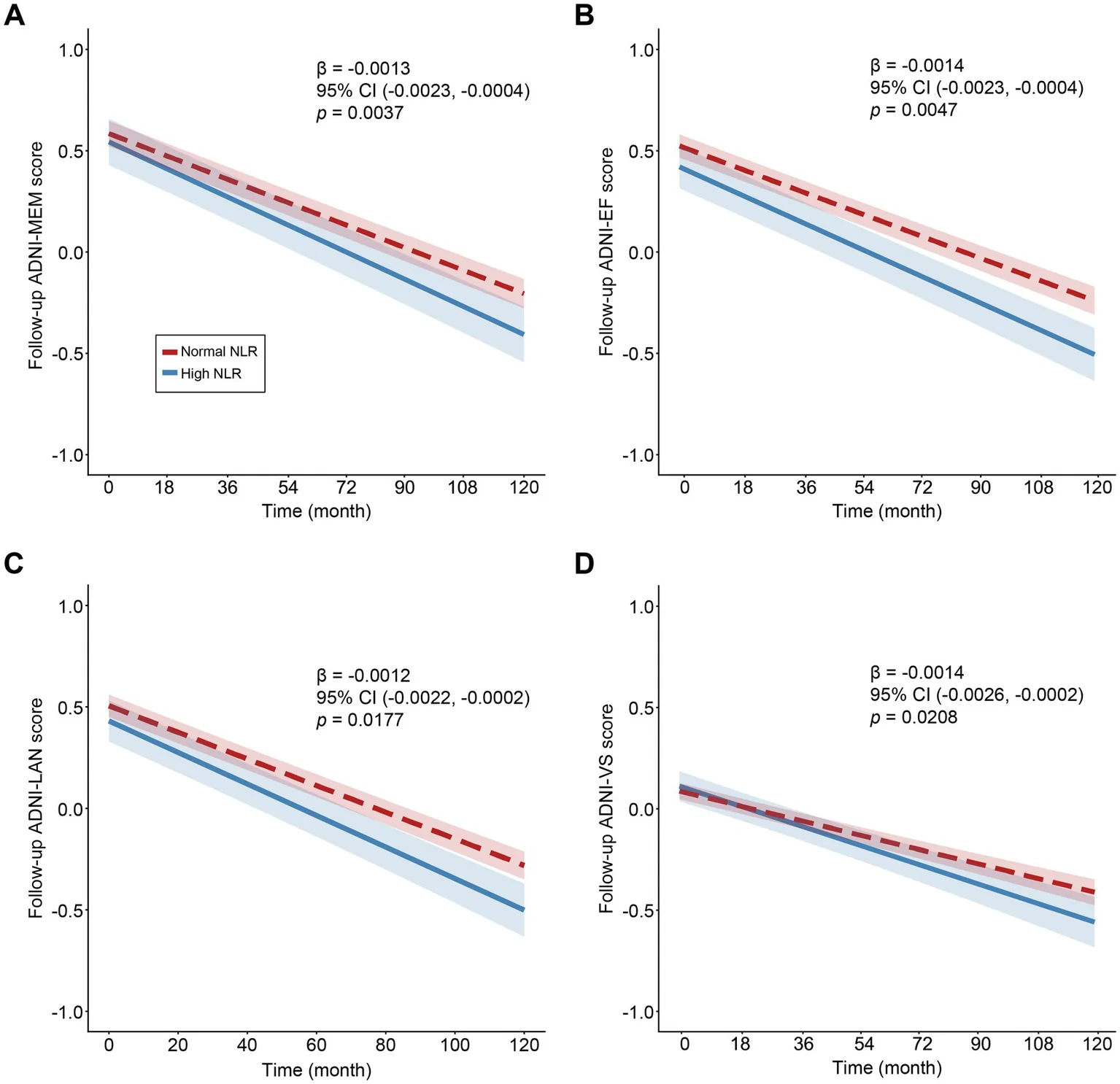
In 1,190 older adults without dementia, elevated baseline neutrophil-to-lymphocyte ratio tracked accelerated cognitive loss across multiple domains. Researchers analyzed participants from the Alzheimer's Disease Neuroimaging Initiative, including 405 cognitively normal individuals and 785 with mild cognitive impairment followed for an average of five years. Participants with a baseline ratio of 3 or higher experienced significantly faster decline in global cognition, memory, executive function, language, and visuospatial abilities. Each one-unit increase in baseline ratio was associated with a 20% increase in progression risk. Cerebrospinal fluid markers of tau pathology, but not amyloid-beta 42, partially mediated this decline, explaining 29.6% to 42.7% of the effect.
Why it matters
The findings link systemic peripheral inflammation to central tau pathology and neurodegeneration in early Alzheimer's disease trajectories. This highlights how circulating immune dysregulation could contribute to the clinical spread of age-related cognitive impairment.
Caveats
The study was observational and cannot establish causality, and participants were predominantly White and non-Hispanic. The authors also note that formal predictive modeling and external validation are required before this blood marker can be applied in clinical settings.
The paper
Shanxi Medical University
Frontiers in Aging Neuroscience · 16 Sep 2026