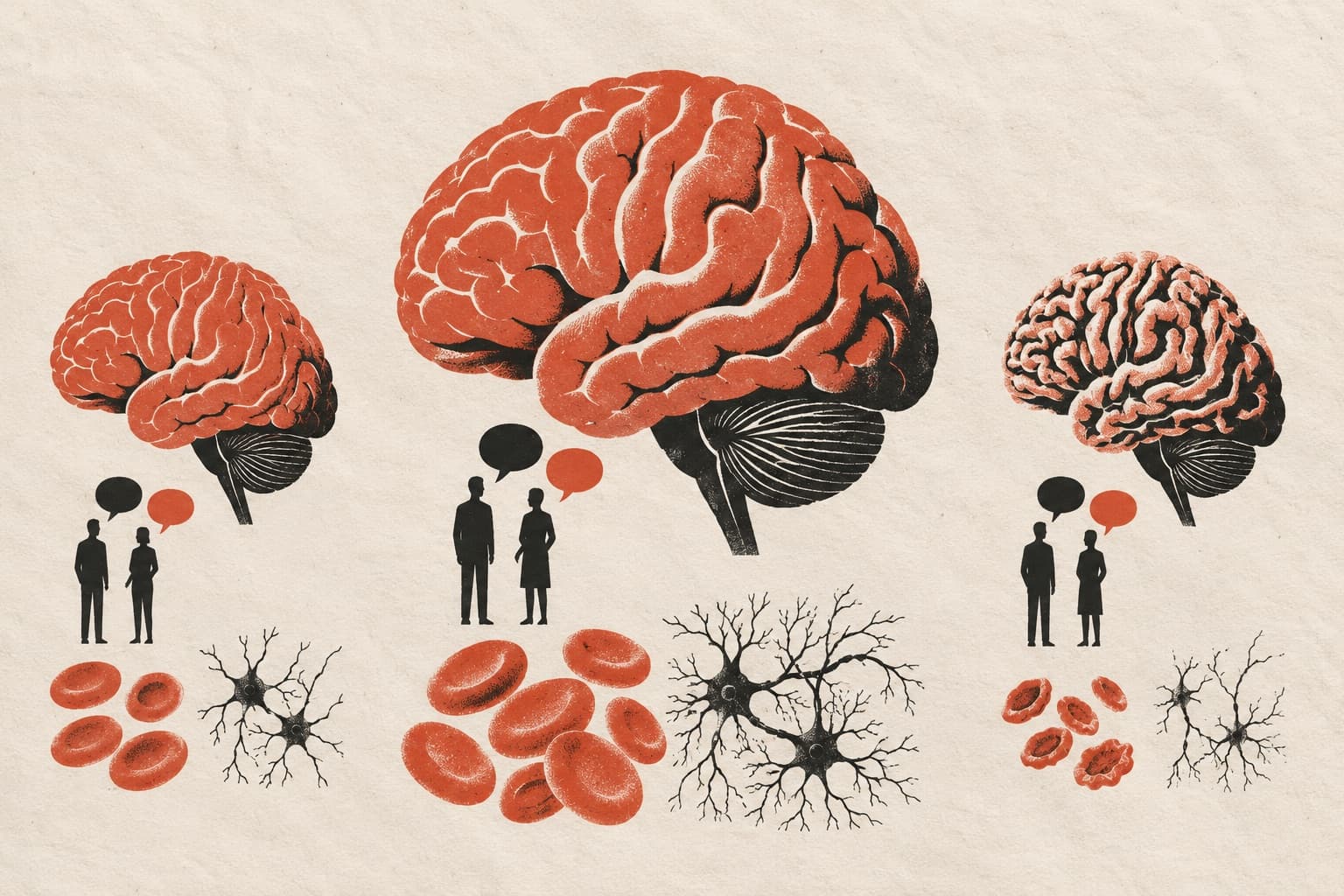
An 11-protein blood score tracks incident dementia risk
In over 36,000 UK Biobank participants, the signature raised Harrell's C-index from 0.798 to 0.862, carrying a hazard ratio of 2.645 per standard deviation increase.
Geriatrics & Gerontology International
In a prospective study of 36,696 UK Biobank participants followed for a median of 15.73 years, researchers identified an 11-protein plasma signature associated with incident dementia. The team screened 2,923 baseline Olink protein assays using Cox models adjusted for age, sex, and genetic principal components. After filtering with landmark analyses, redundancy pruning, and feature selection, they derived the 11-protein score. Among the cohort, 591 incident dementia events occurred. Each standard deviation increase in the score was linked to a hazard ratio of 2.645 for dementia. Adding the score to a basic model raised Harrell's C-index from 0.798 to 0.862, and from 0.792 to 0.861 in an extended clinical cohort. The associations also persisted across two- and five-year landmark analyses.
Why it matters
Circulating proteomic profiles provide minimally invasive tools to detect neurodegenerative risk years before symptom onset. A compact panel could help pinpoint systemic pathways linked to cognitive decline and biological aging.
Caveats
The study relied on observational data from a single biobank and evaluated internal performance only. The authors note that independent external validation is required before the score can be applied clinically.
The paper
An 11-Protein Plasma Proteomic Signature Associated With Incident Dementia Risk in the UK Biobank
Zhujiang Hospital
Geriatrics & Gerontology International · 1 Oct 2026