Plasma tau-217 levels rise early in tuberous sclerosis complex
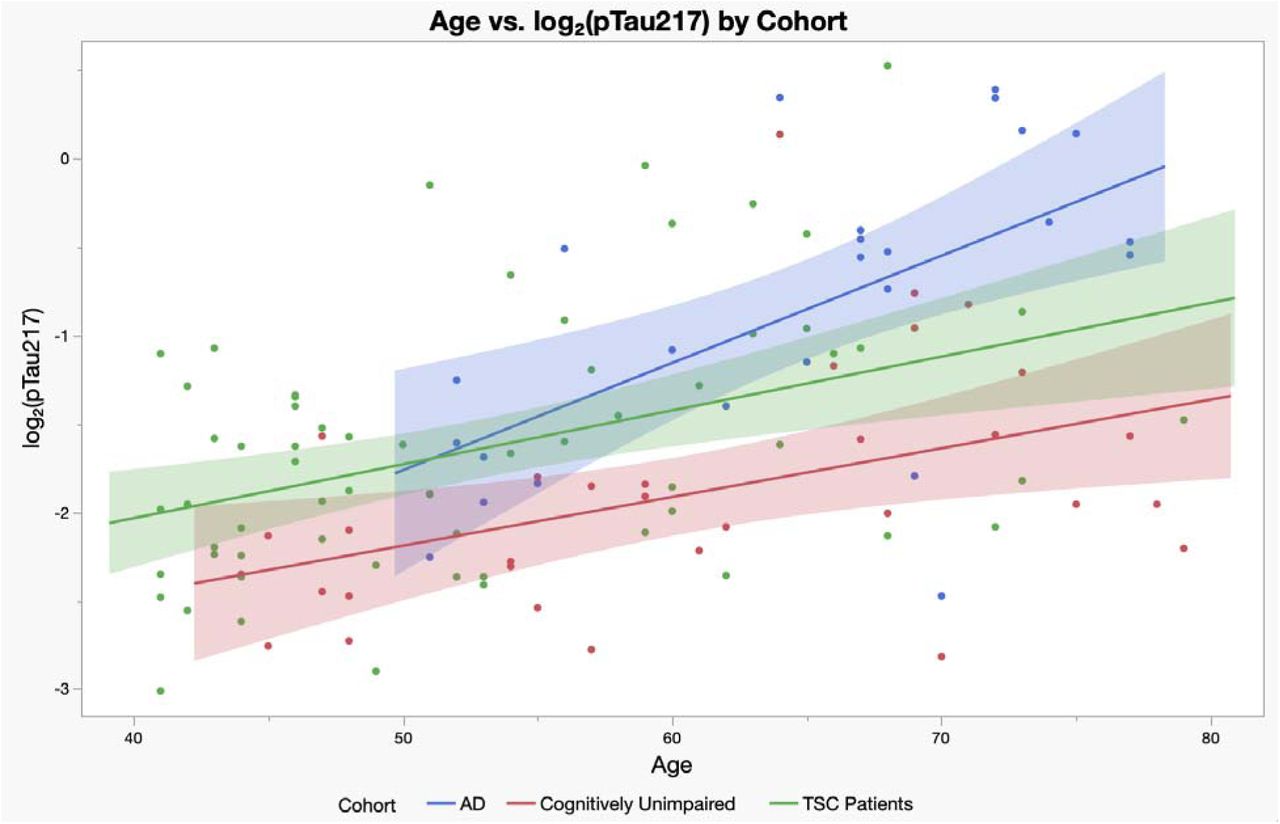
Log2 ptau-217 concentrations were significantly higher in 63 people with tuberous sclerosis complex than in 116 cognitively unimpaired controls (p < 0.0001).
medRxiv
In a human cohort study, researchers measured plasma levels of phosphorylated tau-217 (ptau-217) across 63 patients with tuberous sclerosis complex (TSC), 25 with Alzheimer's disease (AD), and 116 cognitively unimpaired controls. The preprint reports that individuals with TSC showed elevated plasma ptau-217 at younger ages. In multivariable linear regression, log2 ptau-217 levels were significantly lower in cognitively unimpaired controls relative to the TSC group (β = -0.21, SE = 0.05, p < 0.0001). Concentrations did not differ significantly between the TSC and AD groups (β = 0.17, SE = 0.09, p < 0.071). Age-related trajectories of ptau-217 accumulation were also parallel across the cohorts.
Why it matters
TSC involves chronic hyperactivation of the mTOR pathway, a central regulator of cellular aging. These findings suggest shared downstream neurodegenerative pathways between TSC and Alzheimer's disease independent of amyloid accumulation.
Caveats
This study is an observational preprint that has not yet undergone peer review. The Alzheimer's disease comparison group was relatively small, comprising 25 patients.
The paper
Duke University
medRxiv · 11 Sep 2026 · Preprint, not peer-reviewed