Impaired glucose tolerance is tied to higher stroke risk
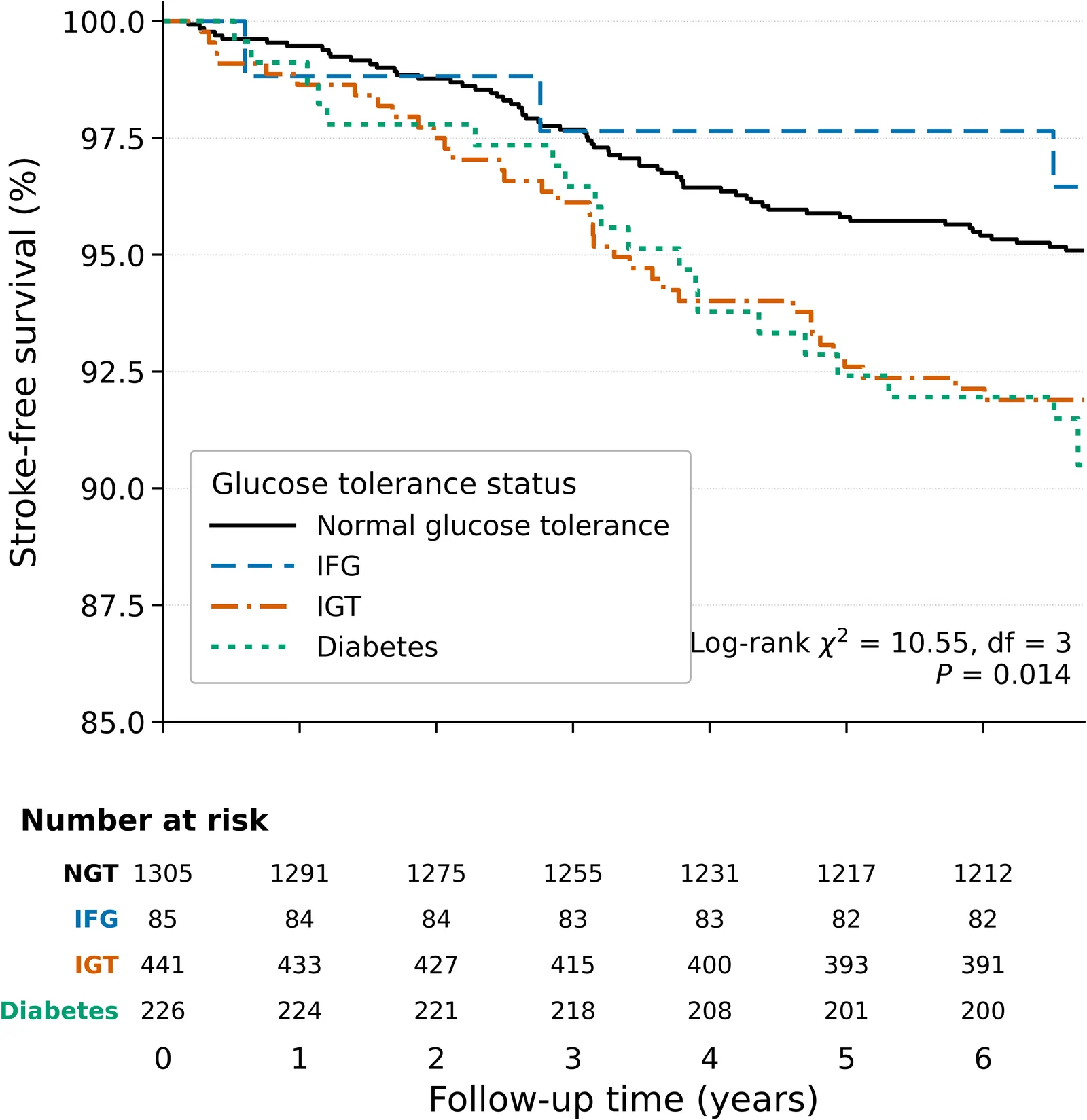
Impaired glucose tolerance carried a hazard ratio of 1.58 and diabetes 1.69 for first stroke compared with normal tolerance, while mortality showed no link.
Frontiers in Endocrinology
In a prospective cohort of 2,057 low-income rural Chinese adults followed for a mean of 6.4 years, researchers examined how glucose tolerance phenotypes relate to incident stroke and all-cause mortality. Participants completed a baseline oral glucose tolerance test and were categorized as having normal glucose tolerance, impaired fasting glucose, impaired glucose tolerance, or diabetes.
During follow-up, 121 individuals experienced a first-ever stroke and 68 died. After adjusting for age, sex, smoking, drinking, and kidney function, both impaired glucose tolerance (hazard ratio 1.58) and diabetes (hazard ratio 1.69) were associated with increased stroke risk compared with normal tolerance. Impaired fasting glucose showed no significant stroke association. In continuous analyses, postload glucose had a stronger per-standard-deviation association with stroke than fasting glucose. Neither baseline glucose categories nor continuous measures were associated with all-cause mortality.
Why it matters
Postprandial glucose handling frequently deteriorates during metabolic and vascular aging. These findings suggest that postload glycemic dysregulation may reflect cerebrovascular risk more sensitively than isolated fasting glucose levels.
Caveats
The observational design cannot establish causality, and findings from this specific rural farming community may not generalize to other populations. In addition, the small impaired fasting glucose subgroup constrained statistical power for that category.