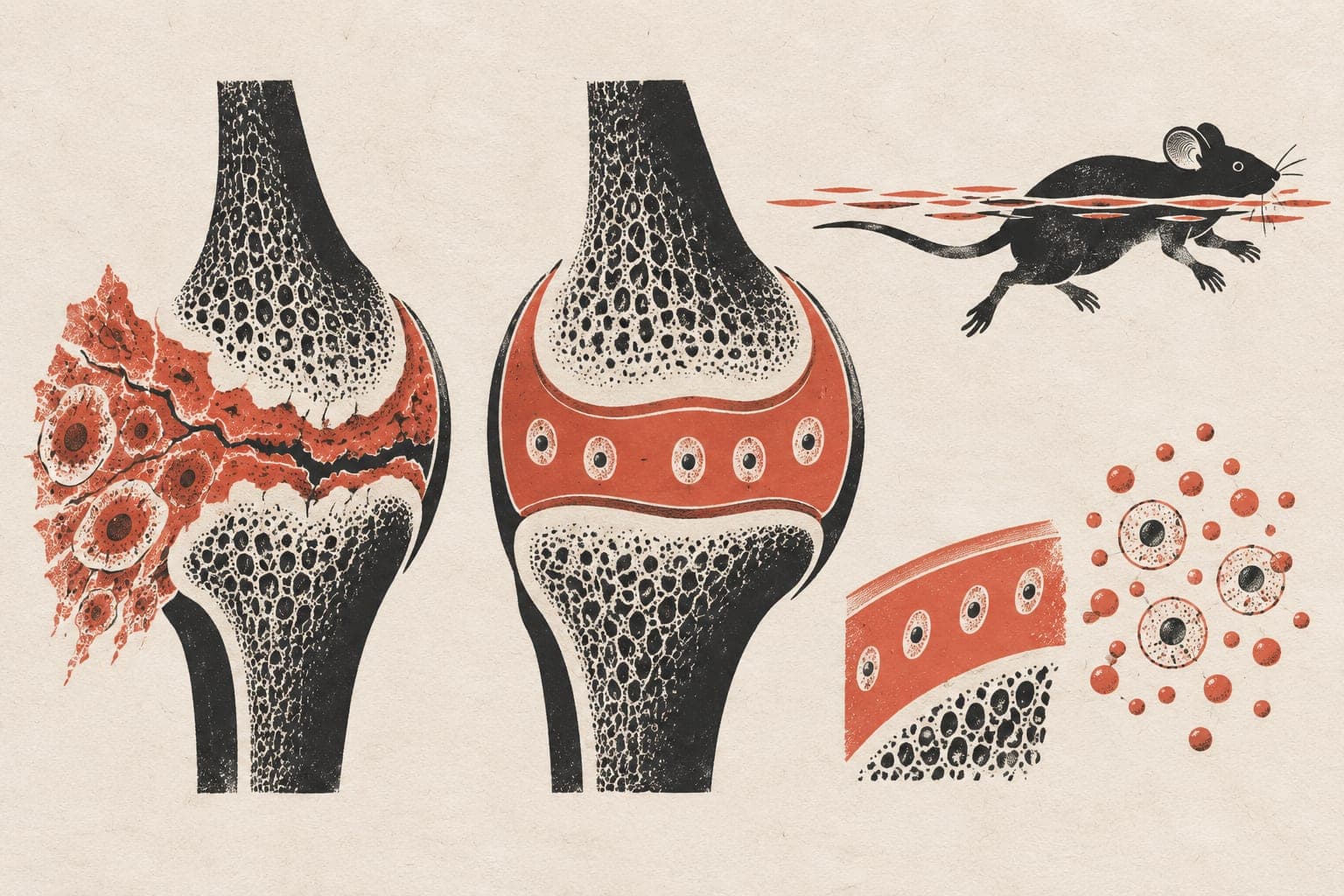
CKB overexpression mitigates osteoarthritis by delaying chondrocyte senescence via activation of the RAP1/PI3K/AKT signaling pathway
Abstract
BACKGROUND: Osteoarthritis (OA) is an age-related degenerative joint disease characterized by alterations in cellular senescence phenotypes. Although the pathogenesis of OA remains incompletely understood, chondrocyte senescence is considered a key driver in the OA pathological process. Therefore, this study aimed to identify pivotal senescence-related genes during OA and investigate their potential value as therapeutic targets. METHODS: The hub gene CKB for OA was identified by analyzing OA-related sequencing datasets (GSE169077 and GSE42295) from the GEO database in conjunction with a senescence-associated gene set. Western blotting, immunohistochemistry, and immunofluorescence were subsequently employed to detect CKB expression levels in human and rat OA tissues. An IL-1β-induced senescence model in rat primary chondrocytes was established, and a lentiviral vector overexpressing CKB was constructed to validate its functional role. Subsequently, combined analysis of CKB co-expression genes and OA-related gene sets was performed to screen and identify the downstream RAP1/PI3K/AKT signaling pathway. Rescue experiments further confirmed the effect of CKB on the RAP1/PI3K/AKT pathway and the associated changes in senescence-related phenotypes. Finally, a rat knee joint OA model was used to evaluate the therapeutic effect of CKB overexpression. RESULTS: CKB expression was decreased in OA tissues. In vitro experiments demonstrated that CKB overexpression suppressed IL-1β-induced chondrocyte senescence. Further mechanistic investigation revealed that CKB overexpression upregulates RAP1 expression, thereby activating the PI3K/AKT signaling pathway to delay chondrocyte senescence. In vivo experiments showed that CKB overexpression delayed the progression of OA in rat knee joints. CONCLUSION: The findings of this study indicate that CKB, as a potential therapeutic target for OA, activates the RAP1/PI3K/AKT signaling pathway to delay chondrocyte senescence, thereby ameliorating OA progression.
The paper
Dalian Medical University
Cellular Signalling, 12 May 2026