The Effect of Glucocorticoid and Mineralocorticoid Receptor Antagonists in the Skin of Aged Female Mice
8 weeks
Abstract
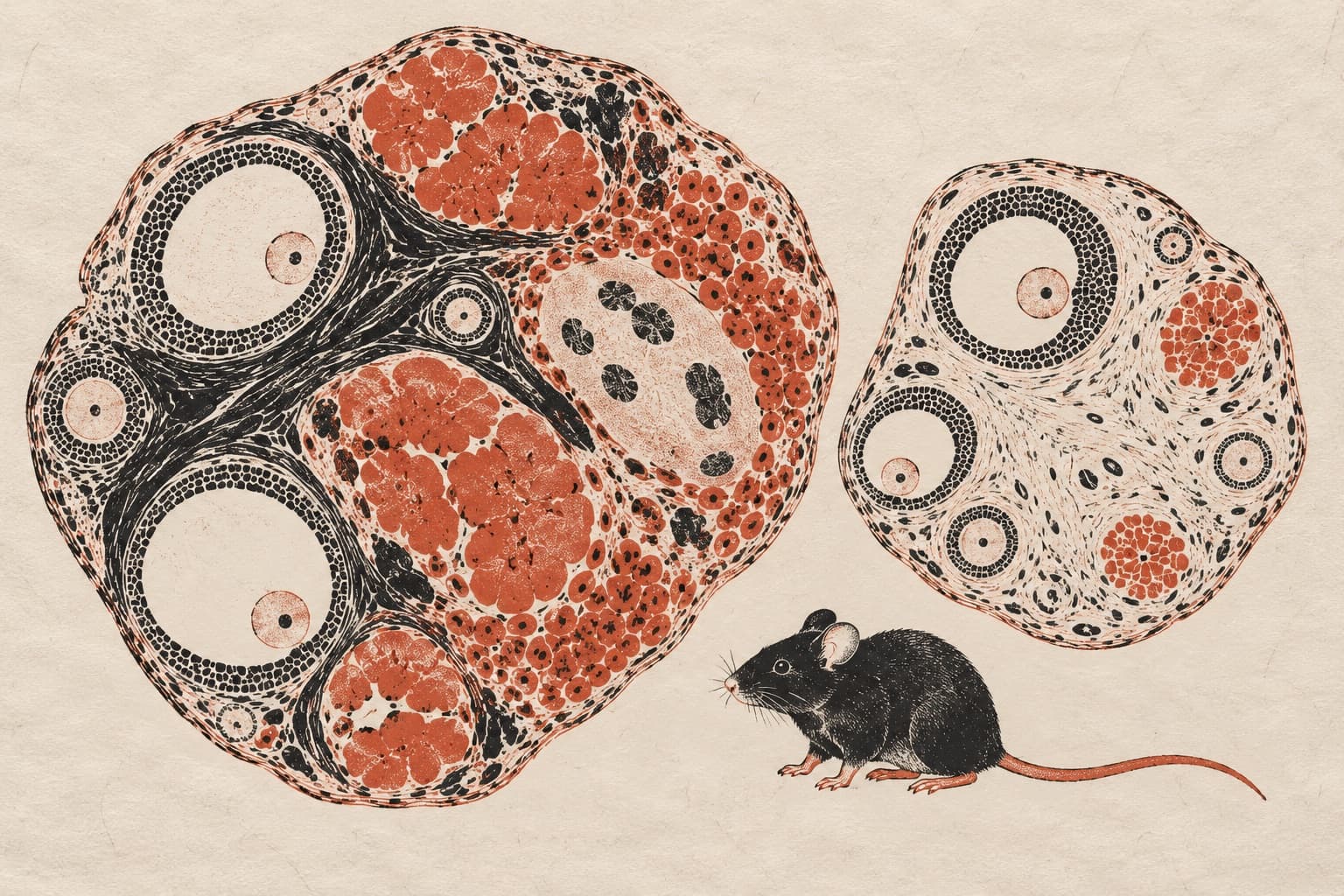
The glucocorticoid receptor (GR) and mineralocorticoid receptor (MR) are ligand-activated transcription factors that regulate epidermal homeostasis, inflammation, and function. Prior studies using epidermal-specific conditional single and double knockout mice have shown their importance in skin physiology; however, clinically human disease is largely treated pharmacologically. Our objective was to examine how systemic MR/GR antagonism affects cutaneous gene expression and epidermal thickness in aged (18-month-old) C57BL/6J female mice. Mice were treated with selective GR (relacorilant), selective MR (eplerenone), or dual GR/MR (miricorilant) antagonists for 8 weeks. Quantitative RT-qPCR analysis of the skin showed that miricorilant significantly upregulated Sgk1, a GR/MR target. Miricorilant also increased the expression of keratinocyte differentiation markers and downregulated key inflammatory cytokines and Col3a1, a collagen subtype associated with tissue remodeling. Relacorilant suppressed Scnn1g, a subunit of the epithelial sodium channel. None of the antagonists significantly altered proliferation markers, epidermal thickness, or regulators of glucocorticoid activity. Our findings show that miricorilant downregulated inflammatory cytokines and increased differentiation marker expression without affecting epidermal thickness, suggesting its potential to treat inflammatory skin diseases. The results contrast with data from GR/MR knockout studies, highlighting the likely significance of receptor dynamics. Further studies of antagonist effects on receptor interactions with co-regulators appear warranted.
The paper
Augusta University
International Journal of Molecular Sciences, 28 Aug 2025