Human ovaries show age-linked protein shifts after menopause
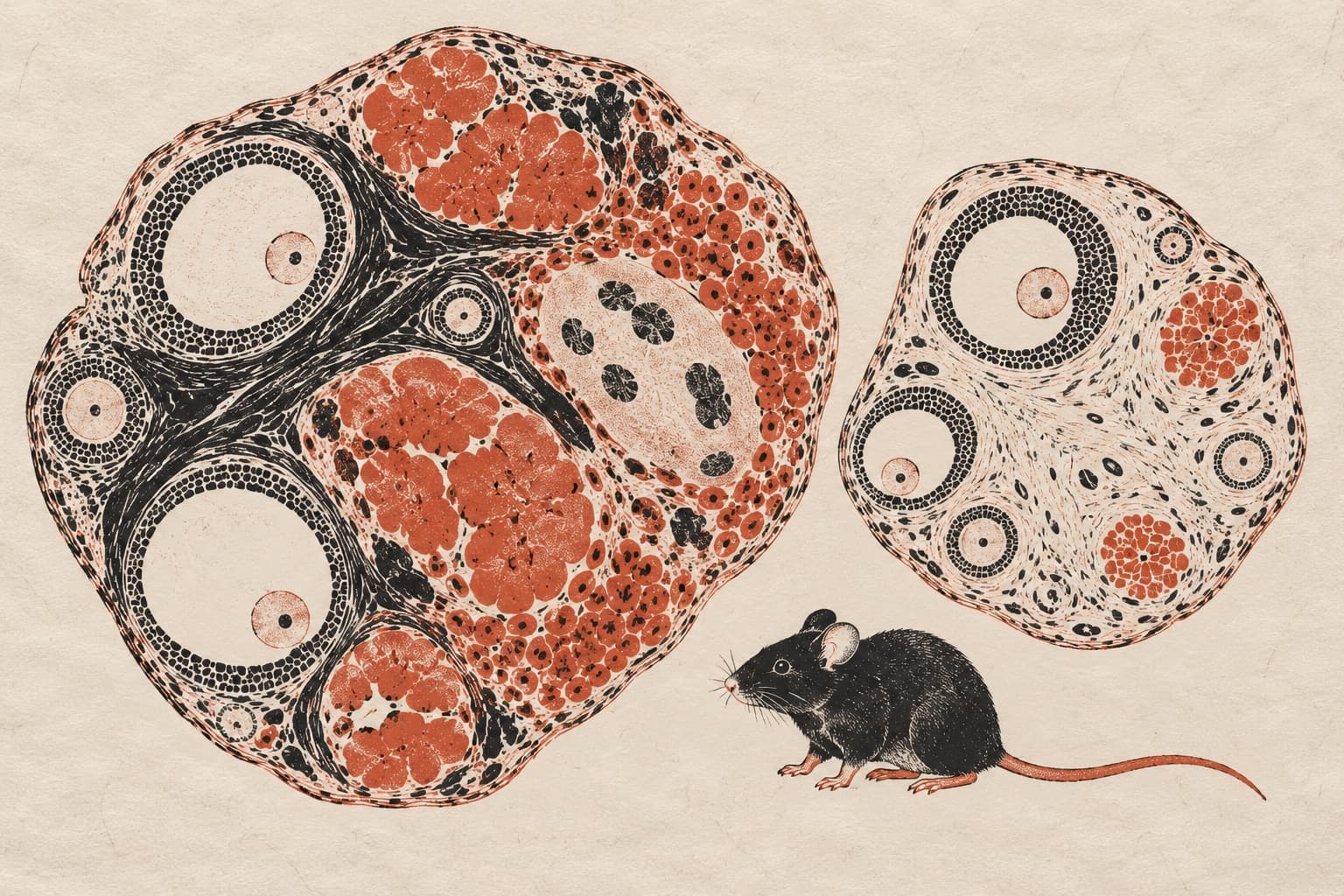
An observational study of 28 women found 117 proteins differed between ovaries from women aged 70 or older and those aged 50–59.
bioRxiv
Researchers analysed healthy ovaries from 28 women aged 50–75 who had passed menopause in an observational study. They compared protein profiles across three age groups: 50–59, 60–69 and 70 or older. Ovaries from the oldest group differed from those in the youngest group in 117 proteins.
Younger ovaries had protein patterns linked to controlling gene activity. Older ovaries had patterns linked to metabolism, transport within cells and first-line immune defences. The researchers also assembled a 26-protein signature—a combined pattern of age-associated proteins. It reflected changes in the material surrounding cells, inflammatory signalling and lower amounts of structural proteins.
Why it matters
The work addresses what happens to ovarian tissue in the decades after reproductive function declines, with potential relevance to tissue signalling and women’s health.
Caveats
This observational comparison linked protein patterns to age but did not establish causes or effects on health. It included 28 women and is a preprint, not yet peer-reviewed.
The paper
The human ovary exhibits dynamic molecular remodeling in the decades post-menopause
Show 5 more authors
Pooja R Devrukhkar, Simon Melov, Elisheva D Shanes, Mary Ellen G Pavone, Francesca E Duncan,bioRxiv · 11 Aug 2026 · Preprint, not peer-reviewed