Combined frailty and metabolic index tracks multimorbidity risk
Across 5,586 Chinese adults, each standard-deviation increment in CTI-FI was associated with a 1.342 hazard ratio for incident cardiometabolic multimorbidity.
Cardiovascular Diabetology
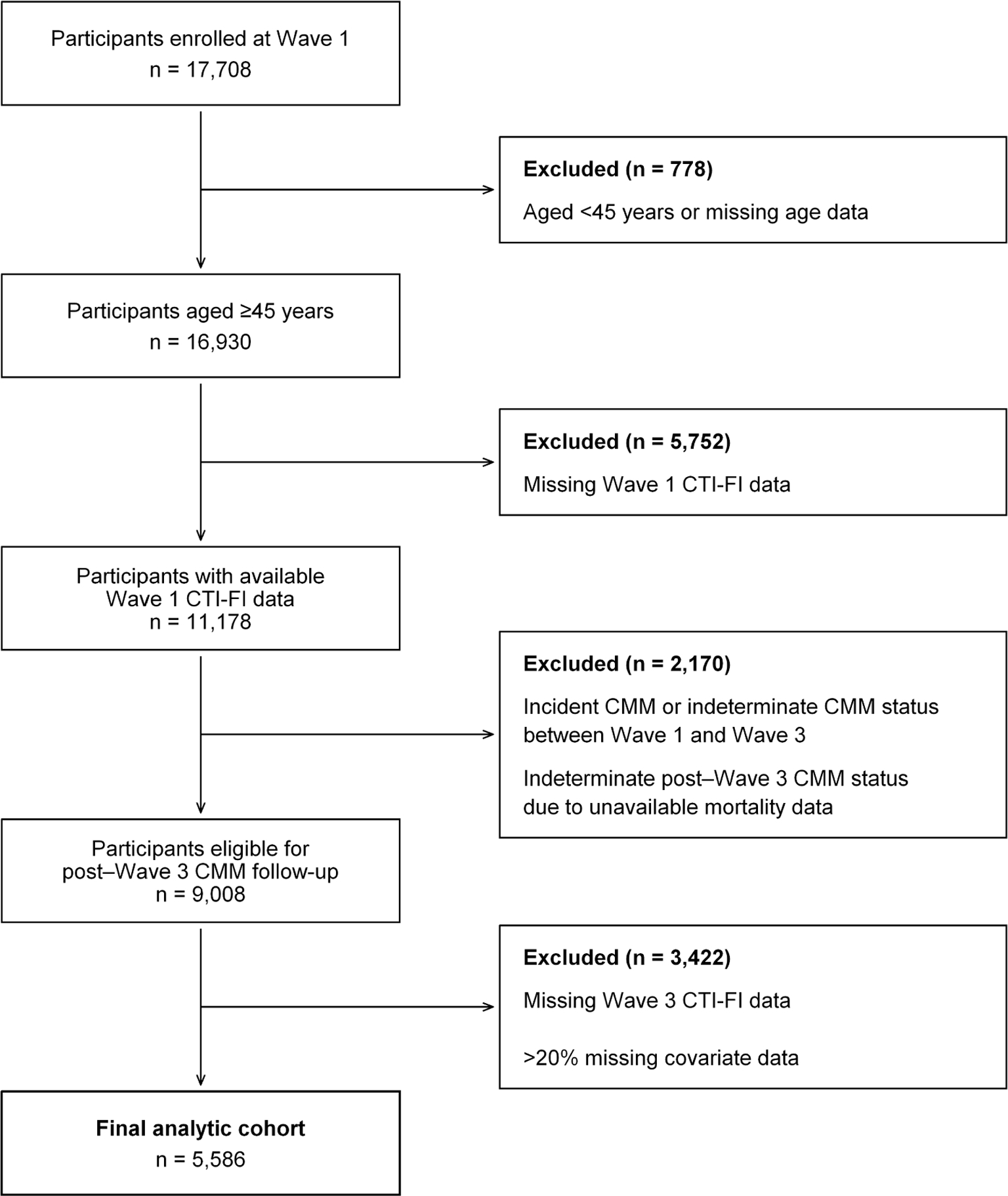
Researchers analyzed 5,586 middle-aged and older participants from the China Health and Retirement Longitudinal Study who were initially free of cardiometabolic multimorbidity. They evaluated the CTI-FI, a metric multiplying the C-reactive protein–triglyceride glucose index by a frailty index, measured at baseline and across two longitudinal time points. Over a median follow-up of 5.00 years, 494 participants developed cardiometabolic multimorbidity, defined as having two or more conditions among heart disease, stroke, and diabetes. Fully adjusted hazard ratios per standard-deviation increment were 1.342 for baseline CTI-FI and 1.370 for the time-weighted two-point mean. Participants in the highest quartiles faced greater hazards than those in the lowest, and continuous scores showed nonlinear associations with incident disease.
Why it matters
Mapping how systemic inflammation and metabolic dysregulation interact with deficit accumulation helps clarify how biological aging accelerates the onset of co-occurring chronic conditions. It also shows how combining clinical biomarkers can clarify the trajectories that lead to complex disease burdens.
Caveats
The study was observational and conducted within a single cohort in China. Importantly, the combined CTI-FI metric showed small gains in discrimination and offered no consistent predictive advantage over models using the frailty index alone.
- CTI-FI
- Cardiometabolic multimorbidity
- C-reactive protein
- C-reactive protein-triglyceride-glucose index
- Frailty index
- Humans
The paper
Weifang Medical University · Shandong Provincial QianFoShan Hospital
Cardiovascular Diabetology · 3 Oct 2026 · CC BY-NC-ND