Other mental disorders

Papers on other mental disorders

657 papers21 new in 30 days

Tuesday, November 17

Wednesday, November 11

Tuesday, November 10

BMC Medicine

Social isolation and loneliness linked to poorer health

The adjusted probability of mental disorders was 0.243 higher with loneliness than without it, on a scale from zero to one.The adjusted probability of mental disorders was 0.243 higher with loneliness than without it, on a scale from zero to one.

Figure from BMC Medicine
Cohort · 94,122 peoplePopulations

Monday, November 9

Neurology

Walking problems linked most strongly to dementia at ages 65–75

At age 65, the estimated rate of developing dementia was 3.13 times as high for walking scores of 11 versus 12.At age 65, the estimated rate of developing dementia was 3.13 times as high for walking scores of 11 versus 12.

Brain sections with wide and narrow tissue gaps sit beside groups of faceless people taking shorter and longer strides.
Cohort · 4,822 peopleIncident dementia

Sunday, November 8

medRxiv

Stressful life events linked to mental disorders and frailty

More types of recorded events were linked to stress-related disorders, with a hazard ratio of 1.62, and to anxiety, depression, other illnesses and frailty.More types of recorded events were linked to stress-related disorders, with a hazard ratio of 1.62, and to anxiety, depression, other illnesses and frailty.

Groups of upright people stand beside clinical sheets and muscle fibers, frayed by the dark blue-green group and intact by the smaller gray group.
Preprint: cohort · 202,988 peopleAnxiety disorders

Saturday, November 7

Friday, November 6

Wednesday, November 4

Journal of Affective Disorders

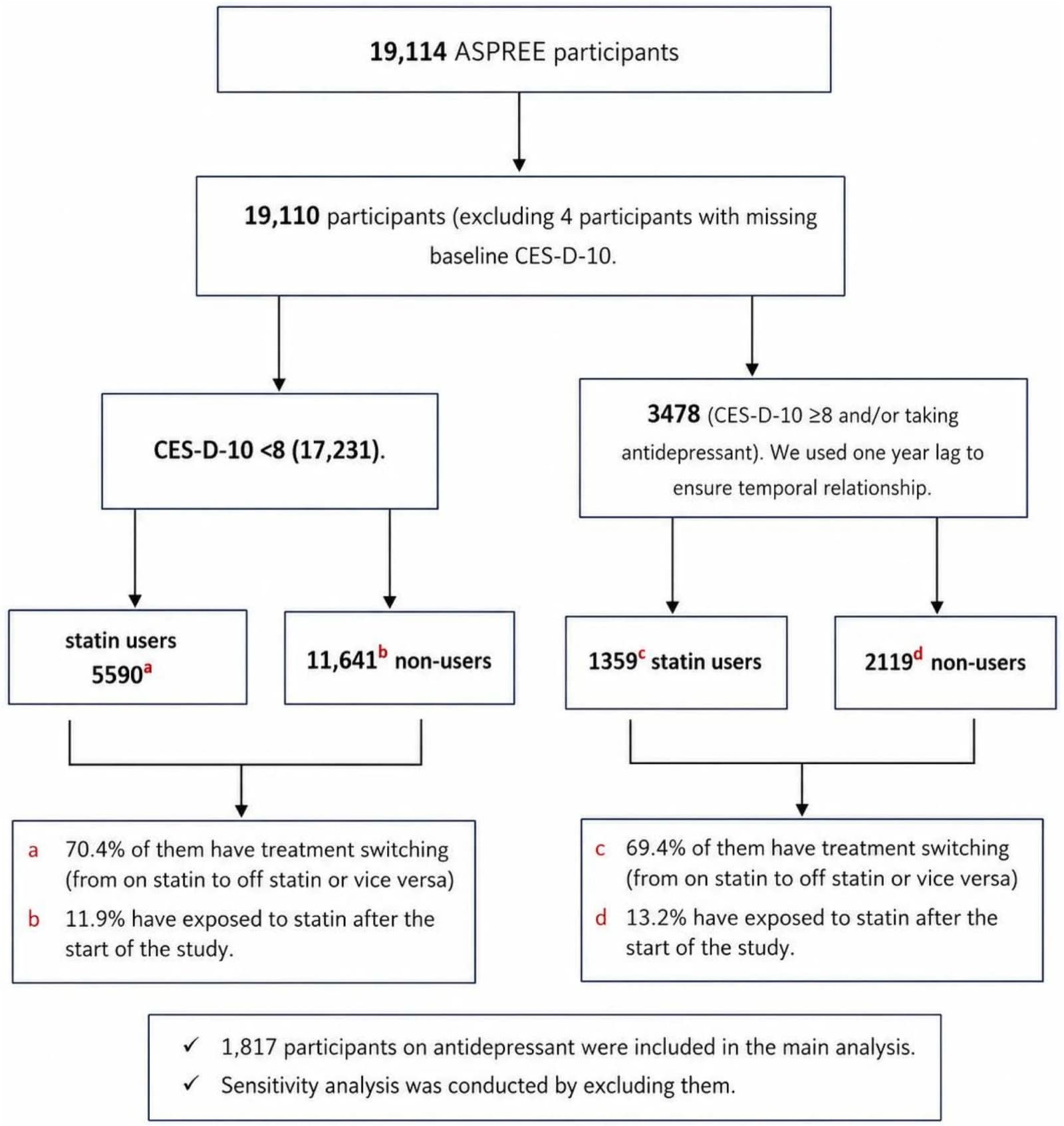
Statins tied to lower risk of new depressive symptoms in older adults

Statin users had a relative risk of 0.80 compared with nonusers among older adults initially free of depression.Statin users had a relative risk of 0.80 compared with nonusers among older adults initially free of depression.

Figure from Journal of Affective Disorders
Cohort · 17,231 peopleDepression

Tuesday, November 3

Thursday, October 29

Monday, October 26

ESC Congress 2026 Abstract

Mental disorders tied to lower survival in congenital heart disease

At 50 years of follow-up, survival probability was 55% for patients with a mental disorder compared with 74% for matched patients without one.At 50 years of follow-up, survival probability was 55% for patients with a mental disorder compared with 74% for matched patients without one.

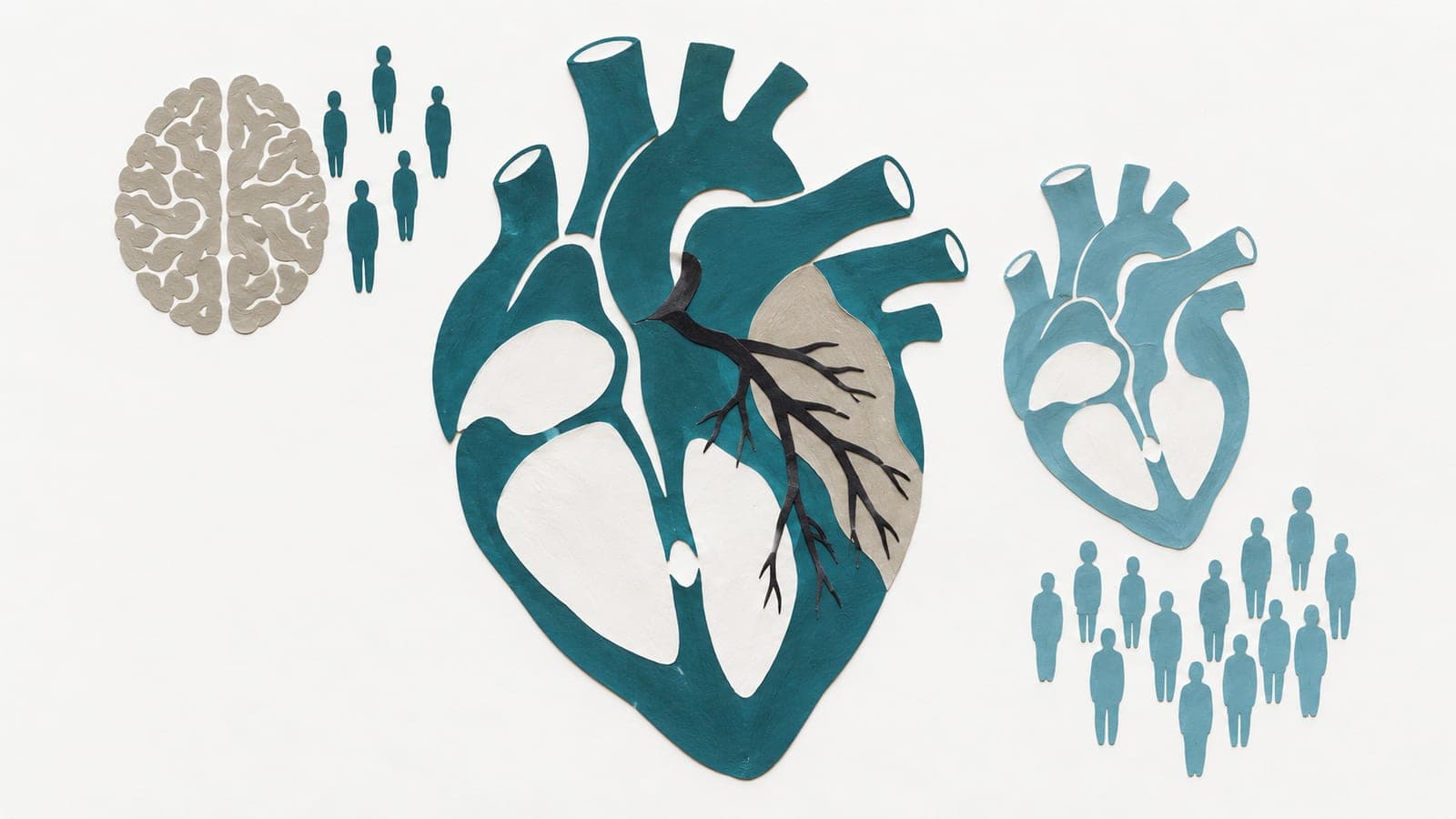
A cutaway heart with damaged muscle sits beside a brain and sparse group of people, opposite a smaller intact heart with a larger group.
Cohort · 18,749 peopleCongenital heart disease
Molecular Psychiatry

Severe mental disorders share genetic links to cellular aging

A genome-wide analysis linked bipolar disorder, depression and schizophrenia to cellular aging markers, identifying nine genes shared across all three conditions.A genome-wide analysis linked bipolar disorder, depression and schizophrenia to cellular aging markers, identifying nine genes shared across all three conditions.

Figure from Molecular Psychiatry
Genetic association studyMechanisms

Friday, October 23

Thursday, October 22

Tuesday, October 20

Monday, October 19

Saturday, October 17

Friday, October 16

Thursday, October 15

Wednesday, October 14

JAMA Network Open

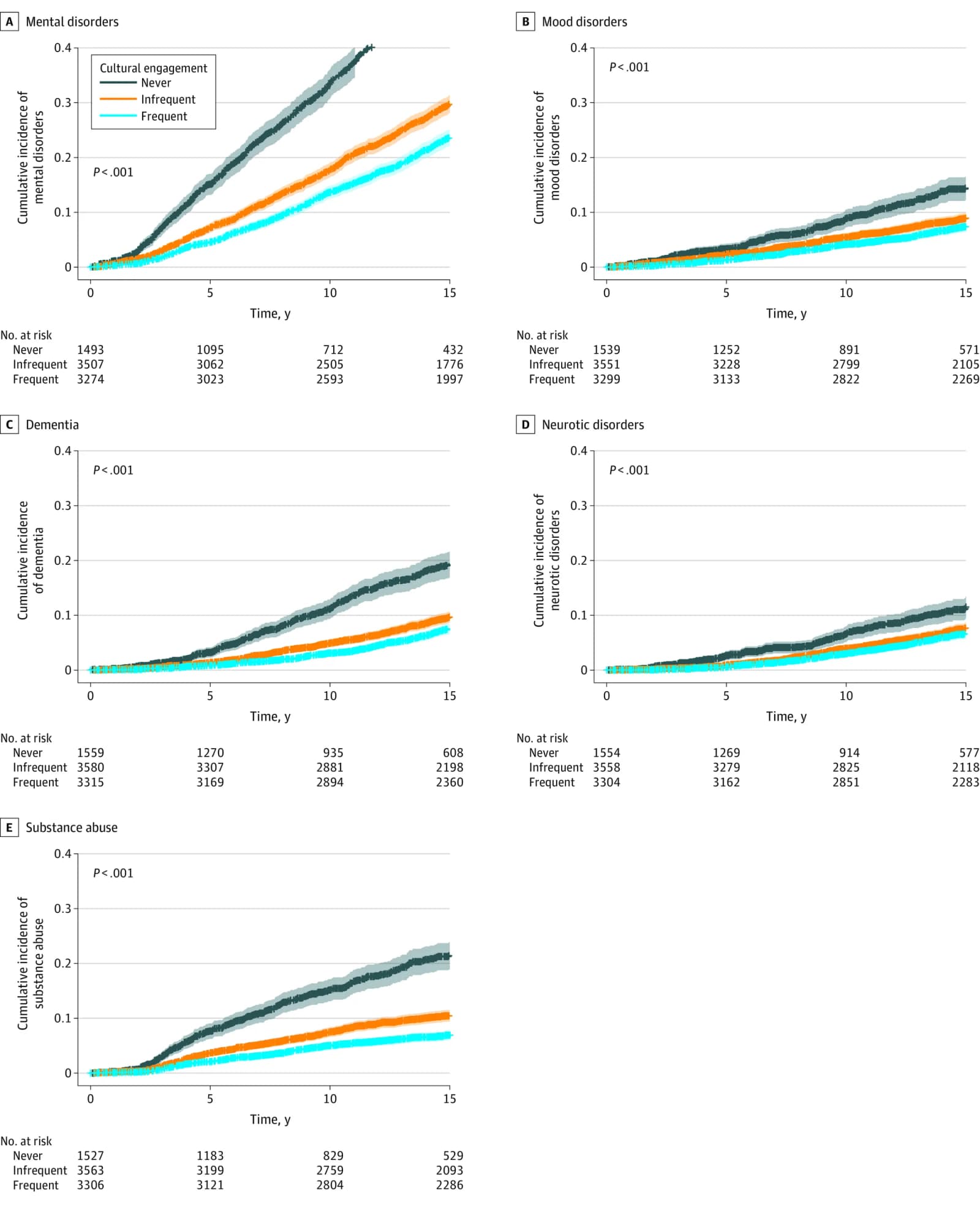
Cultural engagement linked to fewer mental disorders in older adults

Frequent cultural engagement was linked to lower relative risk of hospital-treated mental disorders (hazard ratio 0.71), though the abstract did not specify the…Frequent cultural engagement was linked to lower relative risk of hospital-treated mental disorders (hazard ratio 0.71), though the abstract did not specify the comparison group.

Line Graphs of Cumulative Incidence for Disease Categories Among People With Different Cultural Engagement Groups.
Cohort · 8,274 peopleMental disorders

Sunday, October 11

Friday, October 9

Journal of Affective Disorders

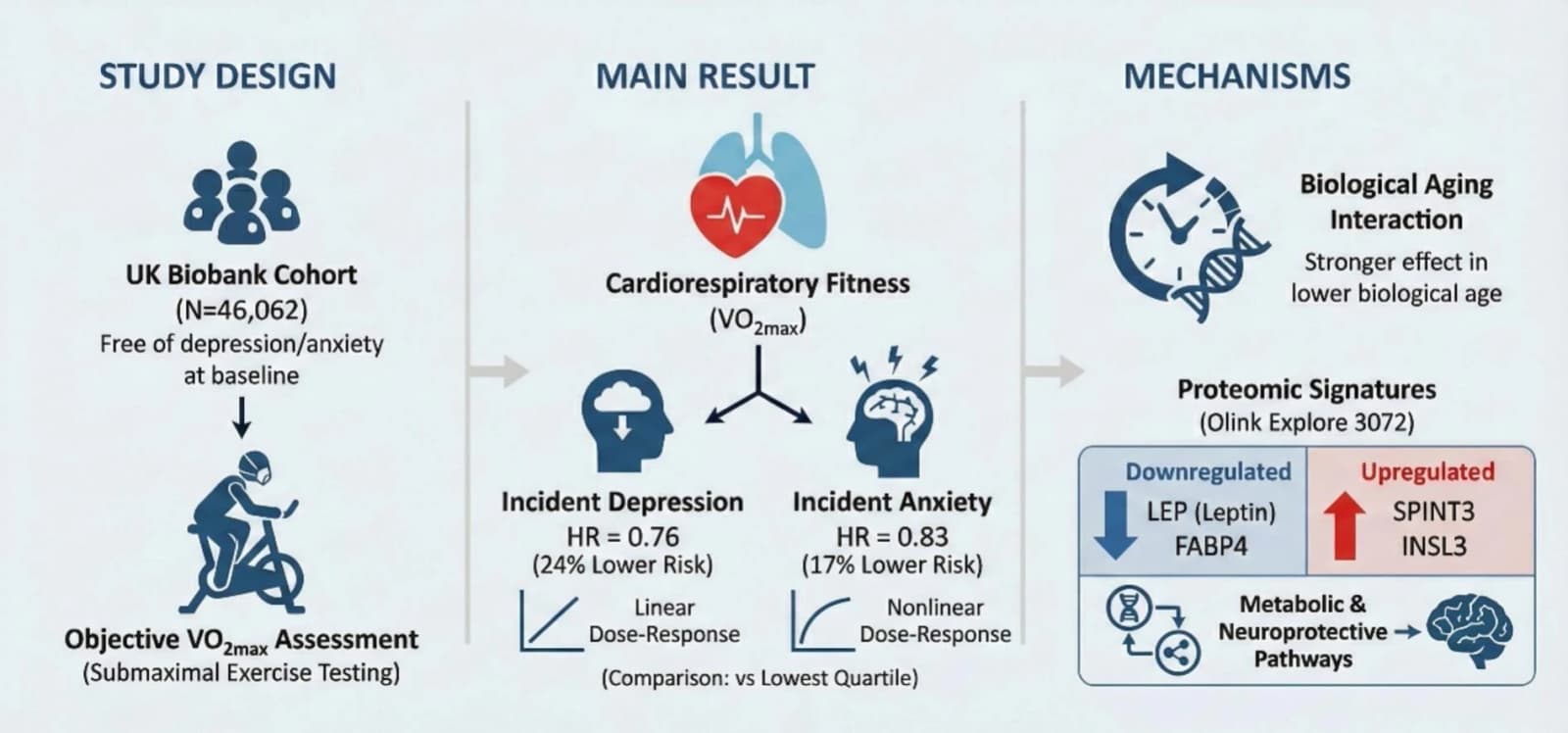
Higher fitness is linked to lower depression and anxiety risk

In a study of UK adults, the highest fitness quartile had a 24% lower depression risk and 17% lower anxiety risk than the lowest quartile.In a study of UK adults, the highest fitness quartile had a 24% lower depression risk and 17% lower anxiety risk than the lowest quartile.

Figure from Journal of Affective Disorders
Cohort study of 46,062 peopleAnxiety