Higher fitness is linked to lower depression and anxiety risk
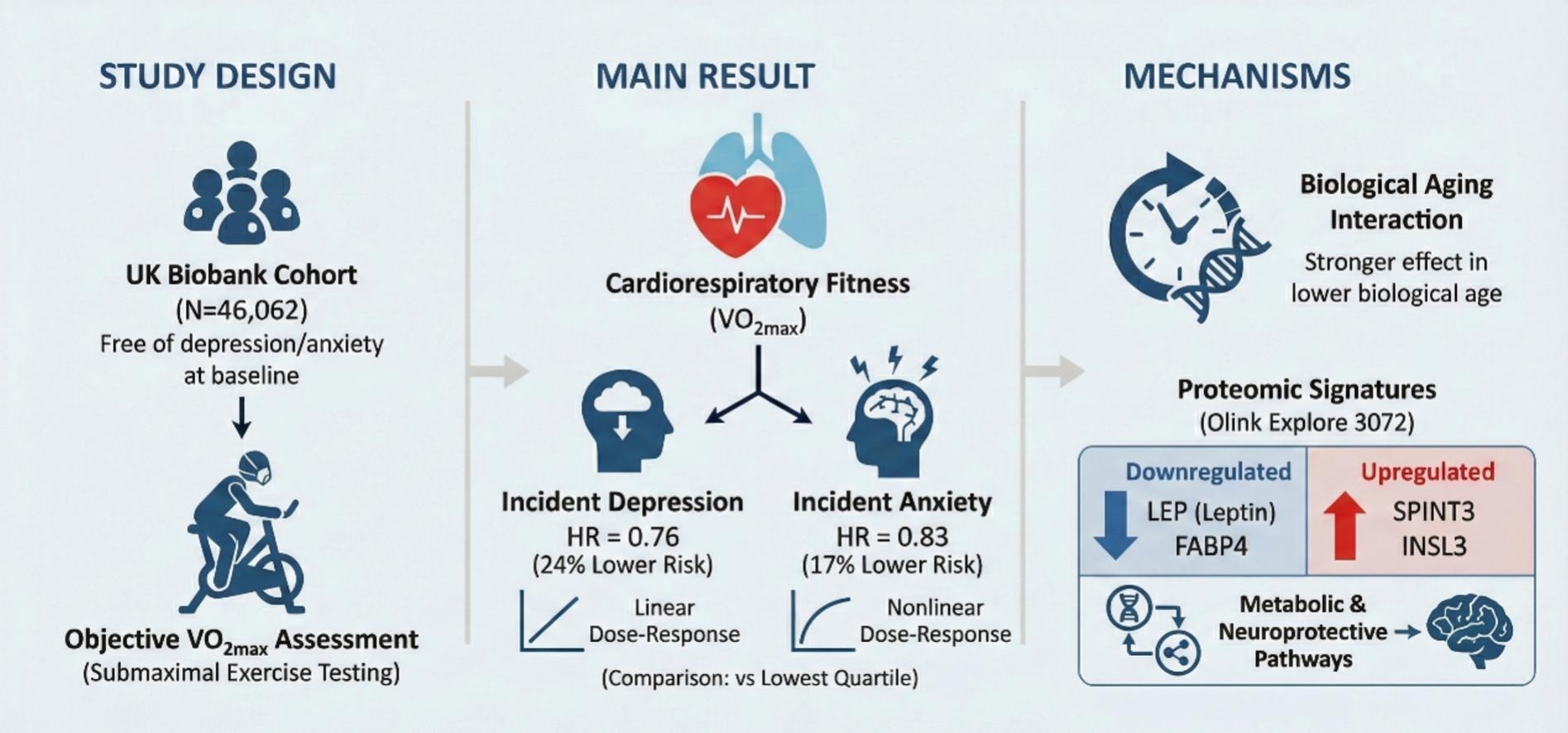
In a study of UK adults, the highest fitness quartile had a 24% lower depression risk and 17% lower anxiety risk than the lowest quartile.
Journal of Affective Disorders
In a prospective cohort study, researchers followed 46,062 UK Biobank participants who had no depression or anxiety at the start. They objectively estimated cardiorespiratory fitness through a standardised submaximal exercise test. Over a median follow-up of 12.6 years, 2,190 participants developed depression and 2,483 developed anxiety. Compared with the lowest fitness quarter, the highest quarter was associated with a 24% lower risk of depression and a 17% lower risk of anxiety. The relationship was linear for depression and nonlinear for anxiety, and associations were stronger among individuals with a lower biological age. In a subset of 3,245 participants, proteomic analysis identified seven blood proteins linked to fitness, including lower levels of leptin and FABP4 and higher levels of SPINT3 and INSL3.
Why it matters
Depression and anxiety are common conditions that impair healthy lifespan and frequently co-occur with physical decline. The results suggest that sustaining cardiorespiratory fitness may support mental health through metabolic and neuroprotective pathways.
Caveats
Because this was an observational cohort study, it cannot show that fitness directly prevents psychiatric disorders. In addition, diagnoses were identified through linked electronic health records rather than in-person clinical evaluations, and the protein analysis included only a small subset of participants.
The paper
Show 2 more authors
Wang Yang, Xin Zhou,The First Hospital of Jilin University
Journal of Affective Disorders · 8 Oct 2026