Cultural engagement linked to fewer mental disorders in older adults
Frequent cultural engagement was linked to lower relative risk of hospital-treated mental disorders (hazard ratio 0.71), though the abstract did not specify the comparison group.
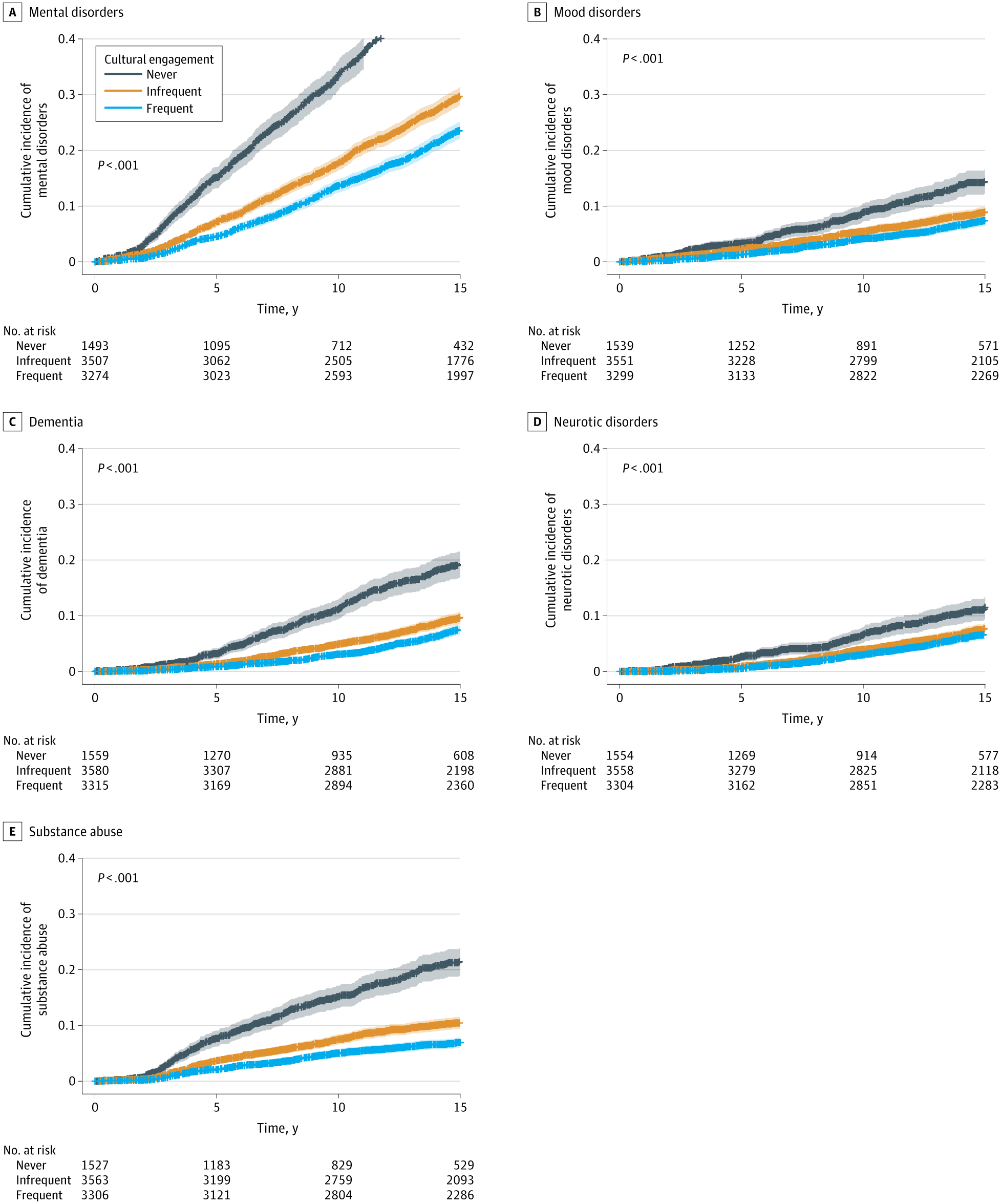
An observational cohort study followed 8,274 adults aged 50 and older in the English Longitudinal Study of Aging, including 4,672 women. Their mean age was 65.4 years. Researchers recorded how often participants watched performances or exhibitions. They linked participants’ records to hospital diagnoses and mortality records, with follow-up of up to 20 years.
Frequent engagement meant every few months to monthly or more. After accounting for demographic, lifestyle and social factors, frequent engagement was associated with a lower hazard of hospital-treated mental disorders. A hazard ratio measures relative risk over follow-up. The researchers also found links with dementia, substance misuse and mood disorders. These associations persisted after excluding early cases and accounting for initial depressive symptoms and thinking abilities.
Why it matters
Studying hospital diagnoses in older adults addresses whether links between cultural engagement and mental health extend beyond self-reported symptoms. The findings support further testing of cultural engagement as a population mental health strategy.
Caveats
This observational study cannot establish that cultural engagement caused the lower risk; unmeasured differences between participants could still matter. The findings concerned adults aged 50 and older and disorders recorded through hospital care.
The paper
Cultural Engagement and Hospital-Treated Mental Disorders in Older Adults
University College London
JAMA Network Open, 1 Oct 2026