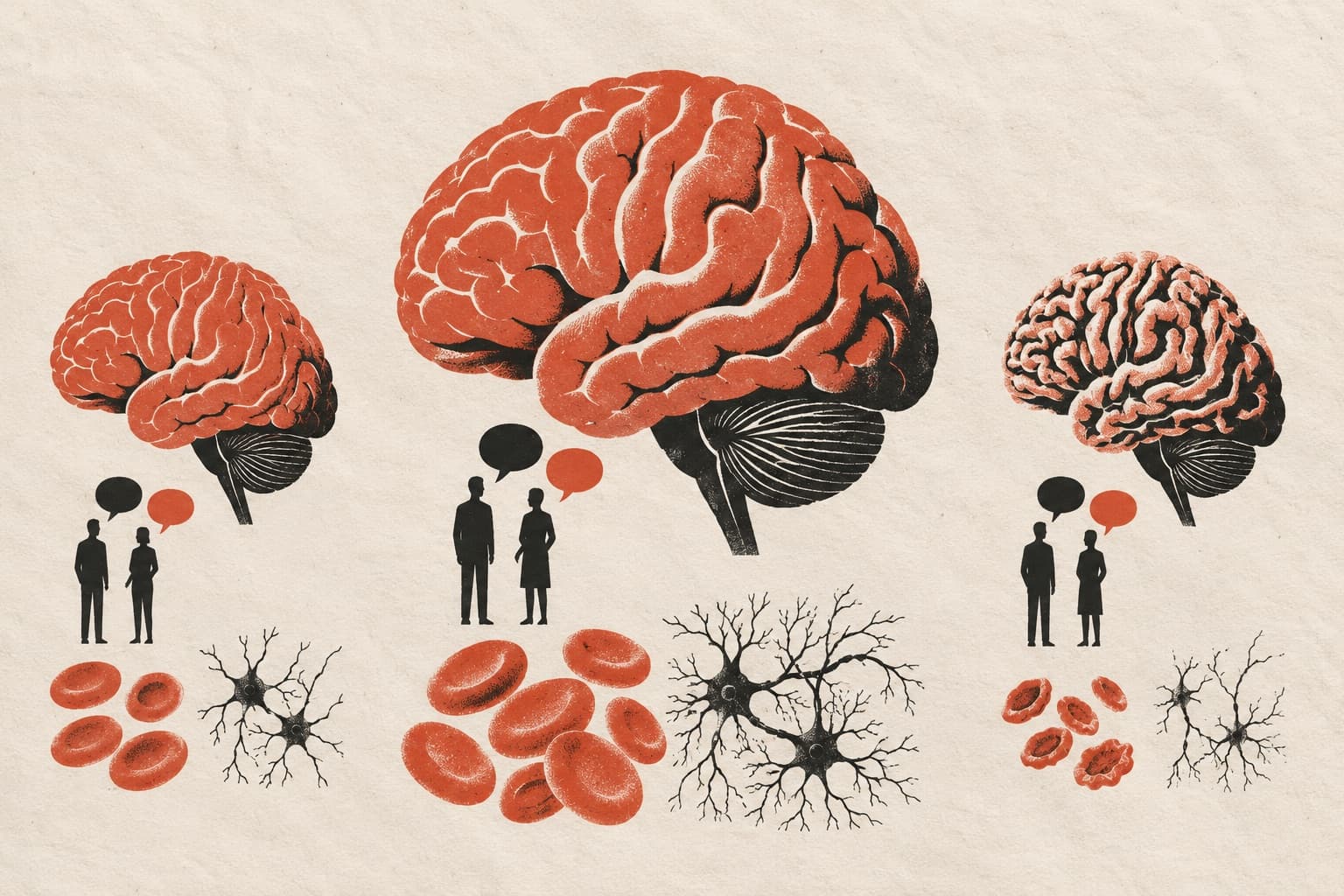
Voice taxonomy detects cognitive decline and Alzheimer markers
In 1,479 participants across three cohorts, a new voice taxonomy differentiated mild cognitive impairment with an effect size of d = −0.39 and tracked cognitive change.
medRxiv
In 1,479 human participants across three cohorts, researchers evaluated a new speech framework to detect cognitive impairment, according to a preprint on medRxiv. The team created the Neurocognitive Speech Taxonomy, which organizes 314 voice features into seven neurocognitive domains. These domains include articulatory precision, cognitive-linguistic abilities, executive fluency and planning, phonation and laryngeal control, prosodic modulation, lexical-semantic complexity, and morphosyntactic complexity. The taxonomy showed stable structure across cohorts, with Mantel r values ranging from 0.71 to 0.77. It differentiated mild cognitive impairment with an effect size of d = −0.39 and distinguished Alzheimer's disease biomarker status with an effect size of d = −0.23. The scores also tracked longitudinal cognitive change and correlated with hippocampal volume, with correlation coefficients reaching up to 0.28.
Why it matters
Interpretable voice biomarkers could provide scalable, noninvasive methods to detect and monitor neurodegenerative changes during aging.
Caveats
The findings come from an observational preprint that has not yet been peer-reviewed, and the study was not registered in a public trials registry.
The paper
A neurocognitive speech taxonomy for voice biomarkers of Alzheimer’s disease
Baylor College of Medicine
medRxiv · 25 Sep 2026 · Preprint, not peer-reviewed