Brain agingIn silicoPreprint

Acoustic noise alters speech-based Alzheimer's model predictions

Across three self-supervised learning models tested on ADReSSo speech audio, controlled acoustic interventions systematically shifted diagnostic predictions for Alzheimer's disease.

arXiv

In a preprint analyzing human speech recordings from the ADReSSo dataset, researchers investigated whether acoustic factors influence speech-based Alzheimer's disease assessments. They evaluated three pretrained self-supervised learning backbones using layer-wise linear decoding, input- and representation-space interventions, and geometric alignment analysis. The authors applied controlled noise and reverberation interventions to participant-speech-only, non-speech, and full-recording audio. Controlled acoustic interventions altered diagnostic predictions across all three backbones. Background noise produced the strongest intervention effects, despite showing no significant diagnostic-group difference in the original dataset. These shifts aligned systematically with the classifiers' decision directions, replicated on a held-out test set, and reversed when representation-space interventions were reversed.

Why it matters

Acoustic biomarkers are emerging tools for detecting age-related cognitive impairment. These findings indicate that models can rely on recording artifacts rather than genuine disease signs, risking misclassification in clinical settings.

Caveats

The findings are based on a computational analysis limited to the ADReSSo dataset and three specific model architectures. The study is a preprint and has not yet undergone peer review.

The paper

Beyond Decodability: Do Acoustic Factors Drive Predictions in Speech-Based Alzheimer's Assessment?

Kopar S, Koudounas A, Rane RP et al.

arXiv · 1 Oct 2026 · Preprint, not yet peer-reviewed
See all
bioRxivHumansPreprint

Human neurons accumulate far more mutations over lifespan than shorter-lived mammals

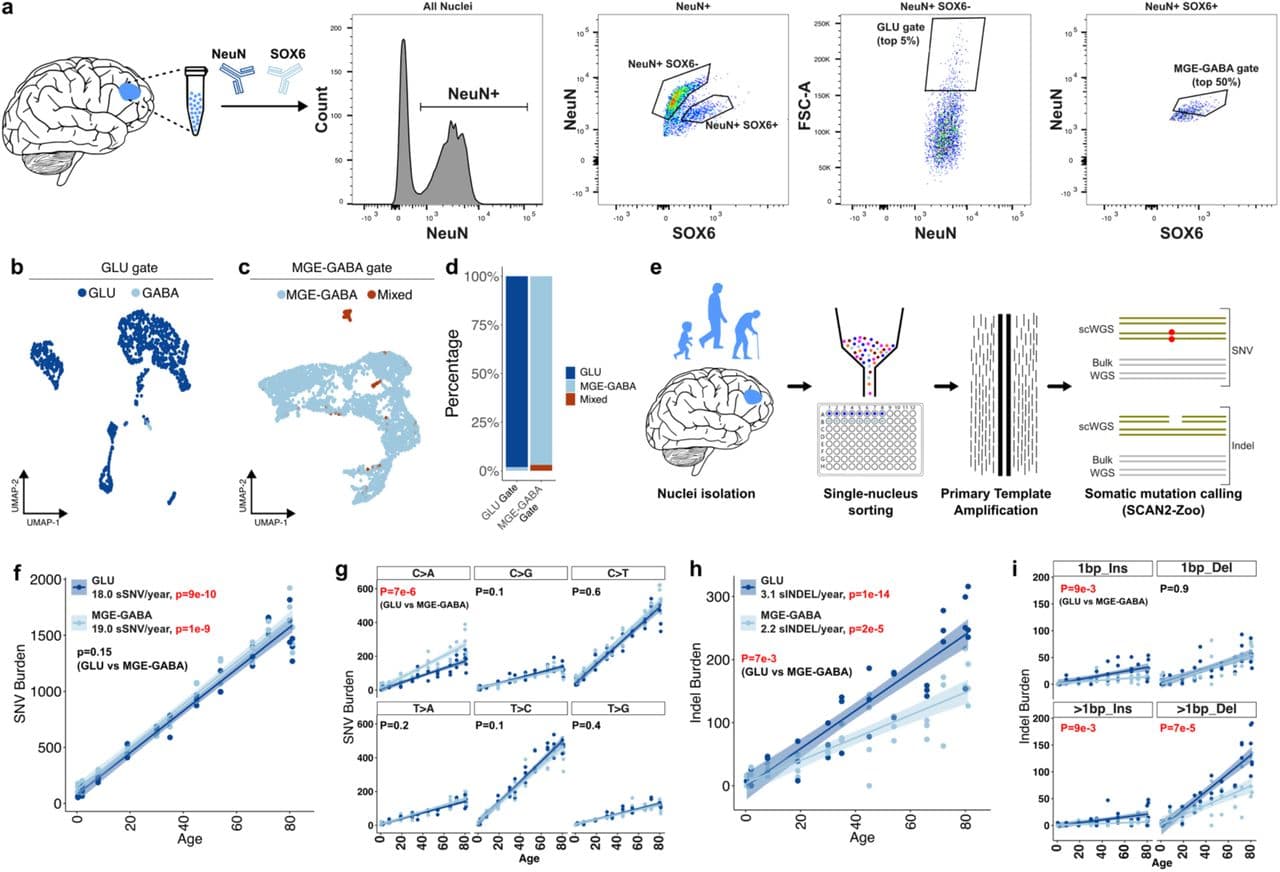
Cortical neurons gain mutations at similar yearly rates across six species, leaving aged humans with uniquely high mutational burdens and…Cortical neurons gain mutations at similar yearly rates across six species, leaving aged humans with uniquely high mutational burdens and transcriptomic dysregulation. In a preprint analyzing humans, chimpanzees, rhesus macaques, marmosets, ferrets, and mice, researchers evaluated genomic…

Distinct cerebral cortical neuronal subtypes display subtle yet specific differences in their mutational landscape.
bioRxivAnimalsPreprint

CAR T cells targeting inflammatory bone marrow progenitors restore cognition in aged mice

Clearing these peripheral myeloid cells remodeled brain macrophages and improved cognitive performance without requiring the engineered immune cells…Clearing these peripheral myeloid cells remodeled brain macrophages and improved cognitive performance without requiring the engineered immune cells to enter the brain. In aged mice and mouse models of Alzheimer's disease, researchers tested CAR T cell therapies targeting inflammatory…

bioRxivAnimalsPreprint

Extracellular cGAMP drives neuroinflammation and premature aging phenotypes in mice

Loss of the cGAMP-degrading enzyme ENPP1 allows microglia-derived signaling molecules to trigger STING-dependent inflammation across multiple brain…Loss of the cGAMP-degrading enzyme ENPP1 allows microglia-derived signaling molecules to trigger STING-dependent inflammation across multiple brain cell types. In a mouse study, researchers found that advanced age and experimental autoimmune encephalomyelitis cause microglia to accumulate…

bioRxivCellsPreprint

Directly converted human neuronal spheroids preserve donor age and model Alzheimer disease

The three-dimensional cell platform maintains biological aging markers while spontaneously developing hallmark pathologies of sporadic Alzheimer…The three-dimensional cell platform maintains biological aging markers while spontaneously developing hallmark pathologies of sporadic Alzheimer disease. In a new preprint, researchers developed directly induced neuronal spheroids using primary fibroblasts from young, unimpaired aged, and…

medRxivHumansPreprint

Auditory nerve myelin degeneration defines a subtype of age-related hearing loss

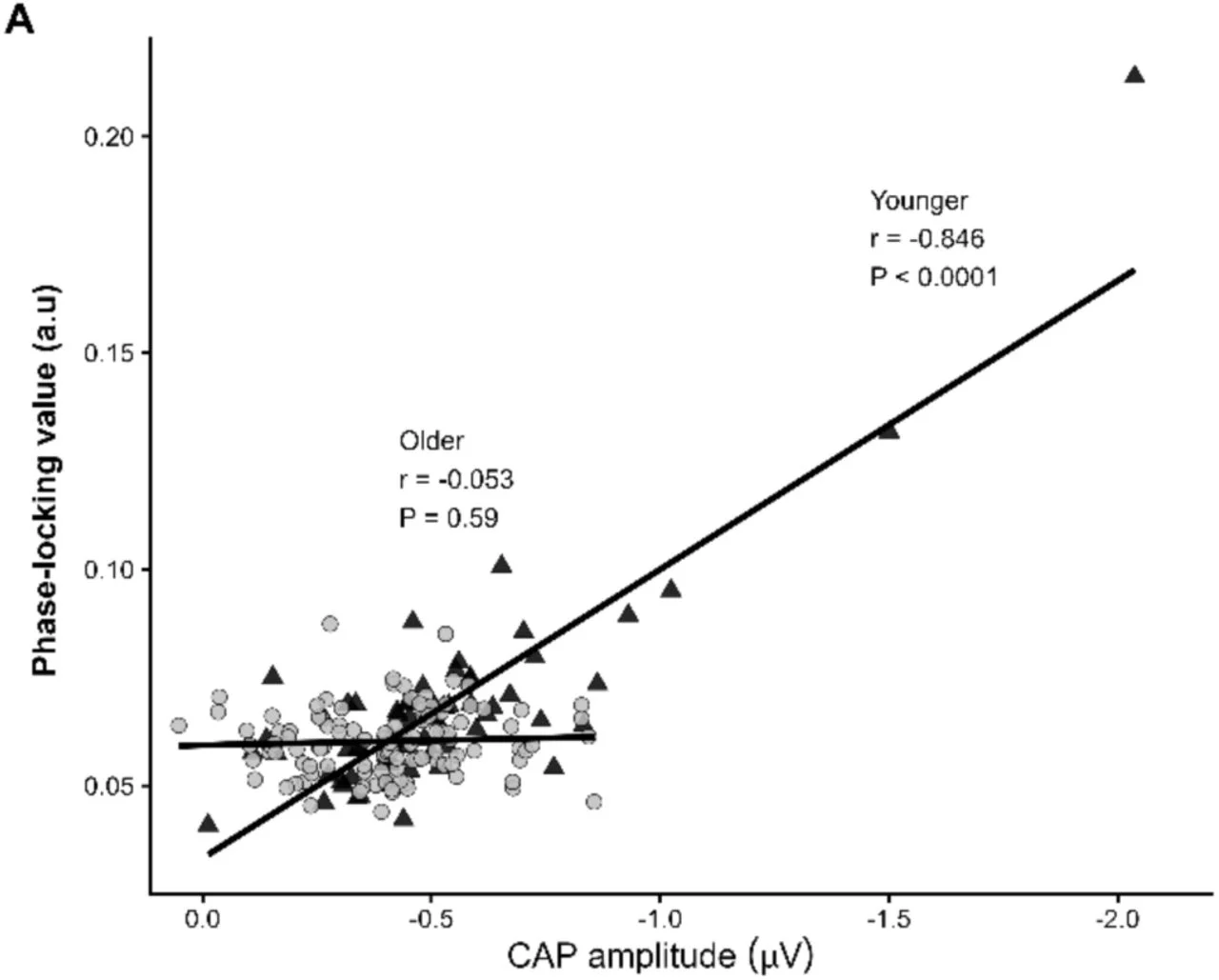
Researchers linked poor auditory nerve synchrony and myelin degradation to amplified communication difficulties in older humans, beyond standard…Researchers linked poor auditory nerve synchrony and myelin degradation to amplified communication difficulties in older humans, beyond standard hearing thresholds. In a human study detailed in a preprint, researchers investigated how auditory nerve changes affect hearing in older adults.

Aging modifies the association between auditory nerve response amplitude and neural synchrony.