Lifestyle trial found similar Alzheimer’s blood marker changes
A two-year randomised trial in 1,260 older adults at risk of dementia found no clear evidence that starting blood markers altered cognitive benefits.
Registered NCT01041989
Older adults at risk of dementia took part in the two-year FINGER randomised trial, which enrolled 1,260 people. This preprint reported a secondary analysis of blood markers linked to Alzheimer’s disease. Researchers examined how these markers related to cognitive changes and benefits from an intervention targeting several aspects of lifestyle and health.
Higher marker levels were associated with less favourable changes in thinking abilities over two years. However, researchers found no clear evidence that starting levels modified the intervention’s cognitive benefits. Blood marker changes were small and followed similar patterns in the intervention and control groups. For p-tau217, a form of the tau protein used as an Alzheimer’s blood marker, 85% of participants started below the disease-related threshold. After two years, 82% remained below it.
Why it matters
In older adults at risk of dementia, the findings suggest that lifestyle-related cognitive benefits may primarily involve biological processes not captured by Alzheimer’s blood markers.
Caveats
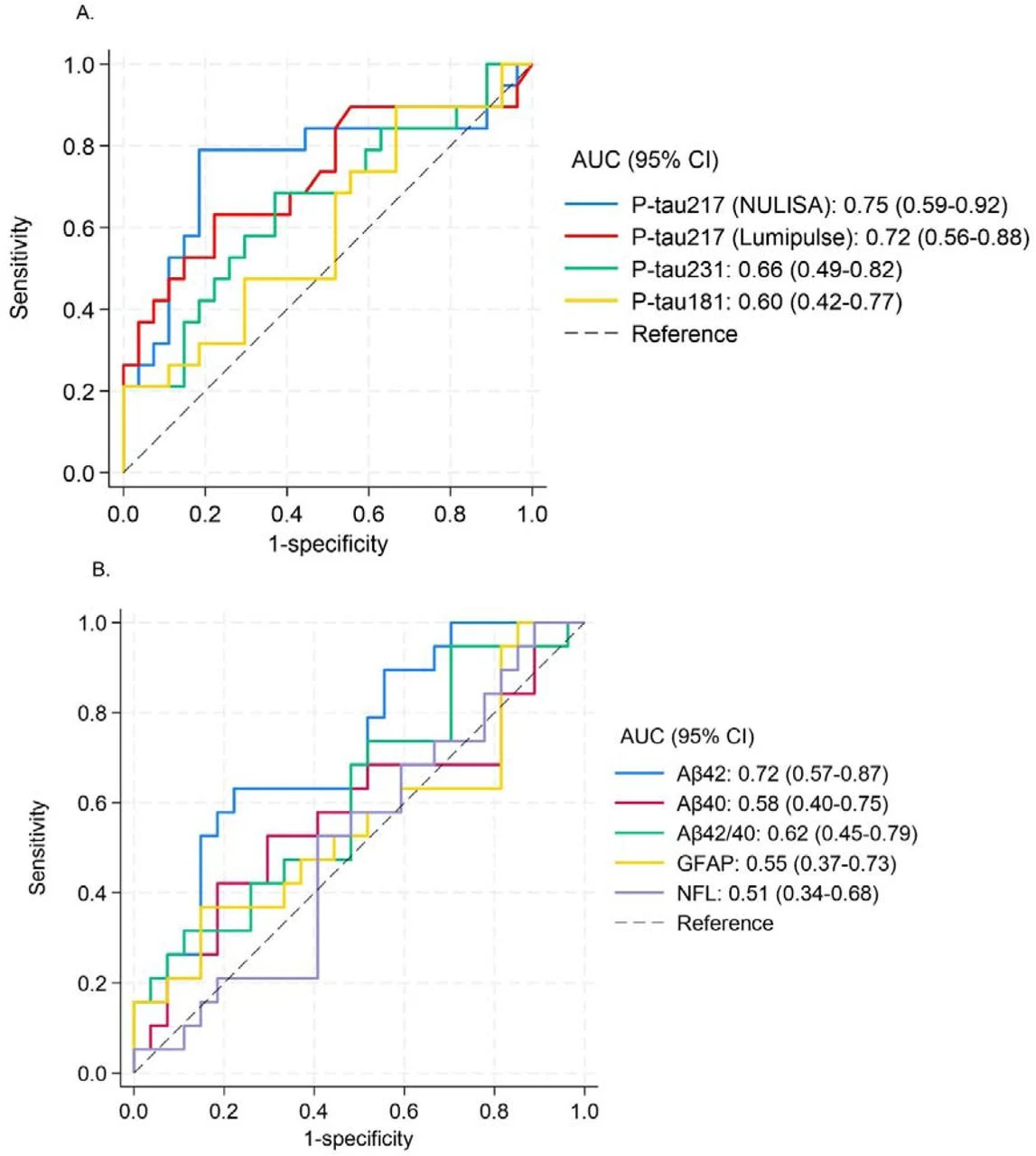
This was a secondary analysis, and the blood markers only modestly predicted amyloid protein deposits in the brain. The report is a preprint, not yet peer-reviewed.
From the paper
- Participants
The PET sub-study (conducted at baseline) included 46 participants who were scanned with ¹¹C-Pittsburgh compound B (PiB)-PET to visually assess Aβ status.
Quoted word for word from the full text on medRxiv.
- Multidomain lifestyle intervention
- Dementia
- Alzheimer's disease
- p-Tau217
- AD plasma biomarker trajectories
- Humans
The paper
Finnish Institute for Health and Welfare; University of Eastern Finland
medRxiv, 6 Oct 2026, Preprint, not peer-reviewed