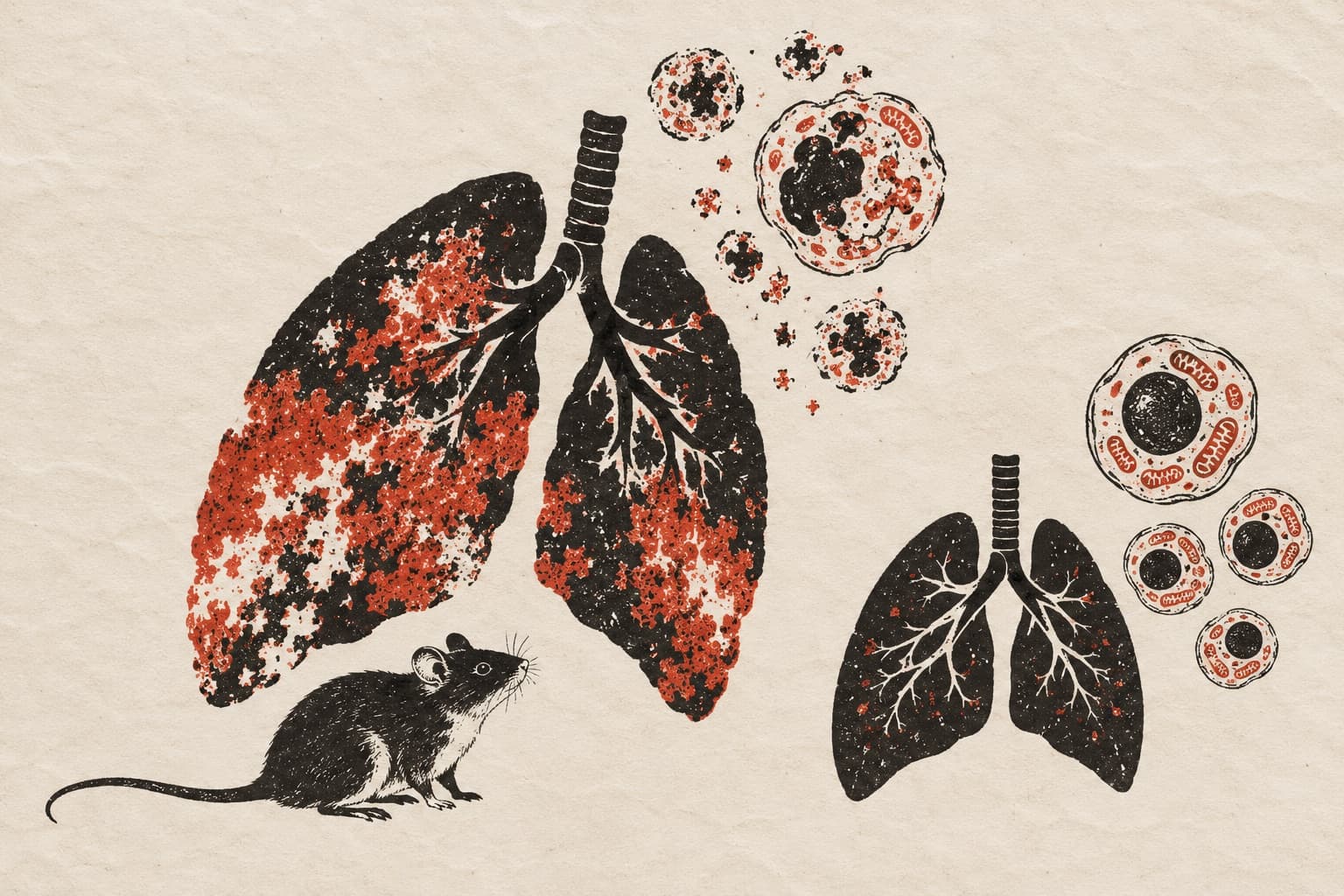
Spermidine reduces oxygen use in some immune cells from aged mice
In experiments on immune cells from aged mice, spermidine, a molecule involved in cell metabolism, reduced oxygen use in one subgroup but not another.

Limit: The abstract omits the spermidine dose and exposure duration
Edited by Boris Djordjevic · AgingResearch.News
In experiments on CD8 effector T cells, a type of immune cell, from aged mice, spermidine reduced oxygen use by mitochondria, the cells’ energy-producing structures. Cells from young mice responded differently. The reduction depended on fatty acid breakdown and was associated with mitochondrial oxidative stress—an imbalance between reactive molecules and antioxidant defenses. The aged cells also produced less interferon gamma, an immune-signaling protein, and had less capacity to multiply.
Oxygen use fell markedly in a subgroup carrying the surface protein CD44 but lacking another, CD49d. This subgroup accumulated with age. Cells carrying both proteins were unaffected. In the affected subgroup, spermidine lowered levels of molecules involved in antioxidant defenses without changing mitochondrial levels of reactive oxygen molecules. The authors suggested that this reflected consumption of antioxidant reserves.
Why it matters
The age-related buildup of this T-cell subgroup makes its response relevant to understanding how spermidine affects the aging immune system.
Caveats
These experiments on mouse immune cells do not establish effects on health or aging in people. The abstract does not report the dose or duration of spermidine exposure.
The paper
Kyoto University Graduate School of Medicine
International Immunology, Oct 30, 2026