Intermittent fasting promotes memory-forming immune cells
Experiments examining killer T cells found that fasting shifted them toward using fat for fuel and supported the development of lasting immune memory.
Limit: The fasting schedule is not reported, leaving the effective regimen unspecified
Edited by Boris Djordjevic · AgingResearch.News
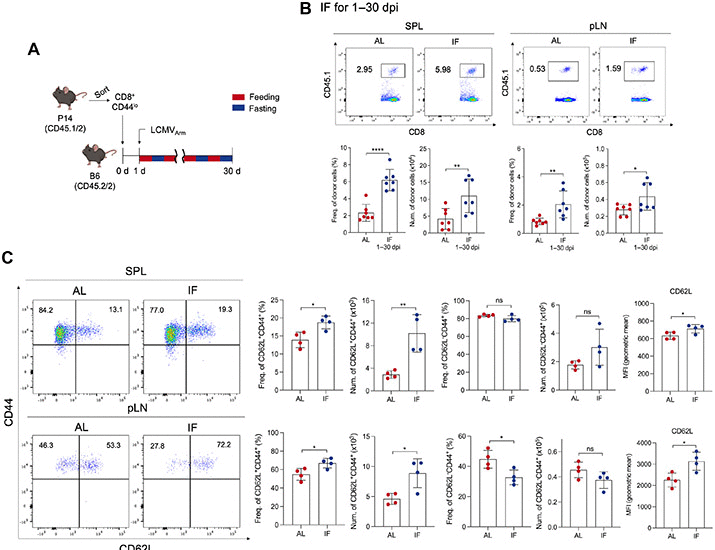
In experiments examining CD8-positive T cells, immune cells that can attack infected or cancerous cells, researchers tested how intermittent fasting shaped immune memory. Fasting favored cells poised to become memory cells. It also enhanced the development and function of memory T cells, which support lasting immune responses.
The researchers reported that fasting-induced restriction of glucose, a sugar, shifted the cells toward using fat for fuel. This improved the function of mitochondria, the cells’ energy-producing structures. The authors attributed the durable, functional memory responses to interactions between metabolism and the control of gene activity that supported memory-cell development.
Why it matters
The work bears on efforts to strengthen lasting immunity against cancer, an age-related disease, by changing how immune cells use fuel.
Caveats
The abstract does not identify the organism or experimental model. It also does not report sample sizes or the fasting schedule.
- Intermittent fasting
- Adoptive transfer therapy
- Glucose restriction
- Epigenetic regulation of gene expression
- Fatty acid β-oxidation
- Immune response
The paper
Seoul National University
Science Advances, Oct 28, 2026


