Cellular energy defects worsened heart disease in Fabry mice
Experiments in a humanized mouse model found worsening energy production and waste disposal with age; L-arginine prevented heart abnormalities.
Limit: Heart damage was described, but survival was not reported
Edited by Boris Djordjevic · AgingResearch.News
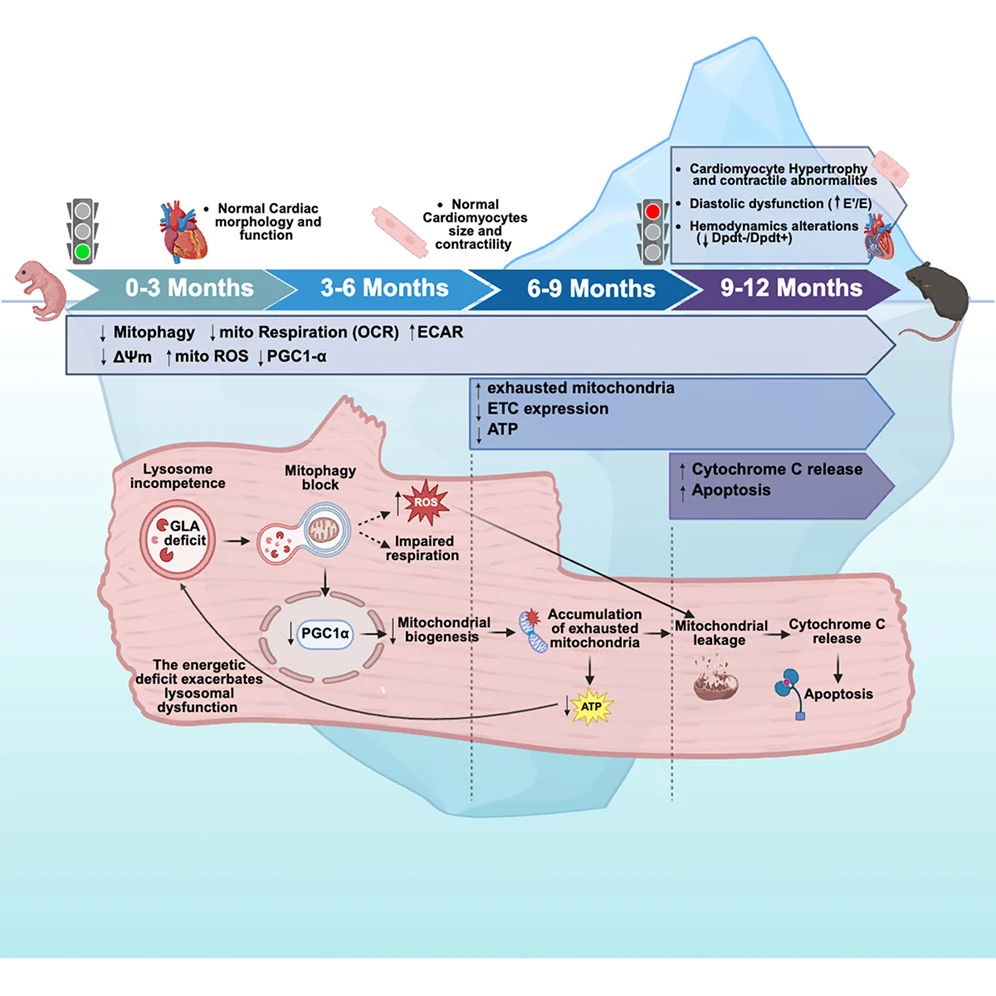
Experiments in a humanized mouse model of Fabry disease examined how faulty energy production contributed to heart damage. The study also used embryonic fibroblasts, cells that build connective tissue, and newborn and adult heart muscle cells.
The researchers found impaired mitophagy—the removal of mitochondria, the cell’s energy-producing structures—and reduced mitochondrial respiration, the process that supplies usable energy. These defects worsened with age in the mice. Malfunctioning mitochondria accumulated, energy production failed, and cells died. The mice developed heart enlargement and impaired relaxation between beats. L-arginine prevented heart abnormalities in the mouse model.
Why it matters
The age-progressing defects point to a link between cellular maintenance and worsening heart disease. The work suggests that interactions between waste disposal and energy production offer a potential target in Fabry disease.
Caveats
These were experiments in a genetically engineered mouse model and cells, not a study in people. They do not establish whether L-arginine would prevent heart damage in people with Fabry disease.


